


More news on this day
An Amazon-branded cargo jet overran a runway at Miami International Airport on Sunday, killing at least five people and injuring five more after the aircraft crossed a perimeter road, struck multiple vehicles and burst into flames, according to early reports from local and national outlets.
Get the latest news straight to your inbox!
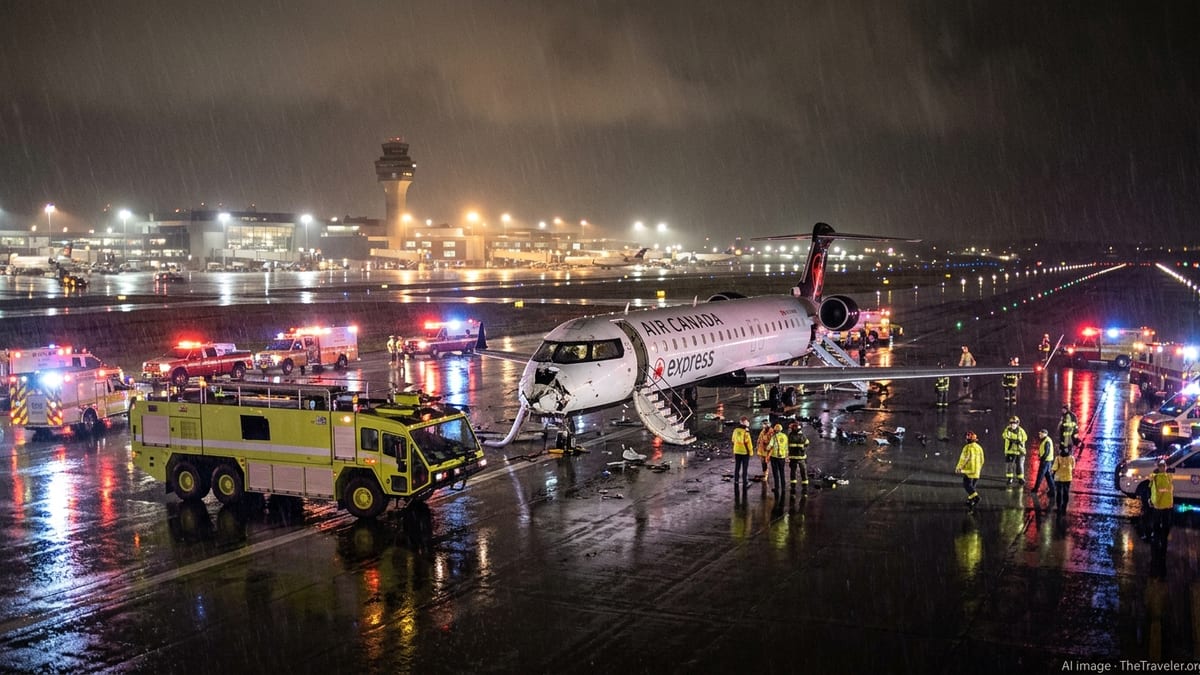
Runway Overrun Sends Jet Across Road and Into Vehicles
Publicly available information indicates the incident occurred on the afternoon of September 6, 2026, when the Amazon Prime Air Boeing 767 cargo aircraft landed at Miami International Airport and failed to stop on Runway 30. The jet continued through the runway end area, breached the airport perimeter and crossed a public road just beyond the airfield boundary.
Reports from multiple news organizations describe the aircraft striking several vehicles on the roadway before coming to rest in a field near airport facilities. Images and video shared by broadcasters and on social media show the fuselage largely intact but surrounded by burned debris and scorched ground, with emergency crews working around the aircraft.
According to published coverage, five people were killed and five injured in the crash, with the fatalities believed to be occupants of vehicles struck beyond the runway. Early accounts suggest the flight crew survived the overrun, though detailed information about their conditions has not yet been widely released.
Miami International Airport temporarily halted operations after the crash while emergency services responded and investigators began initial on-site assessments. Flight tracking data referenced in media reports shows widespread delays and diversions across the busy South Florida hub during the ground stop.
Emergency Response and Impact on Airport Operations
Regional outlets report that a large-scale emergency response was launched within minutes, with dozens of fire and rescue units converging on the scene. Video from local television coverage shows firefighters attacking flames at the nose and left side of the aircraft while others established foam lines to contain burning fuel.
Airport officials issued an immediate ground stop affecting all runways and taxiways, according to industry and financial news reports, effectively pausing arrivals and departures while first responders worked around the overrun aircraft. The closure had a cascading effect on air traffic throughout the region as flights were held on the ground or diverted to other airports.
By early evening, some operations at Miami International appeared to be resuming on a limited basis, though publicly available flight status boards still displayed a heavy concentration of delays and cancellations. Travelers reported long lines and uncertainty in terminals as airlines adjusted schedules in response to the extended runway closure and emergency activity.
The incident underscores the operational vulnerability of major hubs to a single runway event. Miami International Airport serves as a critical gateway for passenger and cargo traffic between the United States, Latin America and the Caribbean, and disruptions of this scale can ripple through airline networks, affecting travelers and freight movements far beyond South Florida.
What Is Known So Far About the Flight
According to aviation industry reports and national news coverage, the aircraft involved was a Boeing 767 operated for Amazon’s cargo network, often branded as Amazon Air or Prime Air. The flight originated in Puerto Rico and was on approach to Miami when the overrun occurred.
Preliminary tracking data shared by aviation analysts online suggests the jet touched down well along the runway length, raising early questions among observers about landing speed, touchdown point and braking performance. However, no official sequence of events or causal factors has yet been established, and formal investigators typically caution that early impressions from video or public data may not reflect the full technical picture.
Weather conditions at the time appeared to include typical South Florida afternoon storms in the vicinity, according to publicly accessible meteorological information cited in media reports. It is not yet clear whether runway conditions, visibility or crosswinds played any role in the event, and such issues would normally be examined in detail during the investigation.
The aircraft came to rest near warehouse and cargo facilities adjacent to the airport, prompting comparisons in some coverage to previous cargo accidents that narrowly avoided more extensive damage in surrounding commercial and residential areas. A significant fuel leak was reported in several outlets, and fire crews remained on scene for hours to manage remaining hot spots and environmental risks.
Investigation Underway Into Deadliest Recent U.S. Cargo Overrun
Public reporting indicates that federal aviation and transportation safety agencies have opened an investigation into the Miami overrun, assisted by local law enforcement and airport personnel. Standard procedures typically include securing the flight data and cockpit voice recorders, documenting runway and tire marks, and examining the aircraft’s braking and thrust-reverser systems.
Aviation analysts quoted across multiple outlets note that runway overruns are a recognized risk in commercial operations, particularly during landings in challenging weather, with high landing weights or when approach stability is compromised. Investigations often look closely at approach profiles, crew decision-making, automation use and adherence to stabilized-approach criteria.
Several reports highlight that this appears to be one of the most serious cargo runway incidents in the United States in recent years involving fatalities on the ground rather than among crew members. Safety specialists will likely compare the circumstances in Miami with earlier overrun and cargo accidents to identify any recurring patterns related to training, procedures, airport infrastructure or aircraft systems.
Formal investigative findings in complex runway events can take months or years to complete. Interim updates often focus on factual information such as aircraft condition, maintenance history and recorded flight parameters, while any discussion of probable cause typically appears only in later, comprehensive reports.
Broader Questions for Cargo Hubs and Surrounding Communities
The crash has renewed attention on how closely major airports interface with surrounding roads, warehouses and neighborhoods, especially at the ends of busy runways. Miami International is bordered by dense development, including logistics facilities and multi-lane roads that handle both airport-related and commuter traffic.
Urban planners and aviation safety advocates have previously raised concerns about the limited buffers in some airport environments, where an aircraft leaving the runway environment can quickly reach public roadways or buildings. Engineering measures such as engineered material arresting systems, or EMAS, have been installed at certain runway ends in the United States to help stop overrunning aircraft, but coverage varies by airport and runway configuration.
Cargo operations have expanded significantly at many large airports, driven by e-commerce growth and next-day delivery expectations. The Miami overrun, involving a branded cargo jet associated with one of the world’s largest online retailers, is likely to intensify scrutiny of how cargo traffic is managed at constrained airfields and how risks are communicated to communities under flight paths and along perimeter roads.
Travelers and residents around Miami International will be watching for updates in the coming days as investigators release additional factual details and airport officials outline any immediate operational or infrastructure changes. For now, the focus remains on supporting those affected by the crash and restoring safe, reliable operations at one of the country’s busiest air gateways.
Associated Press: At least 5 dead after Amazon cargo plane barreled off runway at Miami airport
CBS Miami: Amazon cargo plane overruns runway at Miami International Airport
Anadolu Agency: 5 killed, 5 injured after Amazon cargo plane overruns runway at Miami airport
ABC News: Amazon cargo plane overruns runway at Miami International Airport