


More news on this day
Travelers flying between Thailand and major Middle East hubs are facing fresh disruption as Gulf Air, Qatar Airways and several other carriers adjust or cancel flights on routes linking Bangkok, Doha, Tel Aviv and beyond, according to multiple operational updates and regional travel reports published in recent days.
Get the latest news straight to your inbox!
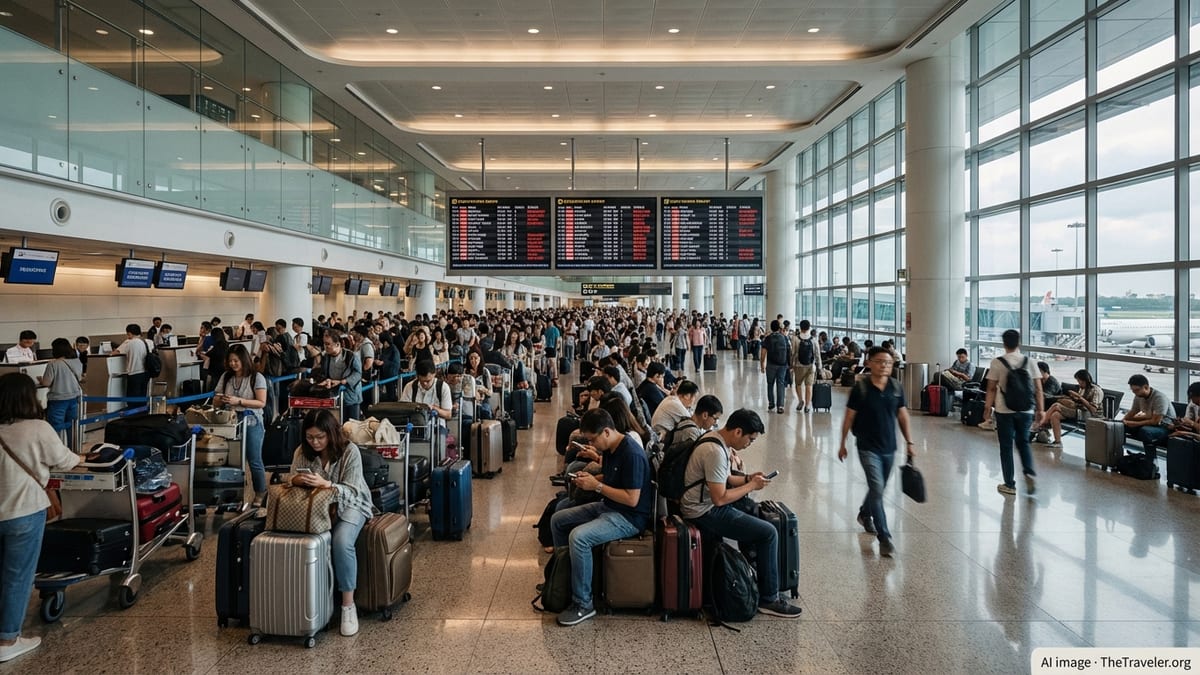
Regional Tensions Ripple Across Gulf and Southeast Asia Skies
Publicly available airline notices and travel-industry reports indicate that a new wave of schedule changes is affecting flights through the Gulf, with knock-on effects for Thailand-bound passengers. While core trunk routes between Doha and Bangkok remain on the timetable for Qatar Airways, a series of cancellations and aircraft swaps on connecting sectors are disrupting itineraries that rely on smooth transfers through Hamad International Airport.
Gulf Air, which uses Bahrain as a key transfer point between Europe, the Middle East and Asia, has also been reshaping services after recent airspace constraints around parts of the region. Travel forums and passenger advisories describe repeated cancellations on multi-leg itineraries involving Bahrain, forcing rebookings via alternative hubs or different departure dates. These changes are now being felt more sharply by travelers connecting onward to Thailand and neighboring destinations.
The wider backdrop is a Middle East environment where airlines are still navigating conflict-related airspace restrictions, heightened risk assessments and volatile demand patterns. Factbox-style overviews from international newswires describe a patchwork of suspensions, reduced frequencies and route diversions that continue to affect flights to Tel Aviv, certain Gulf capitals and parts of the Eastern Mediterranean, complicating planning for passengers originating in or heading to Southeast Asia.
Although no single blanket ban has been announced for Thailand services, the cumulative effect of multiple carriers trimming or cancelling segments that feed into Bangkok, Phuket and other gateways means that itineraries which once involved routine stops in Doha, Bahrain or other Gulf hubs now carry a higher risk of last-minute change.
Qatar Airways Adjusts Network While Maintaining Core Bangkok Links
Qatar Airways has been gradually restoring and expanding its global network through mid 2026, with published schedules showing service to more than 150 destinations from mid June. The airline’s latest operational updates underline that flights remain subject to change or cancellation for operational, regulatory or safety reasons, a caveat that has become far more visible to passengers throughout the spring and early summer period.
Schedule summaries and third-party flight tracking data show that key services between Doha and Bangkok continue to operate, with multiple daily frequencies still listed. However, travelers report instances of last-minute cancellations or re-timings on certain days, particularly on connecting legs that feed into or out of the Bangkok–Doha corridor. Some of these adjustments relate to broader capacity reshuffles as the airline reallocates aircraft to markets with stronger demand or less operational complexity.
Separate travel alerts note that only a limited schedule is available on certain routes and emphasize that passengers should regularly monitor their bookings. For Thailand-bound travelers, this means that even if the main Bangkok–Doha flight remains on the board, the preceding or onward sector might shift, extending layovers or requiring a complete re-route through a different hub.
Reports circulating on consumer forums in recent weeks describe passengers between Europe and Thailand via Doha being offered rebookings several days away from their original travel date when cancellations occur. In other cases, travelers have been moved onto partner airlines or alternative routings that bypass the Gulf entirely, especially where regional airspace closures have made the original path less viable.
Gulf Air and Other Carriers Face Repeated Cancellations via Bahrain
Gulf Air, the flag carrier of Bahrain, has faced particular challenges as changing airspace permissions and security assessments affect its ability to operate some of its usual network. Accounts shared by affected passengers describe multiple cancellations on itineraries such as Singapore–Bahrain–Europe and similar multi-leg journeys, leading to rebookings and, in some cases, out-of-pocket expenses for replacement tickets.
These disruptions are not limited to a single city pair but instead appear across a range of routes transiting Bahrain, including services that traditionally help connect travelers between Thailand and European destinations. When Bahrain segments are cancelled or rescheduled, passengers who had relied on Gulf Air as an alternative to the larger Gulf mega-carriers can find themselves with fewer same-day options.
Regional travel guidance summarizing the situation across Gulf carriers highlights that Gulf Air is far from alone. Airlines such as Oman Air, Kuwait Airways, flydubai, Air Arabia and Saudi operators have all had to navigate shifting operating conditions, with varying levels of suspensions or reduced frequencies on select destinations. For passengers, this translates into a more fragile network where a single schedule change can disrupt a long-haul itinerary spanning multiple continents.
In practical terms, travelers moving between Thailand and Europe or the Middle East via Bahrain are being encouraged by travel agents and consumer-rights guides to build in longer buffers, prepared flexibility and, where possible, to retain refundable or changeable tickets. The pattern of repeated cancellations on some Gulf Air routes suggests that conservative planning may help avoid extended unplanned stays in transit points.
Impact on Routes to Tel Aviv, Doha and Other Conflict-Exposed Destinations
The knock-on impact of regional conflict is particularly acute on routes touching Tel Aviv and other airports in or near active or recently active conflict zones. International media coverage tracking airline responses notes that several European and regional carriers have fully suspended Tel Aviv services into late June or beyond, while others have opted for partial resumptions with limited frequencies.
For Thailand-based passengers, Tel Aviv is usually reached via a connection through Gulf hubs such as Doha or via European gateways. When airline networks into Israel are scaled back, bookings that combine Bangkok with Tel Aviv on a single ticket become harder to secure, and those that do exist can be vulnerable to late changes. Some carriers have reassigned aircraft from Tel Aviv to higher-demand, lower-risk markets in Asia and Europe, influencing seat availability and pricing on remaining services.
Doha itself has also seen periodic disruption, particularly in the earlier stages of the current regional crisis, when certain carriers temporarily curtailed flights amid airspace uncertainty. While those restrictions have eased and many airlines are rebuilding their schedules to the Qatari capital, travel advisories still warn that renewed tension or sudden changes in airspace access could once again affect flights at short notice.
This environment leaves Thailand-bound itineraries exposed, especially those that string together multiple high-sensitivity sectors, such as Bangkok–Doha–Tel Aviv or Bangkok–Bahrain–Levant destinations. Even when Thailand’s own airspace and airports are operating normally, passengers can experience cancellations or extensive rerouting because of events thousands of kilometers away.
What Travelers Flying To and From Thailand Should Watch Now
Consumer-facing guidance from travel organizations and airline help pages generally converge on a few practical steps for travelers caught up in the current wave of disruptions. First, passengers are urged to monitor their bookings closely in the days leading up to departure, using airline apps and booking-management tools rather than relying solely on original confirmation emails. With timetable changes sometimes occurring within 24 to 48 hours of departure, early awareness can expand the range of available rebooking options.
Second, travelers with complex itineraries that link Thailand to Europe, the Middle East or Africa via Gulf hubs may wish to consider more conservative connection times or even overnight stops, rather than tight turnarounds. If an inbound flight into Doha, Bahrain or another hub is delayed or cancelled, longer buffers can reduce the risk of missed onward flights and the need for lengthy queuing at rebooking desks.
Third, widely circulated passenger-rights explainers encourage travelers to familiarize themselves with the applicable compensation and assistance rules for their tickets. Depending on the point of departure, operating carrier and reason for cancellation, travelers may be entitled to re-routing, care, or partial refunds. Those who purchase tickets through third-party platforms should also understand whether changes must be handled by the agency or by the airline directly.
Finally, for those planning new trips between Thailand and destinations that are currently exposed to higher levels of disruption, such as Tel Aviv or certain Gulf cities, booking flexible fares and considering alternative routings can provide additional resilience. With Gulf Air, Qatar Airways and several other regional players still fine-tuning their post-crisis schedules, the situation remains fluid, and travelers may benefit from building as much flexibility as possible into their plans.