


More news on this day
Doha’s Hamad International Airport is experiencing an uptick in flight cancellations and schedule changes as rising geopolitical tensions disrupt air travel across the wider Middle East, affecting connections through one of the region’s busiest hubs.
Get the latest news straight to your inbox!
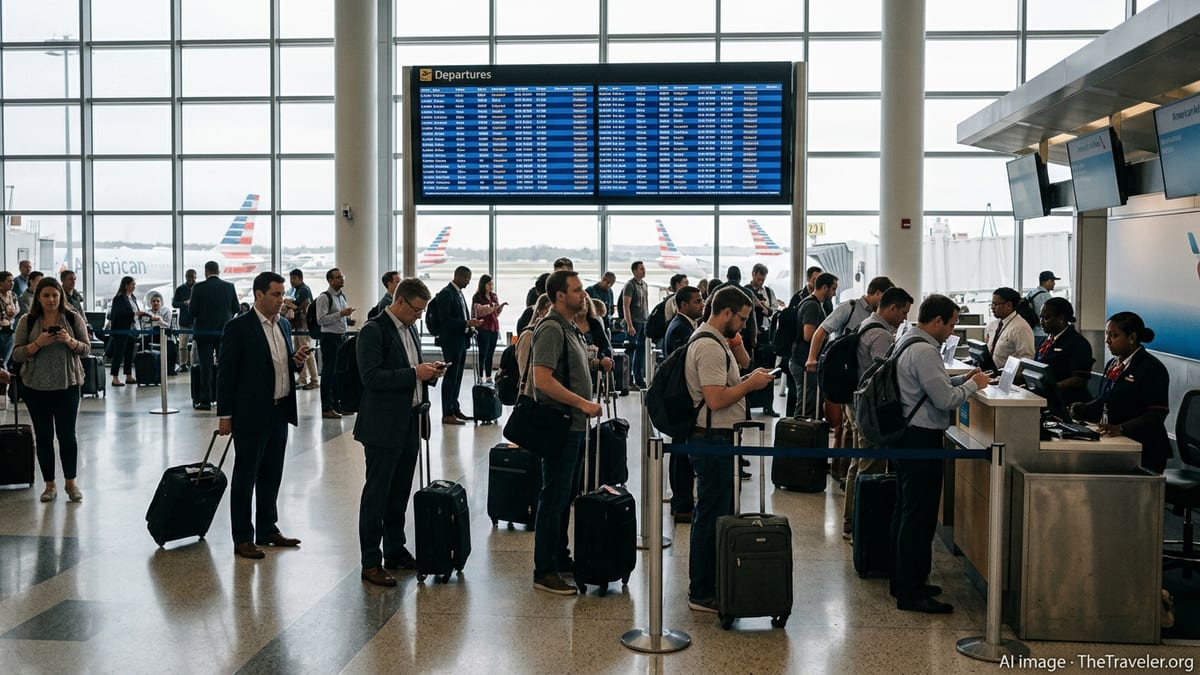
Spike in cancellations at Doha hub amid regional tensions
Operational data compiled from recent days shows that Hamad International Airport has recorded a noticeable number of cancelled flights as airlines respond to evolving airspace restrictions and security concerns in the Gulf region. Airport performance figures for late August and early September indicate that daily cancellations at Doha have ranged from single digits to the mid‑20s, with 24 flights cancelled on September 1 and 14 on September 2, compared with lower levels earlier in the week.
These figures point to several hundred cancelled departures over the past month, reflecting how even a relatively efficient hub can be affected when carriers reroute or trim schedules in response to shifting risk assessments. The same data suggests that, for flights that do operate, average delays at Hamad International remain modest, with departures typically only a few minutes behind schedule, highlighting an effort to keep the overall operation stable despite targeted cancellations.
Travel advisories issued by regional travel management companies describe air travel across parts of the Middle East as affected by “evolving airspace restrictions and occasional flight suspensions,” while noting that airports in Qatar, the United Arab Emirates and neighbouring states remain operational. Passengers are being urged to monitor bookings closely and to review rebooking and refund options where services have been cancelled or temporarily suspended.
Middle East airspace restrictions reshape airline schedules
The increase in cancellations at Doha is unfolding against a backdrop of broader disruption across Middle East airspace, as carriers navigate warnings and temporary restrictions linked to heightened tensions between the United States and Iran. Aviation briefings distributed to airlines in recent days highlight cautionary guidance over parts of the Gulf, including the flight information regions that cover Bahrain, Kuwait, Doha, the Emirates and Muscat, prompting some international airlines to suspend or curtail services to the region.
Published coverage of airline operations into the Gulf reports that several European and North American carriers have extended suspensions on selected Middle East routes or are diverting flights to avoid specific airspace segments. One recent overview of airline activity noted that carriers such as Air Canada, KLM, British Airways and Finnair have adjusted or suspended services on certain routes, contributing to a patchwork of cancellations and altered routings across the region.
These network decisions have a direct impact on hub airports, including Hamad International, which relies on a combination of Qatar Airways’ extensive network and services from foreign airlines. When international carriers suspend specific destinations or avoid particular flight corridors, seats into and out of Doha can be reduced at short notice, affecting transit flows and onward connectivity for passengers using the airport as a connecting gateway.
Doha operations remain largely resilient despite disruptions
Despite the uptick in cancellations, available information from Qatar’s official travel channels and airline updates presents a picture of an airport that remains largely resilient, with overall operations continuing at significant scale. Government portals describing the status of travel in Qatar state that flight operations at Hamad International resumed gradually after earlier disruptions this year and that services are operating through approved safe corridors in coordination with aviation authorities.
Qatar Airways’ own network updates for the current summer season show the carrier operating to more than 160 destinations worldwide through its Doha hub, with additional capacity being deployed on some regional routes such as links to the United Arab Emirates. Industry schedule analyses confirm that, while the airline has trimmed some frequencies and continues to suspend a limited number of destinations, its overall departure volume from Doha remains high, with flight reductions estimated at around 7 percent compared with earlier schedule filings for the coming winter season.
Regional travel advisories emphasise that Hamad International and other major Gulf airports, including hubs in the UAE and Saudi Arabia, are functioning, even as some services are disrupted. This combination of targeted cancellations and ongoing high‑volume operations means that travellers may encounter uneven conditions: some routes are operating near normal levels, while others face last‑minute changes as airlines manage risk and regulatory requirements.
Knock‑on effects across Gulf and Levant airports
The situation in Doha is mirrored, to varying degrees, at other airports across the Gulf and the wider Middle East. Recent reporting on airports in Dubai and Abu Dhabi describes mornings marked by clusters of delayed flights and a smaller number of outright cancellations, particularly on routes linking to Europe, South Asia and neighbouring Middle Eastern capitals. These disruptions have been linked in public coverage to the same regional tensions that are influencing scheduling decisions for services into Doha.
Further north, airports such as Bahrain International and Queen Alia International in Amman have also reported a mix of delays and cancellations on both arrivals and departures, including services operated by local and regional carriers. Some of these cancellations involve flights to and from conflict‑adjacent destinations or routes that traverse sensitive airspace, underlining the interconnected nature of air traffic flows in the region.
Because Hamad International functions as a major connecting hub, cancellations or delays at neighbouring airports can quickly cascade into missed connections or schedule changes for passengers transiting Doha. Travel agencies in the region advise customers to build additional time into their itineraries where possible and to remain flexible about routings, as airlines may rebook travellers via alternative Gulf hubs depending on daily operational considerations.
What passengers through Doha should expect
Publicly available guidance from airlines and travel agencies converges on several practical implications for passengers using Hamad International Airport during this period of heightened disruption. Travellers are strongly encouraged to verify that their flight is operating before going to the airport, using airline websites, mobile applications or direct booking channels. Carriers serving Doha continue to reiterate that schedules are subject to change or cancellation for operational, regulatory or safety reasons.
Where flights have been cancelled, most airlines serving Doha are offering rebooking on alternative dates, rerouting via other hubs, or refunds, in line with their standard disruption policies. Some independent flight‑tracking platforms that consolidate on‑time performance and cancellation data across the Gulf highlight that a proportion of cancelled flights in recent days involve services that could be rerouted rather than fully withdrawn, allowing passengers to be accommodated on different departures.
For now, overall airport data suggests that Hamad International remains a functioning global hub with a temporary spike in cancellations rather than a sustained shutdown. However, given the fluid nature of regional airspace restrictions, travellers planning to transit Doha in the coming days are likely to encounter a higher‑than‑usual risk of last‑minute changes and are being advised to stay closely informed about their itineraries.
https://aerocorner.com/airports/doh/