


More news on this day
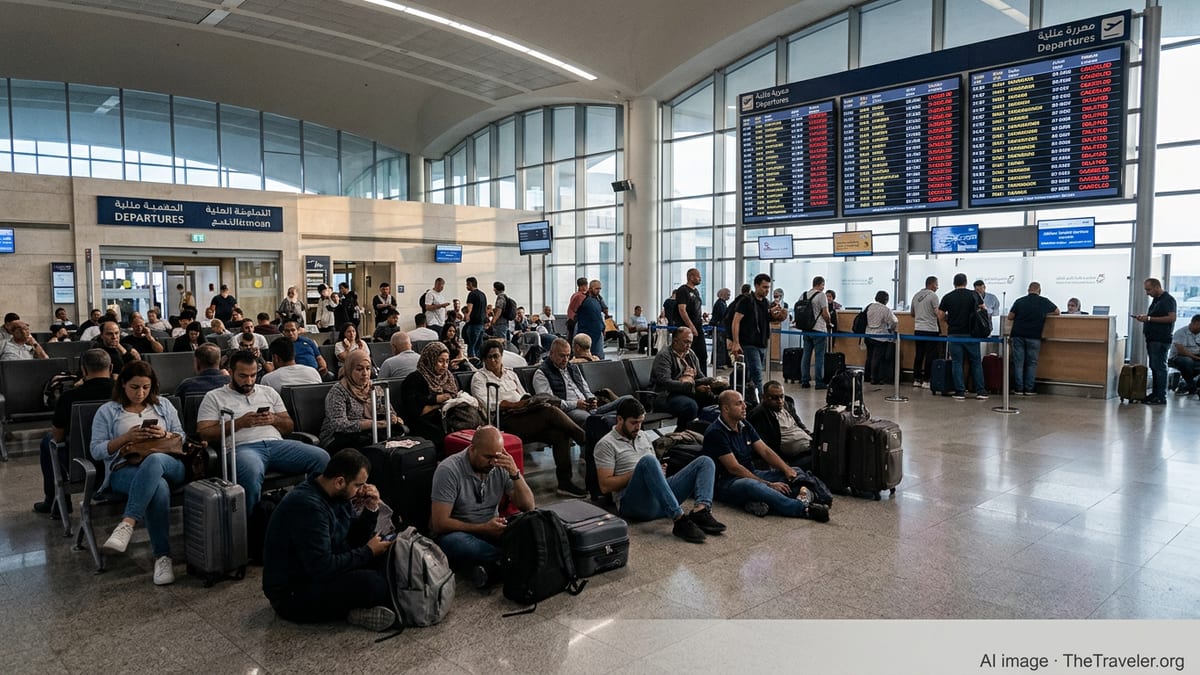
Passengers traveling through Amman’s Queen Alia International Airport on June 7 faced mounting disruption as Royal Jordanian Airlines scrubbed several departures and delayed multiple regional flights linking Jordan with Egypt, Gulf countries and onward long haul routes.
Get the latest news straight to your inbox!
Scrapped Departures and Rolling Delays Hit Regional Network
Flight-status dashboards for Queen Alia International Airport on June 7 showed a patchwork of cancellations and late-running services on Royal Jordanian’s core Middle East network. Publicly available schedules and live trackers indicated that at least three Royal Jordanian departures from Amman were cancelled or not operating as planned, alongside a series of extended delays on routes to neighboring markets.
Among the disruptions, regional services connecting Amman with Saudi Arabian destinations were particularly affected. Data from flight-tracking platforms showed certain rotations to cities such as Medina not operating on June 7, despite appearing as regular services on typical timetables. The Medina route is usually part of a dense schedule of flights between Jordan and Saudi Arabia, supporting business travel, religious visits and family traffic.
Services to other Arab neighbors also showed signs of strain. Airport departure boards and independent flight-status aggregators pointed to late or adjusted Royal Jordanian operations on sectors that are normally high-frequency, including routes to Egypt and the wider Gulf. These flights function as essential short-haul links and as feeders into the airline’s growing long-haul network from Amman.
The pattern of cancellations and delays emerged against a backdrop of heavy traffic at Queen Alia International Airport, which serves as Jordan’s primary international gateway and main hub for Royal Jordanian. The airport routinely handles more than six million passengers a year, according to publicly available airport statistics, giving any operational disruption an outsized impact on regional connectivity.
Key Routes to Egypt, Gulf Hubs and Beyond Affected
The turmoil in Amman’s departures hall carried implications far beyond Jordan’s borders because of the role Queen Alia International Airport plays as a transit hub. Published schedule data shows that Royal Jordanian operates an extensive web of flights from Amman to Cairo, Riyadh, Jeddah, Abu Dhabi, Dubai, Doha and Kuwait City, among other regional cities, with many passengers connecting onward to Europe, North America and Asia.
On June 7, monitoring of live departure and arrival feeds indicated that several of these key spokes were experiencing atypical patterns, ranging from missing frequencies to prolonged ground holds. Flights to Egypt and Saudi Arabia, in particular, appeared vulnerable, with some services operating significantly off their planned timings and others not appearing in the live lists at all despite being part of regular rotations on previous days.
Travelers heading to and from Gulf hubs such as Doha, Abu Dhabi and Dubai also faced uncertainty. An operational note for Amman circulated in recent weeks already highlighted elevated cancellation risk on certain Gulf routes operated by various carriers, including Royal Jordanian, during the current regional situation. On June 7, this vulnerability appeared to materialize for some passengers as delays rippled across departure boards and schedules on Gulf-bound flights tightened.
Because a large share of Royal Jordanian’s passengers at Queen Alia use Amman as a transit point, the immediate impact extended to long-haul journeys. Missed or at-risk connections affected itineraries linking Middle Eastern origins with increasingly prominent destinations such as European capitals and new long-haul routes to North America. Even where long-haul departures remained on schedule, late-arriving feeder flights from Egypt, Saudi Arabia, Qatar, the United Arab Emirates and Kuwait complicated transfer windows.
Passengers Confront Missed Connections and Overnight Disruption
For travelers on the ground in Amman, the operational instability translated into long queues, rebookings and, in some cases, unplanned overnight stays. Publicly available travel advisories and consumer-rights briefings on Royal Jordanian’s performance show that the carrier has historically registered a relatively high share of cancellations among its international flights, making disruption management a recurring concern for passengers.
Transit passengers were among those hardest hit. Many itineraries through Queen Alia are constructed with relatively tight connection times, relying on punctual short-haul arrivals from cities such as Cairo, Jeddah, Riyadh, Dubai and Kuwait City. When those inbound flights arrived late or not at all, passengers risked missing onward departures to destinations further afield, including European hubs and recently launched services to North American cities.
Where flights were cancelled or significantly delayed at short notice, travelers turned to rebooking options through airline apps, contact centers and airport ticket counters. Guidance published by aviation-rights organizations indicates that passengers on late-cancelled flights may be eligible, under certain jurisdictions, for compensation or reimbursement, particularly when departures involve European airports and fall under EU-style consumer protections. However, eligibility typically depends on the specific route, cause of disruption and timing of the cancellation.
In the absence of immediate alternative departures, some passengers were reportedly offered later flights or rerouting via other regional hubs. Given the crowded schedules at Gulf and Levant airports in early June, re-accommodating stranded travelers onto remaining seats posed an additional operational challenge, particularly on peak evening waves when many long-haul flights depart.
Operational Pressures Amid Broader Regional Uncertainty
The June 7 disruptions came at a time when Jordan’s aviation sector is otherwise showing signs of recovery from recent regional shocks. In recent weeks, statements from Jordan’s civil aviation oversight bodies have described a gradual return of traffic volumes at Queen Alia International Airport and a steady rebuilding of international connections after earlier slowdowns linked to regional instability.
Operational updates for airlines serving Amman, circulated by travel and tour operators in recent months, have nonetheless warned of ongoing scheduling volatility. Some advisories highlighted adjustments on certain routes, including services to Iraq, Kuwait, Bahrain and Doha, where demand, security assessments and airspace restrictions have periodically prompted timetable revisions or temporary suspensions.
Against this backdrop, even limited clusters of cancellations or delays can quickly cascade, especially for a hub carrier like Royal Jordanian that relies on carefully timed banks of arriving and departing flights. Weather variations, air-traffic flow restrictions, crew-availability issues or technical checks can all contribute to same-day irregularities, although the precise triggers for the June 7 pattern were not immediately clear from public data.
While regional aviation has adapted to operating in a complex environment, the events at Queen Alia underscore the sensitivity of interconnected schedules across the Middle East. With several carriers funnelling passengers through Amman to destinations in Europe, North America and Asia, localized turbulence in Jordan can ripple outward across multiple networks.
What Travelers Passing Through Amman Should Expect
For travelers with upcoming itineraries via Queen Alia International Airport, the latest disruptions highlight the importance of monitoring flight status closely in the hours before departure. Flight-tracking platforms and live airport boards for Amman provide near-real-time information on cancellations, gate changes and departure delays, helping passengers adjust their plans earlier when irregularities arise.
Consumer guidance on Royal Jordanian’s own policies and general aviation-rights resources recommend that passengers keep confirmations and receipts when disruption occurs, particularly in cases of long delays, missed connections or forced overnight stays. These documents can be important for any later claims related to meals, accommodation or alternative transportation that may be available under applicable regulations or fare rules.
Given the hub nature of Amman, travelers connecting from regional cities such as Cairo, Alexandria, Jeddah, Riyadh, Dammam, Medina, Doha, Abu Dhabi, Dubai and Kuwait City may wish to allow additional buffer time between flights when booking or revising itineraries during periods of heightened volatility. Longer connection windows can reduce the risk of missed onward flights if short-haul legs encounter delays.
The situation on June 7 illustrates how quickly operations at a busy Middle Eastern hub can shift from routine to strained. As summer travel ramps up and regional demand rebounds, airlines and airports across the area, including Queen Alia International Airport and Royal Jordanian, are likely to remain under close scrutiny from travelers who depend on these vital links between the Levant, the Gulf and long-haul destinations worldwide.