


More news on this day
Travelers across the Middle East and on long-haul routes into Europe and Asia are facing a new bout of disruption, as at least 132 flight delays and 28 cancellations ripple through airports in the United Arab Emirates, Bahrain, Qatar, Kuwait and beyond, snarling operations for carriers including Gulf Air, Flydubai, Emirates and IndiGo across hubs such as Dubai, Sharjah, Cairo and Paris.
Get the latest news straight to your inbox!
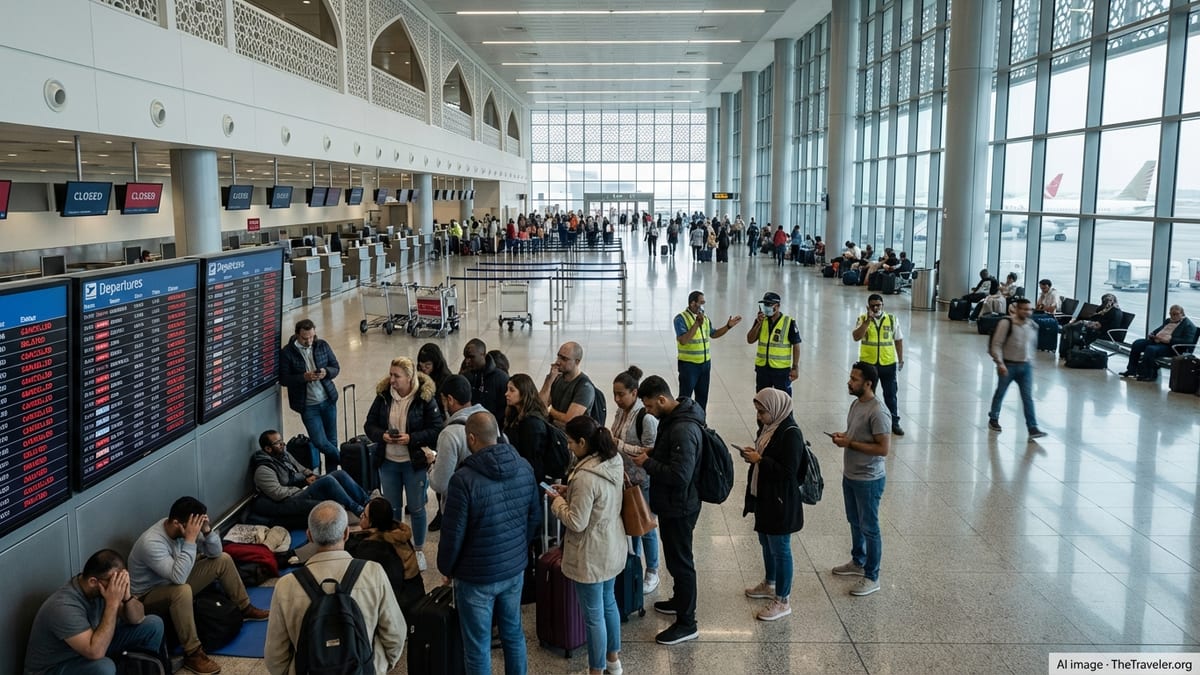
Fresh wave of disruption across Gulf air corridors
Publicly available operational data and recent industry coverage indicate that a new cluster of delays and cancellations has emerged in early June, compounding months of instability across Middle East airspace. The latest figures point to at least 132 flights experiencing lengthy delays and a further 28 being cancelled outright on routes linked to Gulf hubs, affecting both regional and intercontinental services.
Reports describe a patchwork of disruptions that reaches far beyond the Gulf itself. Flights touching major transit points such as Dubai International, Sharjah, Doha, Kuwait City, Manama and Abu Dhabi are being rescheduled, rerouted or scrubbed from departure boards, with knock-on effects for connections to cities including Cairo, Paris, London and a range of South Asian destinations. Carriers such as Emirates, Flydubai, Gulf Air, IndiGo and other regional and European airlines are all referenced in published schedules as facing operational challenges.
The latest turbulence comes on top of wide-ranging airspace restrictions introduced after late February security incidents that led several Middle Eastern states, including the UAE, Bahrain, Qatar and Kuwait, to curtail or temporarily close portions of their skies. Travel analysis pieces note that while some corridors have partially reopened, capacity remains constrained and routing more complex, leaving airlines with little flexibility when fresh operational or security pressures arise.
Aviation trackers and passenger-rights platforms cited in recent coverage highlight that the present wave of disruption is spread across multiple days rather than being confined to a single incident. That pattern suggests a system still struggling to absorb earlier shocks to airspace availability, with schedule recovery efforts frequently undermined by new restrictions, weather factors or aircraft and crew positioning issues.
Kuwait and Dubai emerge as flashpoints
The latest reports identify Kuwait International Airport and Dubai International Airport as two of the most heavily affected hubs in this round of disruption. Coverage focused on Kuwait City indicates that more than a dozen flights were suspended on 7 June, affecting services operated by Flydubai, IndiGo, Gulf Air, Oman Air, Qatar Airways, Emirates and others on routes connecting the Gulf state with destinations in the UAE, Qatar, Saudi Arabia and Egypt.
In Dubai, operational summaries show that the world’s busiest international airport is again contending with a mix of delayed departures, extended holding patterns and day-of-travel cancellations. Emirates and Flydubai are among the carriers most exposed, given their dense regional networks and heavy reliance on tightly timed connections to feed long-haul flights to Europe, North America and Asia. Even modest slippages on inbound services can quickly cascade into missed connections and rolling delays across the network.
Sharjah, home base for Air Arabia and an important secondary hub for Gulf traffic, is also referenced in recent disruption tallies. Combined with constraints in Doha, Abu Dhabi and Bahrain, the pressure on Dubai and Kuwait increases, as passengers and airlines have fewer nearby alternatives when a particular route or time window becomes unviable.
Industry commentary notes that airport operators are largely keeping core infrastructure open and functional, but ground handling resources, security checks and terminal capacity can become strained when large clusters of delayed flights depart in compressed timeframes. This creates crowded gate areas and lengthier queues at transfer and customer service desks, adding to passenger frustration.
Wider regional tensions keep skies unstable
The current travel chaos is rooted in a broader regional crisis that has repeatedly closed or restricted airspace across parts of the Middle East since late February 2026. Publicly accessible notices from civil aviation regulators and international briefings describe how airspace above countries including Iran, Iraq, Israel, Jordan, Kuwait, Bahrain, Qatar and the United Arab Emirates has been subject to rolling limitations in response to security concerns.
Earlier phases of the crisis triggered sweeping schedule cuts for a broad set of airlines, among them Emirates, Etihad, Qatar Airways, Gulf Air and various European and Asian carriers that rely on Gulf hubs for east–west connectivity. Data compiled by aviation analytics firms for late February and early March showed sharply elevated cancellation rates for some Gulf airlines, especially on routes traversing contested air corridors.
While many airlines adjusted by rerouting flights, extending block times and trimming frequencies, such measures carry costs. Longer routings increase fuel burn and crew hours, while thinner schedules reduce flexibility for reaccommodating passengers when flights go awry. Industry analysis indicates that some carriers continue to operate with little spare aircraft or crew capacity, heightening the risk that localised incidents quickly spill over into broader network disruption.
Observers also point out that because many Middle Eastern cities function as transfer hubs rather than solely origin or destination points, any airspace restriction can affect passengers who never intended to enter the region. Travelers flying between Europe and Asia or between North America and Africa frequently pass through Dubai, Doha, Abu Dhabi or other Gulf hubs, meaning that difficulties in the Middle East can rapidly reverberate across multiple continents.
Passengers from Cairo to Paris feel the impact
The geographical spread of the latest disruptions is underscored by schedule data and media coverage referencing affected routes that extend well beyond the Middle East. Services linking Gulf hubs with Cairo have seen adjustments and cancellations, while long-haul flights to major European gateways such as Paris and London have also experienced significant delays.
Carriers like Emirates and Gulf Air, along with low-cost and hybrid operators including Flydubai and IndiGo, are central to these corridors. Their networks stitch together South Asian cities with the Gulf and onward to Europe, so when flights into Dubai, Sharjah, Doha or Bahrain arrive late or are cancelled, onward passengers to Cairo, Paris, Manchester or Frankfurt may find themselves stranded or rebooked on later departures.
Published accounts from affected travelers describe missed business meetings, disrupted family trips and extended layovers. Some passengers departing from secondary airports in South Asia or East Africa report that their flights operated as planned but arrived into Gulf hubs too late for original connections, forcing overnight stays or unplanned detours via alternative European or Asian cities.
Travel analysts note that, unlike during earlier pandemic-related disruptions, airlines in the current crisis are generally attempting to operate as much of their schedule as possible within the constraints of restricted airspace. This often results in complex workarounds, such as flights taking longer, circuitous routes, or operating at off-peak hours to secure available corridors, which can further displace passengers from their original itineraries.
What travelers can do as disruptions continue
Guidance compiled from airline advisories, airport notices and passenger-rights organisations suggests a number of practical steps for those due to travel through the region in the coming days. Travelers are urged to monitor their bookings closely through airline apps and websites, as schedule changes and cancellations may be published at short notice and not always accompanied by immediate direct communication.
Public-facing advisories generally recommend avoiding travel to the airport until a flight is clearly showing as operating, checked in and not subject to active delay notices. Passengers connecting through Gulf hubs are encouraged to allow for generous layover times, as tight connections are particularly vulnerable when departure slots shift or aircraft are rerouted around restricted airspace.
Consumer advocates highlight the importance of keeping detailed records, including booking confirmations, boarding passes, delay notifications and receipts for accommodation or alternative transport. Such documentation can be critical later when seeking refunds, rebookings or, where applicable, financial compensation under local or international passenger-protection rules.
With regional tensions and airspace conditions still fluid, aviation commentators expect further schedule volatility in the short term. For now, travelers planning to transit Dubai, Sharjah, Kuwait, Doha, Bahrain or nearby hubs are being advised to build flexibility into their plans, stay closely informed and be prepared for last-minute changes as airlines across the Middle East continue navigating one of the most challenging operational environments of recent years.