


More news on this day
Air travel across the United Arab Emirates and nearby Gulf hubs faced another day of severe disruption on 14 May 2026, as publicly available aviation data and passenger reports pointed to at least 13 flight cancellations and around 100 delays affecting services operated by Emirates, FlyDubai, Air Arabia, IndiGo and other regional and international carriers through Dubai, Sharjah, Abu Dhabi, Muscat and neighbouring airports.
Get the latest news straight to your inbox!
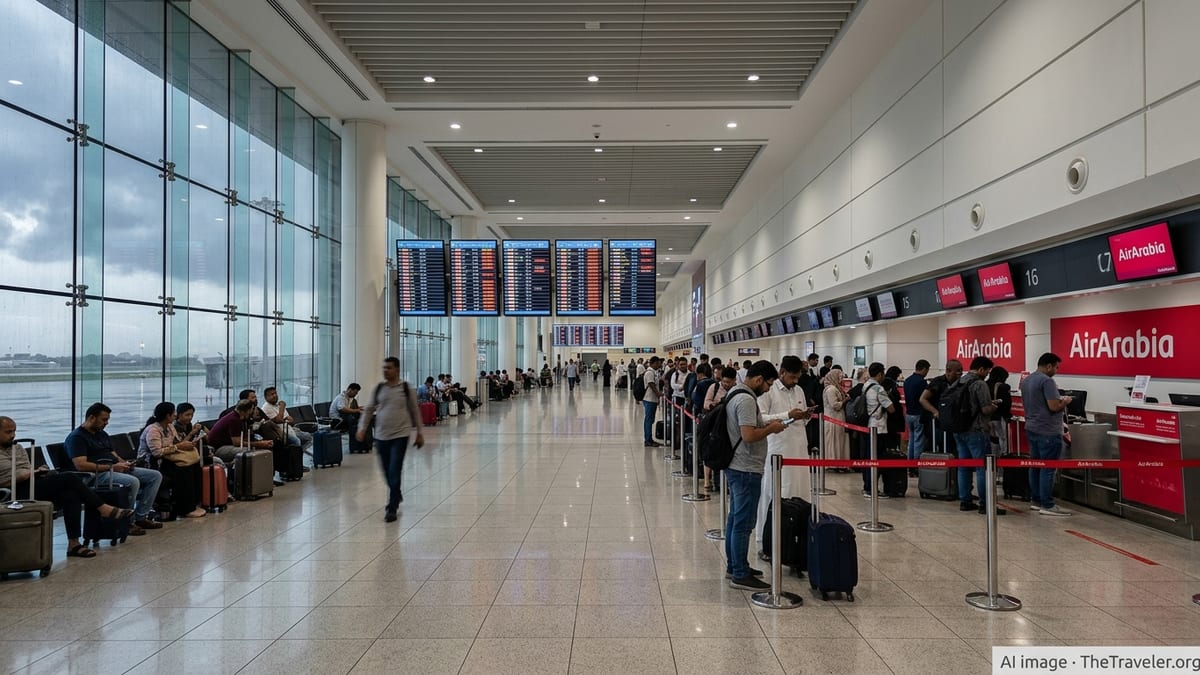
Regional Airspace Constraints Ripple Across UAE Hubs
Industry trackers and published coverage indicate that the latest wave of disruption is closely linked to ongoing regional airspace restrictions that have lingered since large-scale closures earlier this year. Those constraints continue to force airlines to reroute aircraft, accept longer flight times and operate with narrower recovery margins when schedules slip.
Dubai International Airport and Sharjah International Airport have been among the hardest hit, with one recent analysis of 14 May operations citing 128 affected flights, including 15 outright cancellations and more than 100 delayed departures or arrivals. Comparable, though smaller, knock-on effects were registered at Abu Dhabi International Airport and in nearby Muscat, where altered routings and holding patterns added further strain to already busy timetables.
While the total number of cancellations directly tied to the latest disruption cycle is relatively modest compared with the peak of the regional crisis, the concentration of delays has intensified the impact on passengers. Even short hold-ups at major hubs such as Dubai can cascade into missed connections across Asia, Europe and Africa, complicating recovery efforts for airlines already operating reduced or restructured schedules.
Operational data suggests that these constraints have become a rolling challenge rather than an isolated event, with several days in April and May showing elevated levels of disruption across Middle East and Asian airspace, and UAE hubs consistently featuring among the most affected.
Emirates, FlyDubai and Air Arabia Struggle to Stabilise Schedules
Flag carrier Emirates, Dubai-based low-cost airline FlyDubai and Sharjah-headquartered Air Arabia remain central to the unfolding picture. Publicly available information from flight-status platforms shows that select Emirates departures from Dubai on 13 and 14 May were either cancelled or subject to substantial departure delays, affecting routes to destinations such as Budapest, Mumbai and key European cities.
FlyDubai has recorded its own pockets of disruption, with passengers sharing confirmation of cancelled flights around mid-May and limited same-day rebooking options on popular regional routes. Air Arabia, which connects Sharjah and Abu Dhabi with a wide network across South Asia, the Middle East and North Africa, has also been adjusting schedules in response to changing airspace availability, with some customers reporting schedule changes and cancellations for departures in the first half of May.
Aviation analysts note that the three UAE-based carriers are still operating below their pre-crisis capacity on several corridors, even as they work to restore connectivity. Reduced slack in the system means that aircraft or crew displaced by a single delay can create a chain reaction across multiple flights, turning what might once have been a minor operational issue into a full-day disruption for some passengers.
Despite these challenges, capacity restoration continues. Emirates has recently highlighted that it has reactivated the vast majority of its global network from Dubai, but it is doing so in an environment where short-notice airspace changes and congestion at alternative routings can quickly erode punctuality gains.
IndiGo and Other Asian Carriers Caught in the Crossfire
The disruption is not confined to Gulf-based airlines. Data compiled by delay-compensation specialists for 13 May points to nearly 450 cancellations and close to 3,000 delays across Asia, spanning India, China, Japan, the United Arab Emirates, Malaysia, Thailand and Saudi Arabia. IndiGo, India’s largest carrier by market share, appears prominently among the affected airlines, alongside carriers such as Air India, AirAsia, China Eastern Airlines and Japan Airlines.
IndiGo has already spent much of the past year managing its own operational headwinds, including crew scheduling changes and previous bouts of airspace disruption on westbound routes to the Gulf. Recent investor and industry briefings suggest that, even as the carrier steadies its domestic operation, international services to markets such as the UAE, Saudi Arabia, Oman and Kuwait remain vulnerable to sudden airspace changes that can make carefully calibrated schedules untenable.
For passengers, this means that flights linking Indian cities with UAE hubs such as Dubai, Sharjah and Abu Dhabi, and onward connections to Muscat, may be disproportionately exposed when regional airspace conditions tighten. Even when services operate, re-routed flight paths can extend travel times significantly, creating pressure on onward connections and increasing the risk of missed flights further down the itinerary.
Other Asian and Middle Eastern airlines transiting UAE and Gulf airspace have reported similar operational pressures, with some choosing to pre-emptively trim schedules or consolidate services rather than risk last-minute cancellations that can prove costly from both an operational and customer-relations perspective.
Knock-on Effects in Muscat and Wider Gulf Network
While the UAE’s major airports have absorbed much of the attention, neighbouring hubs are also feeling the strain. Publicly available timetable and disruption data for Muscat International Airport shows that services linking Oman to Dubai, Abu Dhabi and other Gulf cities have faced intermittent delays and sporadic cancellations in recent weeks as carriers adapt flight paths and aircraft rotations.
Further afield, airlines serving Gulf destinations from Europe have been reshaping their plans. One recent update from a European airline group confirmed that its planned relaunch of Dubai services has been postponed to later in 2026, with associated flights to Abu Dhabi, Riyadh, Beirut and Muscat also remaining off the schedule through the height of the summer season. That strategic decision concentrates more demand onto surviving UAE-bound routes operated by Middle Eastern and Asian carriers, potentially exacerbating load factors and limiting rebooking options during disruption events.
Capacity constraints across the broader Gulf network, combined with sporadic airspace closures or restrictions, mean that what might once have been a straightforward same-day reroute via another regional hub is now far from guaranteed. Travellers whose flights are cancelled or severely delayed out of Dubai or Sharjah may find that nearby options via Muscat or other Gulf gateways are already heavily booked or operating on skeleton schedules.
These pressures highlight how interconnected the region’s aviation system has become. Adjustments made for safety and security reasons in one section of airspace can quickly echo through multiple hubs, especially at peak periods when airports operate near their maximum hourly throughput.
What Passengers Are Experiencing and How to Respond
Reports from passengers across social platforms and consumer-rights sites describe a patchwork of experiences. Some travellers report relatively smooth journeys through Dubai and Sharjah, with only minor delays and normal transit connections, while others recount same-day cancellations on FlyDubai, schedule changes on Air Arabia and IndiGo, and multi-hour delays on long-haul Emirates services.
Consumer-rights organisations monitoring the situation advise that travellers check their flight status frequently in the 24 to 48 hours before departure, using official airline apps or airport information feeds. Given the ongoing potential for last-minute airspace adjustments, even flights that appear confirmed several days out can still be rescheduled or cancelled close to departure.
Passengers are also being reminded to review the conditions of carriage and any applicable consumer-protection frameworks covering their journey. Depending on the origin, destination and operating carrier, travellers impacted by significant delays or cancellations may be entitled to re-routing, refunds, or in some cases financial compensation and assistance at the airport. The exact entitlements vary by jurisdiction and the cause of the disruption.
With regional airspace conditions still described as fluid, industry observers suggest that travellers build extra flexibility into plans involving Dubai, Sharjah, Abu Dhabi, Muscat and other connected hubs over the coming weeks. Allowing longer connection times, considering overnight stops where feasible, and keeping alternative routings in mind can help mitigate the impact if schedules shift again at short notice.