


More news on this day
An IndiGo flight operating from Ranchi to Delhi as 6E6274 diverted to Jaipur for an emergency landing following an in-flight incident, according to early reports from Indian aviation trackers and local media, leaving passengers facing hours of disruption and prompting fresh questions over how such diversions are managed across India’s busy domestic network.
Get the latest news straight to your inbox!
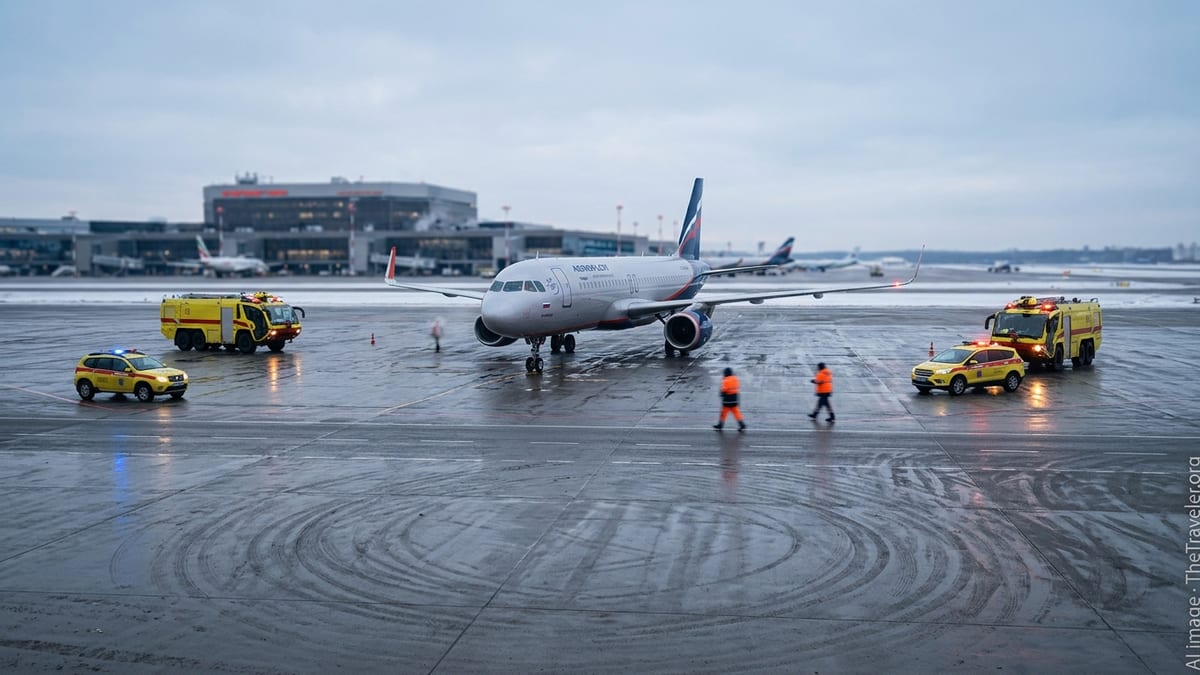
Emergency Diversion From Planned Ranchi–Delhi Route
Flight tracking data and initial media summaries indicate that IndiGo flight 6E6274, scheduled to operate from Ranchi’s Birsa Munda Airport to Delhi’s Indira Gandhi International Airport, was diverted from its planned route and instructed to land in Jaipur after an incident was reported on board. The aircraft was partway through the evening sector when the crew reportedly requested priority handling and accepted diversion away from Delhi.
Publicly available information shows that the flight was operating as a routine domestic service linking the Jharkhand capital with the national capital, a route that has seen sustained demand from business and leisure travelers. The diversion to Jaipur, located roughly midway between many key north Indian city pairs, is consistent with established contingency practices that use alternative airports capable of handling large passenger jets, including those in the IndiGo fleet.
Details of the precise nature of the in-flight incident remained limited at the time of writing, with reports focusing primarily on the fact of the diversion and the emergency landing rather than on the underlying cause. Early coverage has concentrated on the operational impact on passengers and the broader pattern of recent unscheduled landings involving Indian carriers.
Initial indications point to a controlled, precautionary landing in Jaipur, with no immediate reports of injuries. The absence of confirmed medical emergencies or visible aircraft damage in early accounts has led observers to describe the event as a serious operational disruption but not a major accident.
Passenger Experience and On-Ground Disruption
According to social media posts and local reporting, passengers experienced significant delays on the ground in Jaipur as the airline and airport teams worked through post-landing checks and onward arrangements. Some travelers described a lack of clear, timely information, reflecting broader frustrations that have surfaced after other Indian domestic flights were diverted or held for extended periods on remote stands.
Recent episodes involving diversions to Jaipur and other alternates have frequently led to passengers remaining seated in aircraft for long stretches, sometimes with limited access to refreshments while ground handling plans are revised. Publicly available accounts from earlier cases involving diverted Delhi-bound flights suggest that communication lapses and uncertainty over connecting journeys can compound the stress of an already unsettling mid-air incident.
In the case of flight 6E6274, reports so far have focused on the immediate safety outcome and the logistics of moving travelers onward to Delhi, either by a replacement aircraft or by re-accommodation on later flights. The experience for many on board appeared to shift quickly from initial anxiety over the incident itself to concern about missed connections, late-night arrivals, and accommodation arrangements in the event of extended delays.
Consumer advocates have repeatedly pointed to such scenarios as evidence that contingency planning around diversions in India, particularly at busy hubs and alternates, must go beyond technical safety procedures to include clearer passenger care protocols, including regular announcements, water and meal provision, and swift rebooking options.
Pattern of Recent IndiGo Safety and Diversion Incidents
The diversion of 6E6274 comes against a backdrop of several IndiGo flights in recent months and years that have made precautionary or emergency landings due to technical snags, bomb threats, or weather-related issues. Publicly documented cases include Delhi–Goa services diverted after engine problems, as well as flights that returned to origin airports following mid-air warnings and cockpit alerts.
Published coverage and regulatory records show that such events are not unique to IndiGo and form part of a broader pattern across India’s rapidly expanding aviation market, where high utilization of aircraft, challenging weather, and congested airspace all increase the likelihood of in-flight anomalies and unscheduled diversions. Analysts frequently note that, from a safety standpoint, precautionary landings after cockpit alerts are an expected and desirable outcome of modern safety systems.
Nonetheless, the growing list of diversions and emergency declarations associated with major low-cost carriers has drawn heightened public attention, especially when passengers describe intense cabin experiences such as smoke, unusual vibrations, or sudden changes in flight path. When such events coincide with viral social media posts, the perception of airline reliability can be affected even if regulators ultimately classify the incidents as minor or routine within aviation safety frameworks.
Industry observers suggest that IndiGo and its peers face a dual challenge: maintaining strong technical safety performance while also demonstrating through visible actions that passengers are cared for comprehensively when flights do not go as planned, whether because of an engine alert, weather closure, or in-flight medical episode.
Operational Protocols and the Role of Alternate Airports
Jaipur has increasingly appeared in diversion reports involving Delhi-bound traffic, reflecting its role as a key alternate airport when weather, congestion, or an in-flight technical issue makes an immediate arrival in the capital less desirable. Its runway length, available rescue and fire-fighting capability, and proximity to Delhi make it a logical option for a diverted aircraft such as IndiGo’s 6E6274.
Aviation guidelines require crews to plan alternates and to divert promptly when conditions, technical readings, or onboard incidents warrant a change of destination. Safety specialists often emphasize that declaring an emergency or accepting priority handling into an alternate field does not imply that an aircraft is on the verge of catastrophe, but rather that the crew is choosing the most conservative and controlled course of action.
In India’s northern airspace, those protocols frequently lead aircraft away from Delhi during thunderstorms, visibility drops, or surges in traffic that coincide with peak bank times. When combined with technical alerts that might limit an aircraft’s ability to hold or perform multiple approaches, a diversion to Jaipur or another suitable airport becomes the preferred scenario.
The handling of 6E6274 appears consistent with this approach, with the aircraft landing at a field capable of supporting emergency services and technical checks before any decision is made on further flight operations. For passengers, however, the operational logic is often overshadowed by the discomfort of an unplanned stop and the uncertainty around reaching their original destination on time.
What Travelers Can Expect After an Emergency Landing
Travel industry guidance suggests that passengers involved in diversions or emergency landings should prepare for extended time on board and at the alternate airport as crews complete safety inspections and formalities. Airlines typically prioritize aircraft checks and regulatory reporting before committing to onward transport timelines, which can mean that rebooking and hotel arrangements take time to finalize.
For those on IndiGo flight 6E6274, publicly available information indicates that the immediate priority was to confirm the safety of the aircraft and all occupants at Jaipur, followed by decisions on whether a replacement aircraft or a rescheduled departure would take travelers to Delhi. Past examples from similar incidents show that outcomes can range from same-night continuation of the journey to overnight stays followed by re-accommodation on multiple later flights.
Experts often advise passengers to document timings, boarding passes, and any out-of-pocket expenses when involved in such events, both for potential claims and to have a clear record of the disruption. While India’s compensation rules for domestic flights differ from those in some other aviation markets, carriers operating at scale in the country increasingly face scrutiny over how they handle irregular operations and communicate with affected customers.
As more details emerge about the exact circumstances of the in-flight incident that led IndiGo flight 6E6274 to divert from Ranchi–Delhi to Jaipur, attention is likely to focus not only on the technical cause but also on how effectively passengers were supported from the moment the aircraft touched down at the alternate airport.