


More news on this day
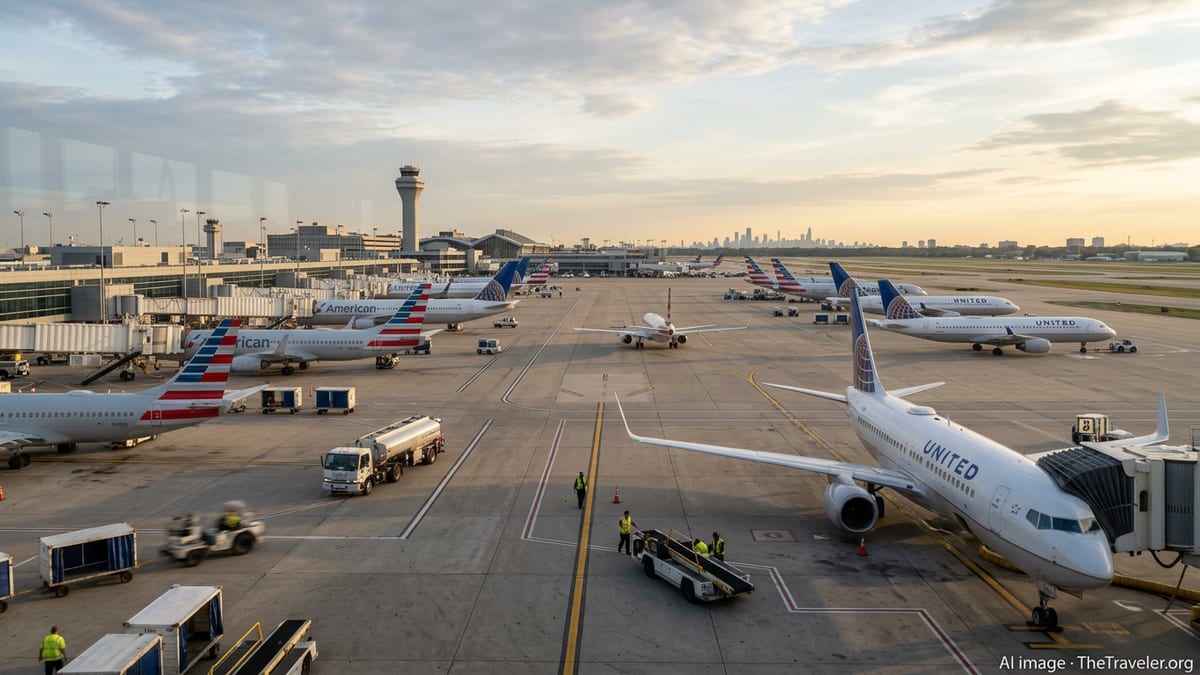
Travelers at Chicago O’Hare International Airport faced another turbulent day on Thursday, as publicly available tracking data showed about 539 delayed flights and at least five cancellations disrupting departures on SkyWest, American, United and Delta to New York, Dallas, London, Tokyo and other major destinations.
Get the latest news straight to your inbox!
Delays Mount at One of the Nation’s Busiest Hubs
Chicago O’Hare, already among the most congested airports in the United States by flight volume, saw delays build through the morning of May 14. Aggregated flight status dashboards drawing on Federal Aviation Administration data showed Chicago classified as “on time” overall, but individual carriers and routes told a more difficult story for passengers trying to leave or connect through the hub.
Airport schedule trackers indicated that more than 1,300 arrivals were expected at O’Hare on Thursday, alongside a comparable number of departures. Within that heavy schedule, around 539 flights were reported late at some point in the day, with a smaller number ultimately canceled. The bulk of the disruption clustered around peak morning and early afternoon departure banks, when aircraft and crew rotations are especially sensitive to small operational setbacks.
Recent federal briefings have highlighted the pressure on O’Hare’s infrastructure ahead of the peak summer season, noting that planned peak-day operations for 2026 are nearly 15 percent higher than last year. Those increases mean modest slowdowns at one airline or on one runway can quickly cascade into missed connections and rolling delays for travelers heading across the country or onward to international gateways.
Ripple Effects for Major Airlines and Regional Partner SkyWest
The brunt of Thursday’s disruption at O’Hare fell on four major brands: American Airlines, United Airlines, Delta Air Lines and regional operator SkyWest, which flies many feeder routes under major airline codes. Publicly accessible tracking pages showed delayed departures scattered across each carrier’s schedules, particularly on short-haul and regional hops that feed into larger domestic and international networks.
SkyWest flights operating on behalf of United and other partners appeared among those experiencing schedule slippage, affecting travelers on smaller regional jets into Midwestern and East Coast cities. Because these flights often carry passengers connecting to long-haul services, even minor late departures amplified stress for those trying to reach later transcontinental and overseas departures.
United and American, the two dominant carriers at O’Hare, managed to keep most flights operating but with notable lateness on busy routes to the East and West Coasts. Delta, which maintains a smaller presence at O’Hare compared with its operations at other hubs, also reported scattered delays, adding to the sense of uncertainty for passengers who had planned tight connections at destination airports.
Key Routes Hit, From New York and Dallas to London and Tokyo
While O’Hare’s overall status remained technically open and operational, the delays translated into concrete disruption on marquee routes. Flight-tracking services showed slower-than-usual departures to New York area airports, including LaGuardia and JFK, where separate weather and traffic issues were creating their own departure and arrival constraints. Travelers bound for New York from Chicago encountered departure slowdowns that stacked onto conditions already affecting Northeast airspace.
Flights to Dallas and other major domestic hubs also encountered schedule pressure. With Dallas–Fort Worth and other central U.S. airports serving as key redistribution points for domestic and Latin American traffic, any tardy departures from Chicago risked missed onward flights, forcing some passengers to be rebooked later in the day.
Long-haul services to London and Tokyo faced a narrower margin for delay, given tighter night curfews and airport slot controls at many international destinations. Although most of O’Hare’s transatlantic and transpacific departures continued to operate, slower boarding, aircraft turns and upstream aircraft arrivals contributed to delayed pushbacks. For travelers, that meant later-than-planned arrivals in European and Asian cities, with knock-on effects for rail transfers, regional flights and hotel check-in times.
Weather, Volume and System Strain Combine
Publicly available information on Thursday pointed to a combination of factors behind the disruptions rather than a single, easily identified cause. National delay dashboards showed weather-related constraints at several major coastal airports, including San Francisco and Boston, alongside moderate departure delays linked to wind at New York’s LaGuardia. Those conditions required air traffic managers to meter flows into crowded airspace, affecting flights departing from Chicago and other inland hubs.
At O’Hare itself, operations were technically categorized as “on time,” suggesting that runway availability and local weather remained within normal limits. Even so, the airport’s heavy traffic volume left little flexibility once upstream delays began to build. Industry data and recent transportation briefings have underscored that O’Hare is planning more than 3,000 flights on peak summer days in 2026, a level of activity that can magnify otherwise modest operational hiccups.
Carriers have also been adjusting schedules in anticipation of federal measures aimed at reducing chronic congestion at O’Hare later this summer. While those capacity limits are not yet in effect, reports on the upcoming changes highlight longer-term concerns about crew availability, air traffic staffing and the resilience of airline networks facing storms, technology issues or temporary ground stops in other regions.
What Travelers Experienced and How to Navigate Disruptions
For passengers on the ground in Chicago, Thursday’s numbers translated into long lines, tense waits at departure gates and a scramble to rebook missed connections. Public-facing flight boards and app notifications showed departure times sliding back in increments, which can be especially frustrating for travelers tracking tight international links or important events at their destination.
Travel information providers emphasized the importance of relying on live status updates from airlines and airports rather than printed itineraries, as same-day schedule shifts can be frequent when large hubs are under strain. In this environment, passengers connecting through O’Hare to New York, Dallas, London, Tokyo or other distant cities faced strong incentives to seek earlier flights, accept reroutes through alternative hubs or build in longer connection times where possible.
With the busy summer period approaching and federal capacity limits at O’Hare scheduled to begin later in May, analysts expect days like Thursday to shape traveler behavior. Flexible itineraries, carry-on luggage where possible and readiness to adjust plans at short notice remain key strategies for minimizing the personal impact of delay statistics that, at scale, now represent hundreds of disrupted journeys every few hours at one of America’s most important gateways.