


More news on this day
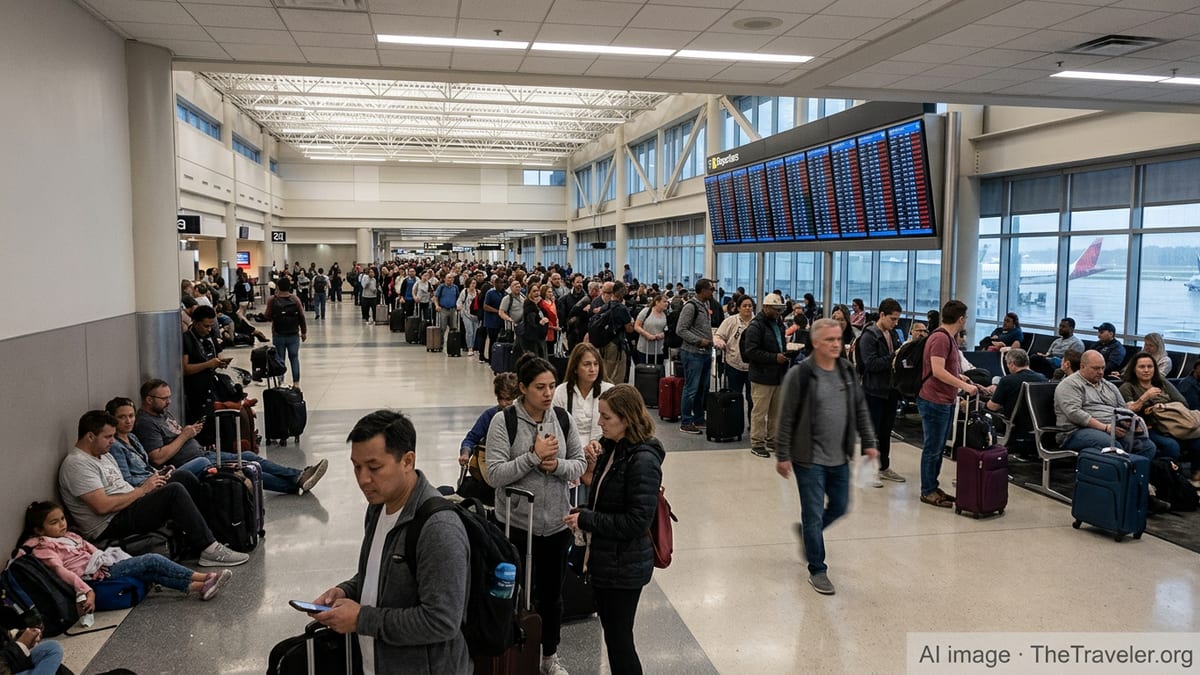
Hundreds of travelers were left scrambling for alternatives after severe storms over Atlanta triggered 26 flight cancellations and 214 delays at Hartsfield-Jackson Atlanta International Airport, rippling across major hubs in the United States and long haul routes to Europe, South America and Asia.
Get the latest news straight to your inbox!
Storms Over Atlanta Ignite a New Wave of Disruption
Publicly available aviation data for June 13 and June 14, 2026, indicate that intense thunderstorms over Georgia again turned Hartsfield-Jackson Atlanta into a chokepoint for domestic and international air travel. Tracking sites and aviation blogs report that at least 26 flights were cancelled outright while more than 200 others departed late, many by over an hour.
Reports describe a familiar pattern for frequent travelers through Atlanta. When storms force temporary ground stops or slowdowns, aircraft and crews are left out of position, gates fill quickly and turnaround times lengthen. Even brief periods of lightning in the area can halt ramp operations, which in turn produces long queues of aircraft waiting to depart and a cascade of missed connections.
Hartsfield-Jackson is the primary hub for Delta Air Lines and a key base for carriers such as Southwest and JetBlue, as well as an important station for long haul operators including Etihad Airways. Industry statistics show that the airport regularly handles hundreds of daily movements for these airlines, meaning that any operational slowdown almost immediately spreads beyond Atlanta itself.
On this latest storm affected weekend, that concentration magnified the effect of the weather. Disruption figures compiled by aviation tracking services show that Delta, Southwest, JetBlue and Etihad all experienced multiple delayed or cancelled services touching Atlanta, in some cases affecting aircraft that were scheduled to continue on to other continents.
US Hubs From Chicago to Orlando Feel the Impact
Because Atlanta acts as a central transfer point for much of the US domestic network, the impact of the 26 cancellations and 214 delays was quickly felt at other major hubs. Flight status boards at Chicago, Dallas and Orlando showed tightening departure banks, rolling delays and occasional gate changes as aircraft arriving late from Atlanta forced schedule adjustments.
According to airline timetable and tracking information, a single delayed departure from Hartsfield-Jackson can disrupt multiple onward legs. A late arriving Delta or Southwest aircraft from Atlanta, for example, may be scheduled to operate a midday service from Chicago or Dallas, pushing that flight back and constricting connection windows for passengers continuing on to smaller cities.
In Orlando, a popular leisure gateway, the timing proved particularly difficult for families traveling at the start of the summer season. Aviation focused outlets reported that several services from Atlanta to central Florida departed significantly behind schedule, leading to long lines at customer service desks as passengers attempted to rebook missed connections or secure hotel vouchers.
While airlines use spare aircraft and crew reserves to absorb some of this disruption, analysts note that staffing and fleet utilization remain tight across the industry in 2026. When a hub like Atlanta is hit by storms late in the week, recovery can take several days and may extend well into Sunday, especially at downstream airports that rely heavily on feed from Hartsfield-Jackson.
International Routes to Argentina, Europe and Japan Also Hit
The knock on effects were not limited to North American destinations. Route data and flight monitoring services show that long haul operations linking Atlanta with Argentina, Italy, Switzerland, Germany and Japan also encountered extended delays and schedule shuffles.
Widebody flights require coordinated crew pairings, aircraft rotations and dedicated gate space. When earlier domestic segments arrive late or are cancelled, the aircraft meant to operate overnight or transoceanic services may be unavailable at the scheduled departure time. In some cases, carriers are forced to consolidate flights, substitute different aircraft types or reroute passengers through alternative hubs.
Several aviation blogs noted that certain international departures from Atlanta, including services to Buenos Aires, Rome, Zurich, Frankfurt and Tokyo, appeared with significant delays on public tracking boards during the latest storm episode. Some flights departed hours behind schedule, while others were cancelled with passengers rebooked through cities such as New York, Miami or Houston.
Travel industry commentators point out that international travelers are particularly vulnerable when hub operations falter. Passengers flying from secondary US cities to Atlanta, then onward to Europe, South America or Asia, may face both a disrupted domestic feeder flight and a misaligned long haul segment, leading to extended layovers or overnight stays far from their planned destination.
Delta, Southwest, JetBlue and Etihad Confront Network Strain
The latest figures illustrate how operational stress can spread across multiple airlines sharing a dominant hub. Publicly available performance snapshots show Delta recording the highest number of delays and cancellations at Atlanta, in line with its position as the largest carrier at the airport. Southwest and JetBlue, which also run busy point to point and connecting operations through Atlanta, registered elevated delay rates as aircraft and crews became entangled in the weather related bottleneck.
Etihad and other international carriers serving Hartsfield-Jackson faced a different challenge. Their long haul schedules usually involve a small number of daily departures, making each flight particularly important for network connectivity. Disruption to a single Atlanta rotation can affect passenger itineraries across multiple regions, from the United States to Europe, the Middle East and Asia.
Aviation analysts quoted in trade publications have repeatedly highlighted the vulnerability of tightly timed hub banks to localized weather. Even when storms are relatively short lived, the combination of saturated schedules, high passenger loads and constrained runway and gate capacity can push airlines into a reactive posture, juggling aircraft assignments and reworking crew schedules late into the night.
Recent industry data also suggest that carriers have less spare capacity to deploy than before the pandemic era. Aircraft utilization at major US airlines remains high, while training pipelines and crew bases continue to adjust to new demand patterns. The result is that a day of storm driven disruption at a mega hub such as Atlanta can still resonate across the network for several cycles.
Travelers Warned to Expect Continued Summer Volatility
With the North American summer travel season beginning in earnest, airline performance specialists caution that similar incidents are likely in the coming weeks. Meteorological outlooks point to a period of frequent afternoon thunderstorms across the southeastern United States, a pattern that historically brings repeated interruptions to operations at Atlanta and other large hubs.
Passenger advocacy groups and travel industry publications advise travelers with itineraries touching Hartsfield-Jackson to monitor their flight status closely on the day of travel, pay attention to connection times at secondary hubs such as Chicago, Dallas and Orlando, and consider earlier departures when making tight international connections to destinations in Argentina, Italy, Switzerland, Germany and Japan.
Some analysts also suggest that airlines may adjust schedules or add slack to certain critical routes as the season progresses, particularly on long haul services that rely on consistent feed from domestic networks. For now, the latest round of 26 cancellations and 214 delays in Atlanta serves as another reminder of how quickly a localized weather system can spread disruption across multiple airlines and continents.