


More news on this day
Hundreds of travelers across the United States faced disrupted plans today as major carriers including United Airlines, Alaska Airlines, Delta Air Lines, Southwest Airlines and others canceled 44 flights and delayed 1,426 more across a swath of airports from the Carolinas and New York to Chicago, Anchorage and Los Angeles, according to multiple flight tracking and aviation data services.
Get the latest news straight to your inbox!
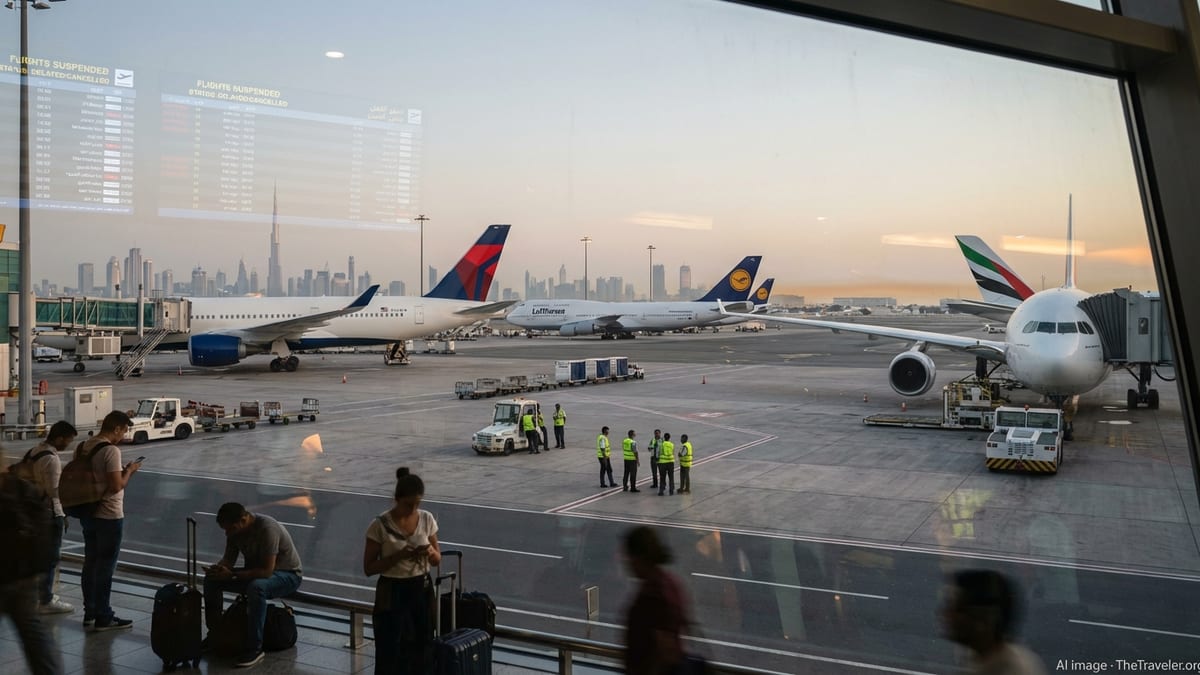
Nationwide Ripple Effect From a Concentrated Day of Disruption
Publicly available flight status dashboards show that while the absolute number of cancellations remained relatively limited, the volume of delays created a difficult travel day at many of the country’s busiest hubs. A total of 44 cancellations left passengers scrambling for rebooking, while more than 1,400 delayed departures and arrivals caused tight connections to evaporate and evening schedules to stretch late into the night.
Reports indicate that the disruptions were spread across a range of major airlines, with United, Alaska, Delta and Southwest among those recording affected services. The pattern reflects broader trends identified in recent federal Air Travel Consumer Reports, which show that even on days with relatively few cancellations, operational pressures can still generate a high number of delayed flights for large network carriers.
Travel analysts note that for passengers, the distinction between a cancellation and an extended delay can be academic. Delays of an hour or more can trigger missed connections, overnight stays and lost vacation time, particularly at complex hub airports where tight turnaround times and high volumes amplify the impact of any initial disruption.
The imbalance between limited cancellations and extensive delays also highlights how airlines increasingly try to keep aircraft and crews moving, even if behind schedule, rather than removing flights from the timetable. This approach can reduce headline cancellation figures but may still deliver a challenging experience for travelers on the ground.
Key Hubs See Pressure in the Carolinas, New York and Chicago
Data from flight tracking platforms shows that several East Coast and Midwest hubs shouldered much of today’s strain. Airports in the Carolinas, including major facilities serving Charlotte and Raleigh, saw clusters of delayed departures and arrivals as morning irregularities rippled into the afternoon schedule.
In the Northeast, the dense New York airspace once again proved vulnerable to knock-on effects. Combined operations at John F. Kennedy International, LaGuardia and Newark Liberty experienced waves of late flights, a familiar pattern on high volume days when any weather, air traffic management program or ground congestion can push services behind schedule.
Chicago, a critical connecting point for both United and other domestic carriers, also appeared among the airports with heightened disruption. Historical federal statistics show that large hub airports such as Chicago O’Hare frequently record significant shares of delays linked to national aviation system factors like air traffic volume and runway capacity, and today’s numbers suggest that similar dynamics were at play.
For travelers relying on these hubs as connection points, even slight delays on inbound legs can translate into missed onward flights. Reaccommodation can be particularly complex when multiple airlines are experiencing pressure at the same time, narrowing the pool of available seats later in the day.
Coast-to-Coast Impact From Anchorage to Los Angeles
The wave of disruption was not confined to the East and Midwest. Publicly accessible boards and aviation trackers show delays stretching to major West Coast airports, including Los Angeles and Seattle, with knock-on effects felt as far as Anchorage. Alaska Airlines, which runs a large operation in the state of Alaska and along the Pacific Coast, was among the carriers registering altered schedules.
At Los Angeles International Airport, one of the country’s busiest gateways, delayed arrivals and departures affected a mix of cross country and regional routes operated by Delta, United, Southwest and other airlines. Large coastal hubs often act as the final link in multi segment itineraries, meaning travelers arriving late into Los Angeles may find limited same day alternatives onward to smaller Western cities.
Anchorage, an important node in Alaska’s passenger and cargo network, also saw flights pushed off their scheduled times. Even modest timing shifts in and out of the state can significantly disrupt connections given the relatively low frequency of some routes compared with the dense schedules at lower 48 hubs.
The coast to coast footprint of today’s disruptions underscores how tightly interconnected airline networks are. A delay on a morning departure from the West Coast can cascade through multiple round trips, eventually affecting evening flights returning to entirely different regions.
Major Carriers Confront Persistent Reliability Challenges
While today’s tally of 44 cancellations is modest compared with major storm events or system outages, the 1,426 delays are part of a wider pattern that has drawn close scrutiny from travelers, regulators and airline investors alike. Recent federal consumer reports show that large carriers such as United, Delta, Alaska and Southwest routinely operate with on time performance in the upper 70 to low 80 percent range over full months, leaving a significant minority of flights subject to some level of delay.
Breakdowns of delay causes in government data highlight a mix of factors behind schedule disruptions, including air carrier issues such as maintenance and crew availability, national aviation system constraints such as congestion and air traffic control programs, late arriving aircraft and episodes of extreme weather. On any individual day, those elements can combine differently across an airline’s network, generating the kind of uneven but widespread delays seen today.
For the airlines, managing such disruptions involves complex trade offs between keeping aircraft in position, maintaining crew duty time limits and protecting the most critical segments of the schedule. Publicly available operational statistics show that carriers have invested heavily in technology and planning tools to anticipate bottlenecks, yet the sheer scale of daily operations across hundreds of airports still leaves little margin for error.
Travel industry observers point out that persistent reliability questions can influence customer loyalty, especially among frequent flyers who compare on time performance across competing networks. At the same time, demand for air travel has remained resilient, suggesting that many passengers accept a degree of unpredictability as part of modern air travel.
What Today’s Disruptions Mean for Travelers
For passengers caught up in today’s cancellations and delays, the practical implications range from minor inconvenience to significant disruption. Some travelers may experience only a short wait at the gate, while others face missed weddings, business meetings or carefully planned connections to cruises and tours. Aviation research into the impact of delays notes that frustration and stress can compound quickly when information is limited or rebooking options are scarce.
Consumer advocates generally encourage travelers to monitor their flight status frequently on the day of departure and to build extra time into itineraries that depend on tight connections, particularly when traveling through historically congested hubs such as New York, Chicago or Los Angeles. Flexible ticket options and knowledge of an airline’s rebooking policies can also help passengers make faster decisions when schedules begin to unravel.
Travel planning experts often highlight the value of early morning departures, which are statistically more likely to operate close to schedule because they use aircraft that have overnighted at the airport. As the day progresses and delays accumulate, later flights inherit the knock on effects.
With the current disruption spanning airlines and regions rather than being confined to a single carrier or airport, today’s events serve as another reminder of how quickly air travel plans can shift, even on days that begin with relatively normal conditions on the national network.