

More news on this day
Hundreds of travellers across Australia and New Zealand are facing long delays and unexpected overnight stays after widespread disruption at major airports led to 514 flights being delayed and at least 18 cancelled across carriers including QantasLink, Virgin Australia, Jetstar, Network Aviation and Air New Zealand.
Get the latest news straight to your inbox!
Major Hubs Hit Across Both Sides of the Tasman
Published operational data and airport boards indicate that the disruption has rippled through some of the region’s busiest gateways, including Melbourne, Sydney, Perth, Christchurch and Wellington. Smaller regional airports feeding into those hubs have also reported knock-on schedule changes as airlines attempt to reposition aircraft and crew.
Melbourne and Sydney, which handle large concentrations of domestic and trans-Tasman services, have recorded clusters of delayed departures on routes to Auckland, Christchurch and other New Zealand cities, with some flights departing well behind schedule. Similar issues have appeared on domestic links within Australia, frustrating passengers trying to make business appointments or onward international connections.
In New Zealand, the impacts have been particularly visible in Christchurch and Wellington, where late-running services from Australia have pushed back turnaround times. According to publicly available arrivals and departures boards, a number of flights have departed outside their scheduled slots, while others have been held at gates for extended periods as airlines work through backlogs.
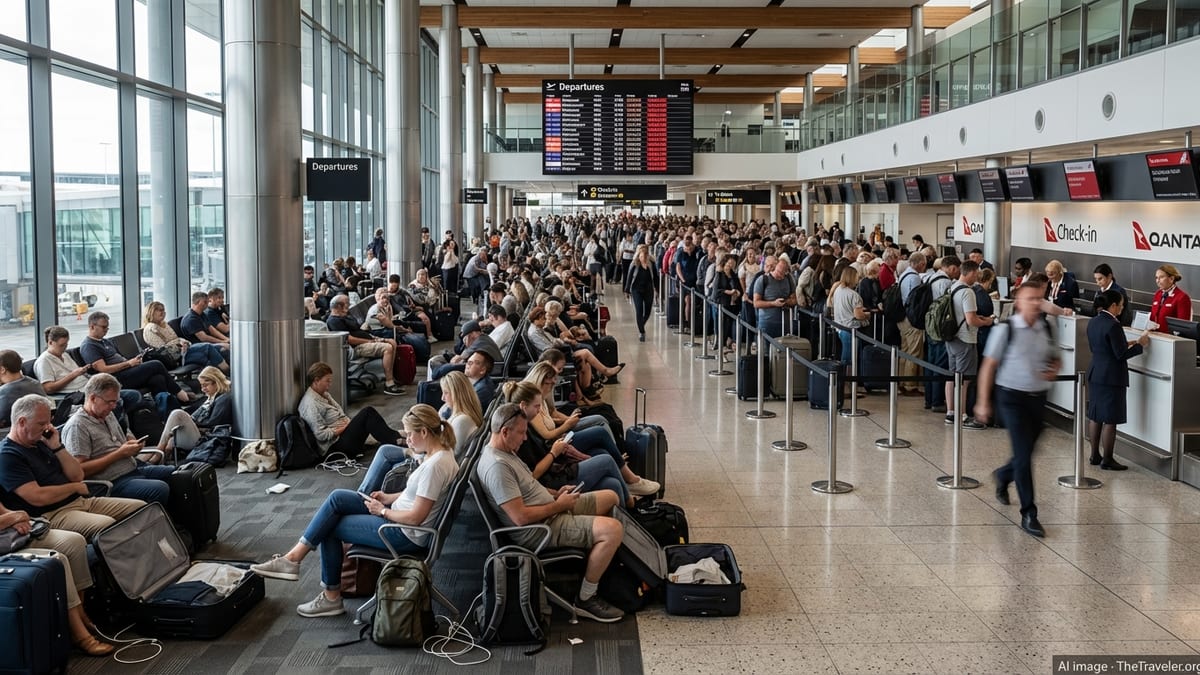
Although the majority of affected flights are eventually getting away, the concentration of 514 delays in a relatively short window has created crowding at check-in counters, security lanes and boarding gates, with many travellers reporting waits stretching into several hours.
Airlines Struggle With Cancellations and Cascading Delays
The disruption has touched almost every major carrier active on Australian and New Zealand domestic and trans-Tasman routes. Regional brand QantasLink, mainline operators Qantas and Virgin Australia, low-cost carrier Jetstar, charter and regional specialist Network Aviation, and flag carrier Air New Zealand are all navigating schedule changes, equipment swaps and crew reassignments.
At least 18 services across these operators have been cancelled outright, according to aggregated flight-status information. Some of the cancellations involve longer-haul leisure routes such as services between Melbourne and Southeast Asia, while others concern shorter domestic and regional sectors where recovery options are more limited and passengers may have only one or two daily alternatives.
Operational data shows a familiar pattern: once early services are delayed or cancelled, crews and aircraft end up out of position for later rotations, compounding the problem across the day. Airlines have been attempting to consolidate lightly loaded services and rebook passengers onto remaining flights, but the volume of disruption has meant that many travellers are being re-accommodated much later than planned.
Publicly available tracking tools show some long-haul flights scrubbed from departure boards, while others are departing significantly behind schedule. Travel industry observers note that, in such circumstances, carriers tend to prioritise flights with the largest number of onward connections or those needed to return aircraft to their home bases.
Passengers Face Long Queues, Missed Connections and Extra Costs
For travellers, the practical impact has been immediate and disruptive. With hundreds of delayed services and a cluster of cancellations across Melbourne, Sydney and Perth in particular, passengers have reported lengthy queues at customer-service desks and rebooking counters as they seek alternative routings or overnight accommodation.
Families returning from school holidays, international visitors on tight itineraries and business travellers have all been caught up in the disruption. Missed connections are a significant concern on trans-Tasman and international routes, where a delayed or cancelled feeder flight can cause passengers to forfeit long-haul sectors that operate only once daily or a few times a week.
Travel insurers and consumer advocates point out that compensation and care obligations vary by fare type and by airline, leaving some passengers responsible for last-minute hotel stays, meals and ground transport when disruptions are classified as outside the carrier’s control. Others travelling on more flexible tickets have been able to move to later flights at no extra cost, but often at the expense of losing valuable time at their destination.
Social media posts and traveller forums show images and accounts of crowded departure halls, gate areas filled with stranded passengers and departure boards dominated by “delayed” notices. Some travellers have described being rebooked multiple times in a single day as airlines repeatedly adjust schedules in response to continuing operational constraints.
Operational and Weather Factors Combine to Test Resilience
While a single clear cause has not been identified across all affected flights, publicly available coverage points to a combination of factors commonly associated with large-scale disruption. These can include adverse or changeable weather conditions around key airports, technical checks on individual aircraft, staffing challenges and air traffic flow restrictions that slow departures and arrivals during peak periods.
Perth and other west-coast operations are particularly vulnerable to the knock-on effects of weather and technical issues because of the long stage lengths on many routes and the relatively smaller pool of standby aircraft available. When one service encounters a significant delay, the same aircraft may be scheduled to operate two or three additional flights later that day, multiplying the impact as the schedule rolls forward.
Aviation performance reports for the region have previously highlighted on-time departure challenges on popular international and inter-capital routes, showing how quickly punctuality can deteriorate when conditions become less than optimal. The current episode, with 514 delays recorded across a network of carriers in a short period, underlines how sensitive tightly timed schedules are to any sustained operational pressure.
Airlines across Australia and New Zealand have spent recent seasons attempting to rebuild capacity and reliability, with mixed results. While overall cancellation rates have stayed relatively low in many months, periodic spikes in delays, like the one now unfolding at major hubs, continue to test both airline resilience and passenger patience.
What Travellers Can Do as Disruption Continues
With delays and cancellations still working their way through schedules, travel advisers recommend that passengers flying to or within Australia and New Zealand closely monitor airline apps and airport departure boards on the day of travel, and allow extra time for check-in and security. Same-day schedule changes are more likely during periods of concentrated disruption, especially for early morning and late evening departures.
Passengers already holding tickets on affected routes may benefit from checking whether their airline has published flexible travel policies covering fee-free changes or credits, which are sometimes introduced during extended periods of operational stress. In many cases, moving to a later flight, an alternative airport or even a different date can significantly reduce the risk of becoming stranded.
Those with critical connections, such as long-haul flights to North America, Asia or Europe departing from Melbourne, Sydney, Auckland or Christchurch, are being encouraged by travel industry commentary to build in wider buffers between sectors or consider overnighting at the hub rather than relying on tight same-day connections.
As airlines stabilise rosters, reposition aircraft and work through the backlog of delayed services, operational data suggests that punctuality usually improves over one or two subsequent days. For now, however, hundreds of travellers across Australia and New Zealand remain in terminals and airport hotels waiting for their journeys to resume.