


More news on this day
Targeted flight cancellations by Saudia and Gulf Air at Cairo International Airport have triggered fresh disruption for passengers traveling between Egypt and key Gulf hubs Jeddah and Dammam, complicating itineraries across already fragile Middle East air corridors.
Get the latest news straight to your inbox!
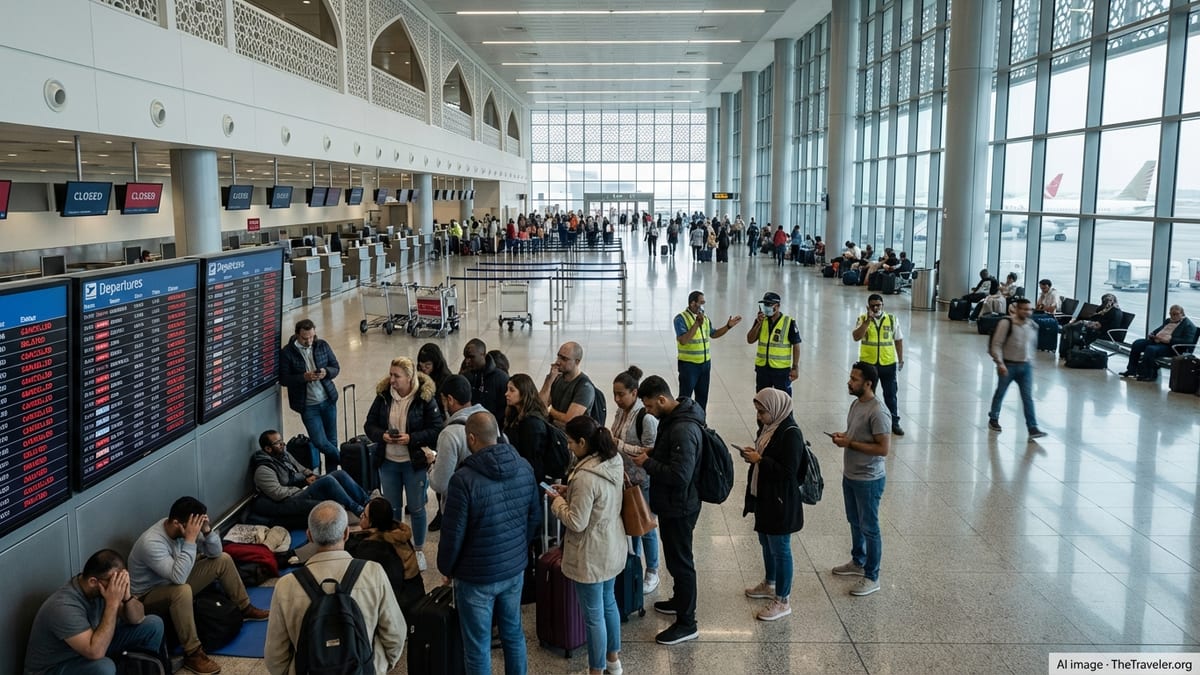
Two Cairo Departures Scrapped Amid Regional Volatility
Recent operational data and published flight-monitoring information indicate that two Gulf-bound flights operated by Saudia and Gulf Air from Cairo have been cancelled, affecting direct links to Jeddah and Dammam. While the affected services represent a small portion of daily traffic at Cairo International Airport, their removal has had an outsized impact on travelers relying on these strategic connections for religious travel, business trips, and onward long haul itineraries.
The Saudia service, typically part of the busy Cairo to Jeddah corridor, and a Gulf Air operation tied into Dammam-focused connectivity, were both withdrawn from the departure board at short notice. Travel-industry coverage and live schedule trackers show that the cancellations sit within a wider pattern of timetable volatility across the region as airlines continue to recalibrate routes in response to security concerns and shifting airspace restrictions.
Passenger reports on social platforms and specialist aviation forums describe same-day disruptions, with some travelers only learning of changes when attempting online check in or arriving at the airport. With peak spring travel underway, including a surge in religious tourism and regional business events, the loss of even a single rotation on heavily used routes has created bottlenecks that ripple through subsequent days’ schedules.
These latest cancellations come as carriers across the Gulf and wider Middle East attempt to balance demand recovery with operational constraints, particularly on routes transiting or connecting through high-sensitivity airspace corridors.
Impact on Jeddah and Dammam as Key Saudi Gateways
Jeddah and Dammam serve as critical entry points to Saudi Arabia, with Jeddah acting as a primary gateway for pilgrims heading to the holy cities and Dammam underpinning business and energy sector travel along the kingdom’s Eastern Province. The disruption of Cairo services into both hubs therefore affects more than point-to-point traffic between Egypt and Saudi Arabia.
Travel analysts note that Jeddah-bound flights from Cairo often carry a high proportion of connecting passengers onward to domestic Saudi destinations and select international routes. A single cancelled rotation can therefore force multiple rebookings, as travelers lose both their initial sector and subsequent connections on the same ticket. That pattern appears to have been repeated following the Saudia service withdrawal, with publicly shared itineraries showing passengers rerouted through alternative Saudi airports or shifted onto later days.
Dammam’s role as a connector for Gulf Air and other carriers into broader Gulf networks means that a cancelled Cairo to Dammam-linked service can undercut access not only to Saudi Arabia, but also to Bahrain and other onward Gulf destinations. In recent weeks, published airline notices and logistics-sector updates have highlighted constrained operations for Gulf Air and continued schedule adjustments around Dammam, underscoring the sensitivity of this particular node for both passenger and cargo flows.
The combination of disruptions to Jeddah and Dammam links from Cairo reinforces how dependent regional mobility has become on a handful of high-traffic corridors. When airlines pare back frequencies or cancel individual flights, travelers often face limited redundancy, especially on days or times when alternative services are already heavily booked.
Knock-On Effects Across Middle East Flight Networks
The two Cairo cancellations are unfolding against a backdrop of wider instability in Middle East aviation schedules. Travel trade bulletins and regional media reports show that airlines across the Gulf, Levant, and parts of North Africa continue to trim frequencies, reroute aircraft, and in some cases temporarily suspend destinations due to the aftershocks of recent regional tensions.
Carriers such as Saudia and Gulf Air are among several airlines engaged in a delicate balancing act: restoring capacity on high-demand routes while maintaining flexibility to react to evolving risk assessments and regulatory guidance. Industry updates in early April point to selective resumptions of flights from Jeddah to major Gulf cities like Dubai and Abu Dhabi, even as other routes remain on reduced timetables or subject to last-minute change.
Within this fluid environment, individual cancellations at a large hub such as Cairo can have disproportionate consequences. Missed connections cascade into overnight stays, forced rebookings through indirect routings, and increased pressure on already busy services operated by EgyptAir, Flynas, Qatar Airways, and other regional players. Travelers attempting to move between Egypt and Saudi Arabia, in particular, have reported a mix of fully sold out flights on some days and sudden availability on others, reflecting how quickly capacity is being reallocated.
The cumulative effect is a travel landscape where confirmed tickets offer less certainty than usual and where the gap between published schedules and day-of-operation reality can be significant.
Passengers Face Rebooking Challenges and Rising Costs
For travelers caught by the Saudia and Gulf Air cancellations at Cairo, the immediate challenge has been securing alternative seats at short notice. Accounts shared across travel forums describe situations in which passengers have been offered re-accommodation on later flights, sometimes via different Gulf hubs, or invited to pursue refunds and make fresh bookings at prevailing market prices.
With demand into Saudi Arabia and the wider Gulf region currently elevated, last-minute fares have often been substantially higher than those on original bookings. Some travelers attempting to replace Cairo to Jeddah or Cairo to Dammam itineraries have reported limited availability in economy cabins and even tighter capacity in premium cabins, making it difficult to match original travel conditions.
Industry commentary suggests that passengers who booked via online travel agencies may face a more complex resolution process, as they negotiate both airline policies and intermediary terms. Others have reported smoother rebooking when working directly with airlines or local ticketing offices, although processing times for refunds and schedule changes can still be extended due to high call volumes and staffing pressures.
In many cases, travelers are adjusting plans by routing through alternative hubs such as Riyadh, Dubai, or Kuwait City, accepting longer travel times in exchange for securing a confirmed seat. This, in turn, places additional demand on those airports and carriers, further tightening capacity across the region.
What Travelers Between Egypt and the Gulf Should Expect Next
Looking ahead through April, publicly available schedules and airline notices point to a gradual but uneven normalization of some Gulf routes, even as certain destinations remain constrained. EgyptAir has indicated incremental restoration of services to Gulf cities, including multiple daily flights to Dammam and other key hubs, suggesting that capacity between Egypt and the Gulf is being rebuilt in stages.
At the same time, industry tracking shows that several carriers continue to operate under special timetables, sometimes publishing schedules only a few weeks in advance or cautioning that additional changes may occur at short notice. Travelers planning journeys between Cairo and Gulf gateways such as Jeddah and Dammam are therefore likely to face a more dynamic environment than in previous years.
Consumer advocates recommend that passengers monitor bookings frequently, keep contact details updated within airline profiles, and be prepared with contingency plans such as flexible accommodation or alternative routing options. Separate travel-insurance policies that explicitly cover disruption and missed connections due to airline schedule changes are also drawing renewed interest from travelers navigating the current conditions.
For now, the cancellations involving Saudia and Gulf Air at Cairo stand as a reminder of how quickly regional aviation patterns can shift. As airlines, regulators, and airports across the Middle East continue to recalibrate, links between Egypt and key Saudi hubs are likely to remain under close watch by both industry observers and travelers who depend on these corridors.