


More news on this day
Hundreds of airline passengers across Asia and South America are facing major disruption as China Eastern, Air China, Shanghai Airlines, Batik Air, Garuda Indonesia and Flybondi cancel 96 flights and delay more than 600, leaving travelers stranded in China, Indonesia, Argentina, Singapore and other hubs.
Get the latest news straight to your inbox!
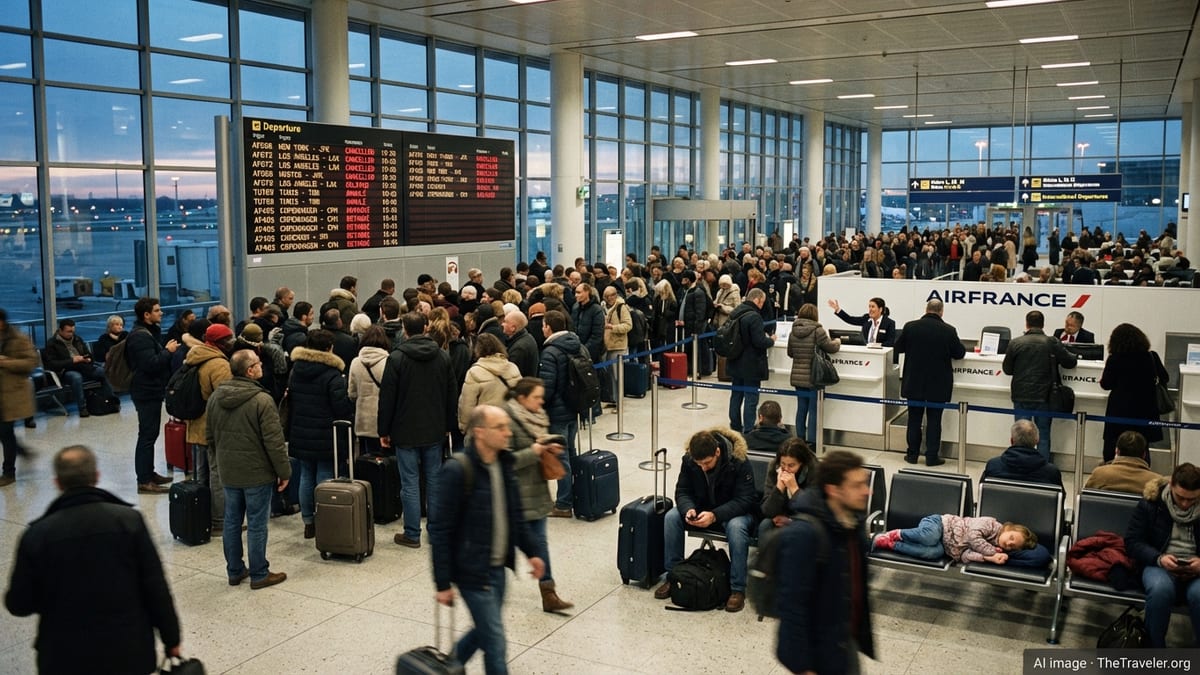
Wide Network Disruption Hits Key Regional Hubs
Publicly available operational data compiled on June 14 indicates that the six carriers collectively scrubbed 96 services and logged 607 delays within a short operating window, an unusually high volume for a single trading day. The disruptions stretch across domestic and international routes, amplifying the impact at major transfer points.
China Eastern, Air China and Shanghai Airlines appear to shoulder much of the burden in mainland China, particularly on services into and out of Beijing and Shanghai. Reports indicate that knock-on effects have rippled into secondary cities as aircraft and crews fall out of position, forcing schedule thinning throughout the day.
In Southeast Asia, Batik Air and Garuda Indonesia have seen their own timetables squeezed, with delays and cancellations focused around Jakarta and Denpasar. These airports act as primary connectors for domestic island routes as well as long-haul links to East Asia, making any disruption especially challenging for passengers with onward connections.
In South America, Argentina’s low cost carrier Flybondi is contending with schedule changes that affect travelers moving through Buenos Aires and regional airports. The combined effect across three continents is a patchwork of missed connections, last-minute rebookings and extended airport waits for passengers caught in the middle of disrupted networks.
Beijing and Shanghai Experience Heavy Operational Strain
According to flight tracking dashboards and published coverage focused on the Chinese market, Beijing and Shanghai remain among the hardest hit nodes in the current wave of disruption. Caps on arrival and departure rates, together with weather-related flow controls and congested air corridors, are contributing to rolling delays.
China Eastern and Air China, both operating extensive domestic and regional networks from Beijing and Shanghai, are particularly exposed when conditions tighten. Industry metrics released in recent months already showed heightened cancellation and delay rates for some major Chinese carriers, underscoring how quickly strain at a few airports can cascade across a national system.
Shanghai-based Shanghai Airlines, with a strong presence on trunk routes such as Shanghai to Beijing and key intra-Asia services, has also seen its schedule constrained. When flights are cancelled out of Shanghai Hongqiao or Pudong, aircraft availability for later rotations is reduced, which can trigger further cancellations or force last-minute aircraft swaps and re-timings.
For travelers in Beijing, the disruption is especially acute on flights connecting through the capital to Japan, Southeast Asia and Europe. Recent public discussions among passengers have highlighted repeated last-minute changes on these routes, contributing to a perception of heightened risk around tight connections and complex itineraries.
Indonesia and Singapore Face Secondary Shockwaves
In Indonesia, Garuda Indonesia and Batik Air are navigating the knock-on effects of regional capacity challenges, intermittent severe weather and route adjustments. Jakarta’s Soekarno Hatta Airport is often a chokepoint when thunderstorms roll through or when upstream delays from other Asian hubs compress already tight turnaround times.
Garuda Indonesia, which operates a mix of domestic and international routes from Jakarta, Denpasar and other cities, can see multiple segments affected when one long-haul or trunk flight falls significantly behind schedule. Publicly available punctuality reports show that even small increases in cancellation percentages for major Indonesian carriers can translate into thousands of disrupted passengers over a short period.
Batik Air, a key player in Indonesia’s domestic market and an operator on routes into China and other regional destinations, has previously drawn attention from travelers for lengthy delays and long rebooking lines when schedules unravel. Current disruptions are exacerbating those pain points for passengers seeking to connect beyond Jakarta or Denpasar, especially where same-day onward flights are limited.
Singapore, a critical transit hub for Southeast Asia, is also feeling the secondary impact as delayed flights from China and Indonesia misalign with banks of onward departures. While Singapore’s main airport is known for resilient operations, publicly shared passenger accounts describe missed connections and forced overnight stays when inbound flights from disrupted carriers arrive hours behind schedule.
Argentina’s Low-Cost Market Stretched by Schedule Changes
Argentina’s Flybondi, operating on a low-cost model with lean spare capacity, faces distinct challenges when confronted with unplanned cancellations and prolonged delays. With a relatively small fleet compared with legacy carriers, every out-of-service aircraft or extended turnaround can have an outsize effect on the day’s rotation plan.
Travelers across Argentina have reported being stranded or facing substantial re-timings when domestic and regional services are pulled from the schedule. Public information suggests that high demand on core routes into Buenos Aires limits the availability of alternative seats, particularly for travelers who must arrive on specific days for work or onward international flights.
When multiple carriers are simultaneously adjusting timetables, the usual fallback options become less reliable. In this environment, passengers who might normally switch to another airline at short notice may find that competing flights are also delayed, sold out or rescheduled, intensifying the feeling of being stuck in place.
These pressures are occurring against a backdrop of broader volatility in South American aviation, where currency shifts, fuel costs and regulatory changes have left several airlines with limited flexibility to absorb operational shocks without impacting customers.
What Stranded Passengers Are Being Advised to Do
Consumer advocacy groups and travel industry commentators are urging passengers caught in the latest wave of disruption to focus first on securing confirmed alternatives, even if those options involve longer routings or extended layovers. Because aircraft and crew rotations are still being reshuffled, experts caution that additional same-day cancellations remain possible.
Airline mobile applications and official booking platforms are widely recommended as the fastest way to obtain rebooking options or request refunds, particularly when airport desks are facing long queues. Several publicly available guides on air passenger rights emphasize that, depending on jurisdiction and departure point, travelers may be entitled to compensation, meals, accommodation or alternative transport when disruptions are not caused by extraordinary circumstances.
Travel planners also note that travelers transiting multiple hubs, especially through Beijing, Shanghai, Jakarta, Singapore or Buenos Aires, should build in extra buffer time between flights where possible and avoid non-changeable booking classes while conditions remain volatile. Insurance policies that cover missed connections and extended delays are being highlighted as an additional safeguard for complex itineraries.
With 96 cancellations and 607 delays recorded across the six carriers, the current disruption underlines how quickly regional weather, airspace constraints or operational imbalances can ripple outward across continents. For now, travelers booked on China Eastern, Air China, Shanghai Airlines, Batik Air, Garuda Indonesia and Flybondi are being encouraged to monitor their reservations closely in the hours before departure and to prepare backup plans if their journeys run into further turbulence.