


More news on this day
Air travel across Asia and parts of the Middle East is facing another severe operational squeeze, with aggregated tracking data indicating 477 flight cancellations and around 5,399 delays over a recent 24 hour period, disrupting schedules at major hubs including Jakarta, Moscow, Jeddah and Tokyo and impacting airlines such as China Southern, SpiceJet, Garuda Indonesia, Saudia, Oman Air and Aeroflot.
Get the latest news straight to your inbox!
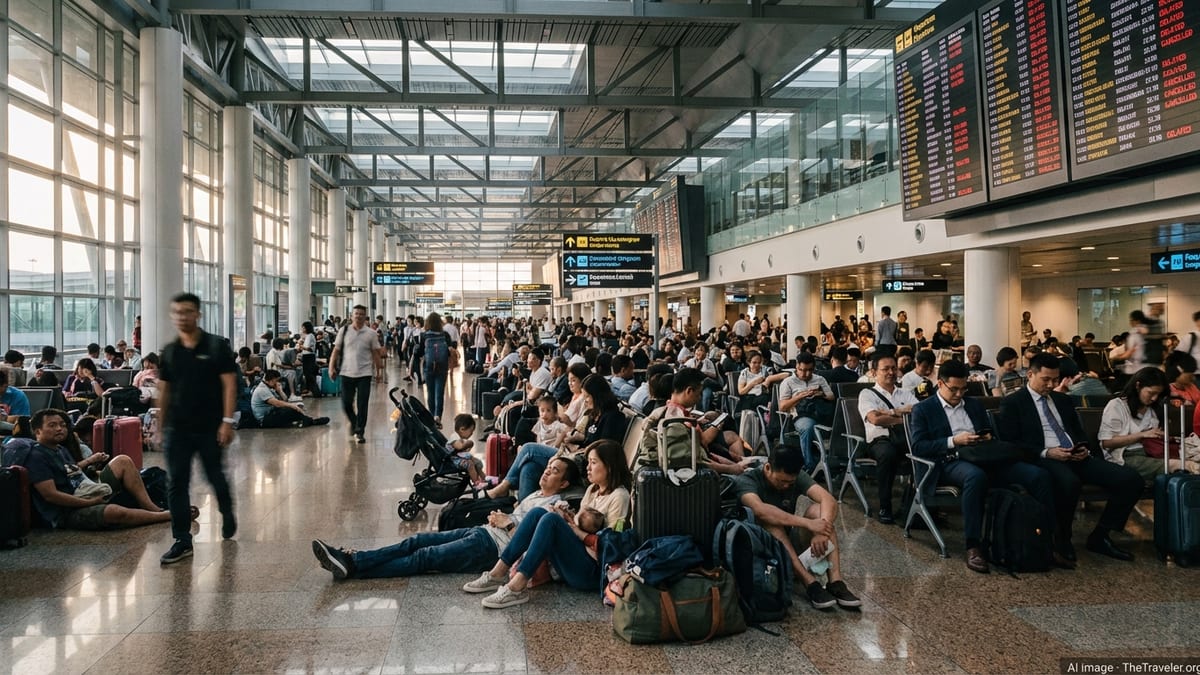
Major Hubs From Jakarta to Tokyo Under Pressure
The latest disruption has concentrated around some of the region’s busiest gateways, where even limited bottlenecks can quickly cascade into wider schedule upheaval. Jakarta’s Soekarno Hatta International has seen rolling waves of late departures and arrival backlogs, with regional coverage pointing to dozens of domestic and international movements affected as airlines work through aircraft rotations and crew availability constraints.
In Japan, published coverage in recent days has highlighted how adverse weather and seasonal storms have repeatedly tested airline and airport resilience. Reports from Japanese broadcasters and regional outlets describe several hundred domestic services being canceled or retimed in early June, including flights to and from Tokyo’s Haneda and Narita airports, compounding delays for Japan based and foreign carriers operating tight turnarounds.
Across the wider region, tracking dashboards and airline status feeds cited in regional travel reports show similar strain at other Asian hubs, with knock on congestion evident at secondary airports that depend heavily on aircraft arriving on time from these primary gateways. When disruption hits multiple nodes at once, even short ground delays can ripple into missed connections and aircraft being out of position for later sectors.
These conditions have made it harder for airlines to recover quickly from localized interruptions. Publicly available airline schedules suggest that many carriers continue to operate high load factors and intensive daily patterns across Asia, leaving limited slack to absorb weather events, airspace constraints or infrastructure bottlenecks without wider customer impact.
Carriers Most Affected Across Indonesia, India, China and the Gulf
The disruption has touched a broad mix of full service and low cost airlines. In Indonesia, Garuda Indonesia and other local operators have been managing a series of rolling adjustments following earlier episodes of delays and cancellations reported in March and June, when severe weather and resource constraints forced multiple schedule changes at Jakarta and other Indonesian airports.
Indian carrier SpiceJet continues to feature prominently in passenger accounts of operational difficulties. Recent consumer complaints and travel commentary describe flights that were first heavily delayed and then canceled close to departure, as well as instances in which passengers were rebooked one or more days later. These individual experiences align with wider data sets showing that some Indian carriers have struggled to maintain on time performance as demand rebounds and fleets are stretched.
China Southern Airlines, one of the largest operators in the region, has also been caught up in the latest turbulence. Public discussions among travelers indicate a pattern of sector specific cancellations on routes linking East Asia and China with long haul destinations, with some itineraries disrupted when a single regional leg was removed while onward long haul segments remained in place, forcing complex rebooking decisions.
In the Middle East, Saudia and Oman Air are among the carriers dealing with operational pressure at Jeddah and other regional gateways. Over recent weeks, travel industry coverage has pointed to periods of heavy congestion around Saudi Arabia’s religious travel peaks, when surges in passenger numbers can quickly strain terminal and airside capacity and leave schedules vulnerable to any additional disruption.
Moscow and Jeddah Highlight Wider Network Vulnerabilities
Beyond Asia’s core hubs, Moscow has emerged as another focal point for cancellations and delays. Aeroflot and other Russian carriers have had to navigate a complex operating environment shaped by evolving airspace restrictions, rerouted long haul services and fluctuating demand patterns, all of which can contribute to irregular operations on certain days.
At Jeddah’s King Abdulaziz International Airport, publicly available flight data and regional coverage underscore how quickly the local operating picture can change when weather, traffic surges and aircraft availability intersect. On peak days, large volumes of connecting passengers traveling between Asia, the Gulf and Europe rely on tightly timed transfer windows, meaning that relatively small disruptions can cascade into missed onward connections and forced overnight stays.
These dynamics are mirrored in other connecting hubs used by Asia based travelers, where ground handling and air traffic flow measures can lead to holding patterns, longer taxi times and departure slot restrictions. When combined with already congested schedules, such measures may result in airlines proactively canceling selected services in order to stabilize wider operations.
Industry analysts note that the current wave of disruption continues a 2026 pattern in which Asia’s aviation recovery has been punctuated by intermittent episodes of gridlock. Each event has highlighted how the region’s tightly packed flight programs can magnify the impact of even localized operational challenges.
What the Numbers Reveal About the Scale of Disruption
The figure of 477 cancellations and 5,399 delays over the most recent affected day places the latest disruption among the more severe single day events seen in Asia this year. Comparable episodes documented in regional reports earlier in 2026 have involved hundreds of cancellations and several thousand delays across a similar footprint of countries.
Analysis of on time performance data from aviation analytics providers shows that even small percentage shifts in cancellation and delay rates can translate into very large numbers of affected passengers when applied to Asia’s dense traffic volumes. For major hub airports handling hundreds or thousands of daily movements, a modest downturn in on time performance can generate widespread knock on disruption.
Historic performance tables for Asian carriers illustrate how sensitive operations can be to external shocks. Airlines that usually cancel only a small fraction of their schedules in a typical month can still see absolute numbers spike quickly when weather, maintenance or staffing challenges converge. The current situation, with a high concentration of delays on a single day, fits within this broader pattern of volatility.
Travel industry commentary suggests that while the majority of flights in the region continue to operate, the headline figures show that passengers on affected routes face a heightened risk of missed connections, extended layovers and last minute itinerary changes, particularly where multiple tight connections are involved.
Guidance for Affected Passengers
Passenger rights organizations and travel advisories consistently recommend that travelers caught up in large scale disruption first confirm the latest status of their own flight through airline apps, SMS alerts or airport departure boards before leaving for the airport. With flight times and routings changing rapidly on high disruption days, same day checks have become an essential part of trip planning.
Consumer guidance widely available online emphasizes that travelers should familiarize themselves with applicable passenger protection rules, which vary by jurisdiction and route. For example, some regulations in the European Union and parts of Asia provide specific remedies for significant delays, cancellations and denied boarding, although eligibility often depends on the reason for the disruption.
Travel specialists also highlight the value of building in longer connection windows when itineraries involve multiple regional hubs that have recently experienced congestion. Where possible, selecting earlier departures, avoiding the tightest connections and considering alternative routings can reduce the risk of forced overnight stays if schedules unravel.
For now, operational data and regional reporting indicate that airlines and airports across Indonesia, Russia, Saudi Arabia, Japan and neighboring markets continue working to restore more stable patterns after this latest spike in cancellations and delays. However, with peak travel periods ahead and weather risks lingering in several sub regions, industry observers expect further localized disruptions to remain a possibility in the coming weeks.