


More news on this day
Air travelers across Asia are facing a fresh wave of disruption after a cluster of carriers canceled 90 flights and delayed 796 more across China, Indonesia and Japan, snarling operations at major hubs and smaller regional airports alike.
Get the latest news straight to your inbox!
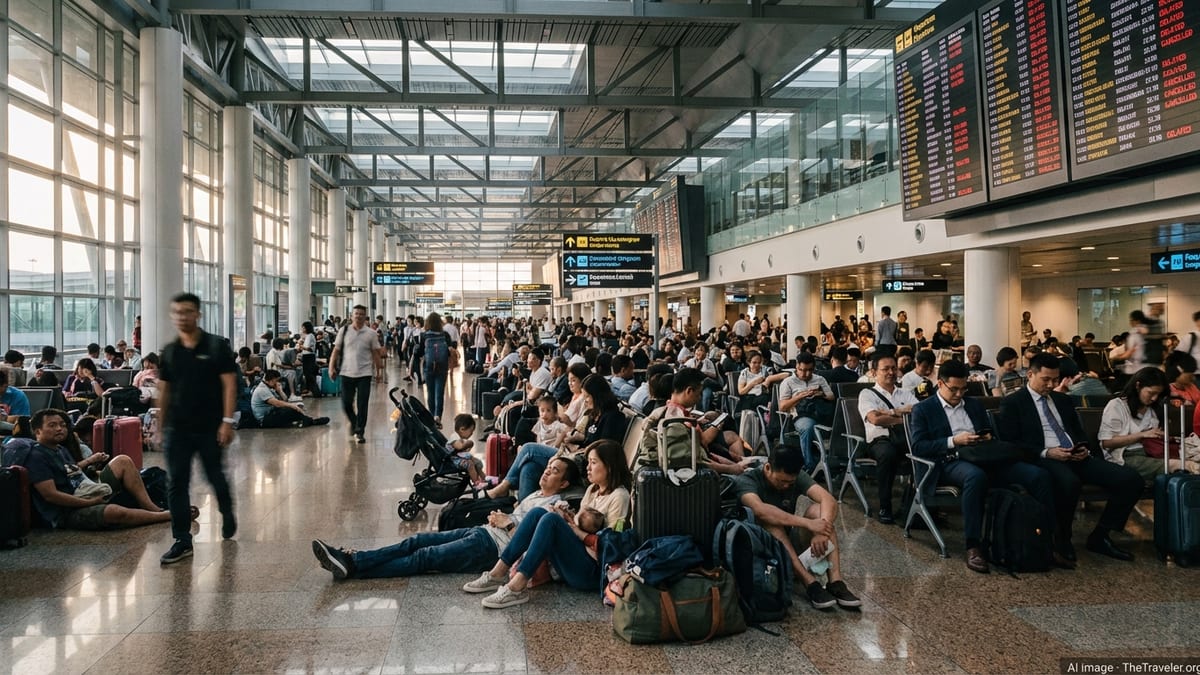
Major Hubs From Beijing to Jakarta Hit by Disruptions
Publicly available flight tracking data and regional travel industry coverage indicate that the latest bout of disruption unfolded on June 29 and June 30, concentrating on key hubs in China, Indonesia and Japan. Beijing’s main airports, Jakarta Soekarno Hatta and regional airports in southern Japan, including Kagoshima, reported large numbers of delayed departures and arrivals, alongside targeted cancellations on busy domestic and regional routes.
According to aggregated aviation data cited by specialist travel outlets, carriers including China Eastern, Air China, Hainan Airlines, Batik Air, Japan Air Commuter and China Express accounted for the bulk of the 90 cancellations, while nearly 800 flights operated behind schedule. The knock-on effect was felt well beyond the three countries, as disrupted services fed into onward connections across Southeast and Northeast Asia.
Travel-focused reports describe long queues at check in and transfer desks in Beijing and Jakarta as passengers sought rebooking options, with some journeys pushed back by many hours or deferred to later in the week. The pattern underlined how concentrated cancellations in a limited number of markets can quickly radiate through a region that relies heavily on connecting traffic.
Although the bulk of confirmed cancellations were recorded in China, Indonesia and Japan, analysts noted that onward itineraries to Malaysia, Singapore, Thailand and South Korea were also affected when travelers failed to make their planned connections. For many passengers, the headline disruption came not from outright cancellations but from extended delays that caused missed onward flights even when the original service eventually departed.
Weather Systems and Operational Strain Drive the Chaos
Regional media and meteorological bulletins point to a combination of adverse weather and already strained airline operations as key drivers of the disruption. Heavy rain and storms across parts of southern and eastern China have recently triggered tighter air traffic flow controls at major airports, slowing departure rates and amplifying congestion throughout the day.
In Japan, local news coverage on June 30 highlighted continuing transport disruption linked to a weakening but slow moving typhoon, which maintained periods of heavy rainfall and low visibility over a wide area. While rail services bore a significant share of the impact, the same weather system complicated flight operations, particularly at airports in western and southwestern Japan.
Indonesia has also been operating through an active weather period, with convective storms regularly flaring over Java and surrounding regions during peak flying hours. Travel industry analyses suggest that such conditions, when layered atop tight schedules and limited spare capacity, leave carriers with little flexibility to absorb additional strain, increasing the likelihood that small operational problems escalate into waves of delays.
Aviation commentators note that many Asian airlines entered the current summer season with limited slack in crew rosters and aircraft rotations, after several years of network rebuilding and cost control. When weather triggers flow restrictions or ground stops at one or more hubs, aircraft and crew can quickly drift out of position, leaving airlines to choose between mass delays or selective cancellations to restore some order to their timetables.
Knock-on Effects Across Asia’s Connected Network
Even though the latest figures on cancellations and delays center on China, Indonesia and Japan, the impact has been region wide. According to published coverage in trade media, passengers heading to or from Malaysia, Singapore, Thailand, South Korea and other Asian destinations faced missed connections and overnight layovers after their first legs were delayed beyond their scheduled onward departures.
Hub airports such as Beijing and Jakarta play a critical role in stitching together secondary cities throughout Asia. When departure banks from these hubs are disrupted, aircraft rotations into neighboring markets can be pushed back, creating rolling delays that persist into the following day. Travel data from earlier episodes this month already show that some routes in and out of Beijing and Jakarta have been operating with elevated delay rates, which magnifies the effect of any new disruption.
For airlines, the challenge extends beyond serving affected passengers on the day of disruption. Aircraft that arrive late into maintenance bases may force rescheduling of routine checks, and crew members who exceed duty time limits during extended delays must be replaced, further complicating staffing for subsequent sectors. Industry observers describe a feedback loop in which a single day of severe delays can compress resources for several days afterward.
Travel advisors in the region have responded by reiterating guidance that passengers build additional buffers into itineraries that rely on tight connections, particularly when traveling through weather sensitive hubs or at peak times. The latest figures on cancellations and delays have strengthened the view that Asia’s recovering aviation system remains vulnerable to cascading operational shocks.
Warning Signs for Peak Season Travel
The disruption comes as Asian carriers head into an increasingly busy travel period, with summer holidays driving higher demand on both domestic and regional routes. Industry publications in China and Southeast Asia have recently highlighted schedule adjustments and route suspensions by several airlines, in part to manage fuel costs and softer demand on select leisure routes, but also to shore up reliability on core networks.
Recent schedule data for Chinese and Indonesian carriers show tactical reductions or postponements on some new routes, while additional seasonal flights are being introduced on others. This balancing act aims to align capacity with demand but also risks leaving networks more brittle if unexpected events force large numbers of aircraft and crew to shift at short notice.
In Japan, domestic networks have already experienced waves of disruption this year from earlier storms and operational issues, according to national media summaries. The latest weather related delays and cancellations add to a picture of a system grappling with both natural hazards and the lingering aftershocks of rapid post pandemic demand recovery.
Aviation analysts warn that the mix of volatile weather, tight schedules and increasingly congested airspace over parts of Asia may produce further episodes of significant disruption in the coming months. The tally of 90 cancellations and 796 delays over just a short window in China, Indonesia and Japan is likely to be studied closely by airlines and regulators as they assess how much additional resilience is needed before the next major weather system or operational shock hits.
What Passengers Can Expect in the Days Ahead
With weather forecasts signaling continued instability over portions of East and Southeast Asia, travelers are being advised by consumer advocates and travel publications to monitor flight status more frequently in the 24 hours leading up to departure. Publicly available tools and airline apps have become crucial for spotting rolling delays or gate changes early enough to adjust plans on the ground.
Airlines affected by the latest disruption are generally offering rebooking on the next available flights and, where permitted by their conditions of carriage, refunds for canceled segments. However, recent reports from passengers caught up in delays in China and Japan suggest that same day alternatives can be limited when multiple flights in a departure bank are hit at once, especially on popular domestic and short haul regional routes.
Airport operators across the affected countries are reviewing the latest disruption patterns in the context of earlier episodes this month, according to industry briefings. Some are expected to refine staffing plans at check in, security and immigration during known weather risk windows, while others may look at how gate allocation and ground handling can be adapted when large clusters of flights are pushed back.
For now, the statistics from the latest wave of cancellations and delays underscore that Asia’s aviation recovery remains a work in progress. Travelers heading through China, Indonesia and Japan in the coming days are likely to face generally normal operations punctuated by pockets of severe disruption whenever weather and operational constraints collide.