


More news on this day
Flight disruption is taking a significant financial toll on UK passengers, with new research indicating that travellers lose an average of around $735 (£603) each to delays once missed connections, extra accommodation, meals and lost holiday time are taken into account.
Get the latest news straight to your inbox!
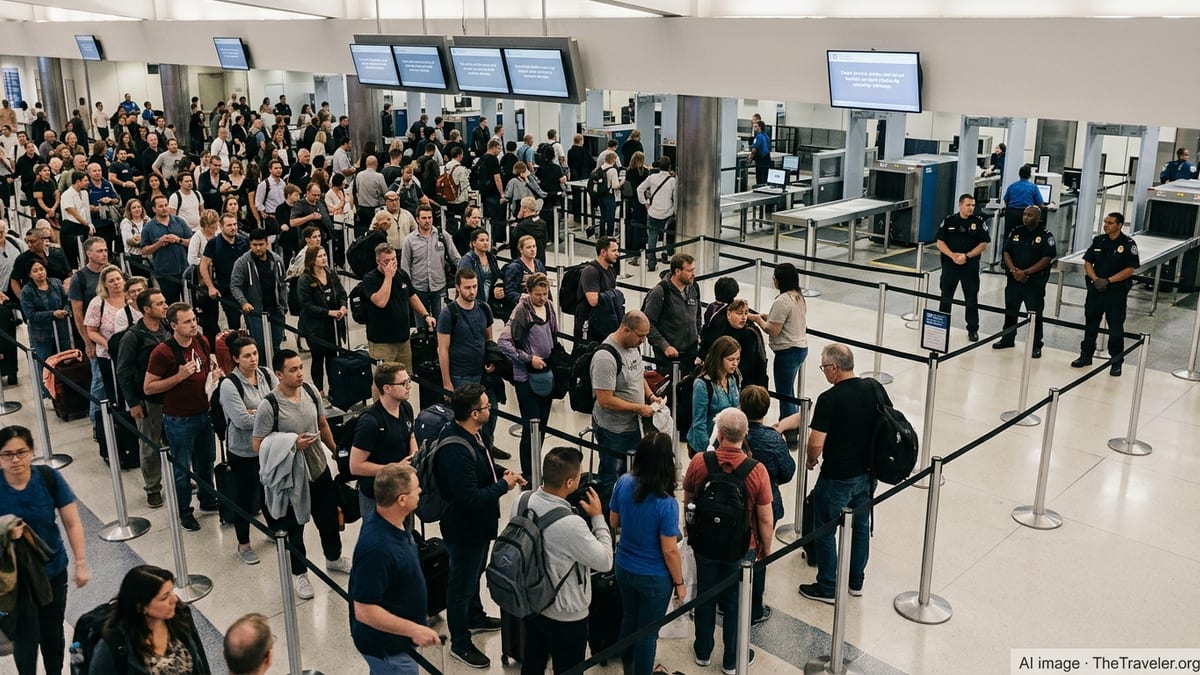
Research highlights mounting personal cost of delays
The latest analysis of compensation decisions and complaint outcomes involving UK air passengers points to a growing gap between what travellers are legally entitled to and what they actually recover. Drawing on publicly available data sets and survey-based modelling of out-of-pocket costs, the research estimates that typical UK travellers facing major delay disruption incur total losses of about $735, or £603, for a single affected trip.
The figure combines direct expenses such as last-minute hotel stays, replacement transport and airport meals with indirect losses like forfeited pre-paid accommodation and activities at the destination. It also reflects the reality that many travellers never see the full value of potential compensation, either because they do not qualify under current rules or because they do not pursue a claim.
Analysts note that this estimated cost per disrupted traveller is an average across a wide range of scenarios, from missed budget flights to long-haul hold-ups that strand passengers overnight. Individual cases can be considerably higher, particularly where delays cause cascading impacts on multi-stop itineraries or tightly scheduled business travel.
The findings arrive at a time when UK airports and airlines are again under scrutiny for punctuality, with recent league tables showing several major carriers averaging double-digit departure delays on flights from British airports.
How delay costs add up for UK passengers
Behind the headline figure of $735 are multiple layers of expense that can quickly escalate. For many passengers, the immediate costs come in the form of food and drink at the airport when a delay extends beyond a few hours, along with transport home or to a hotel if an overnight stay becomes necessary.
Further costs arise when travellers miss onward travel, such as connecting flights on separate tickets, rail journeys or pre-booked transfers. In these cases, consumers often have no automatic right to free rebooking and must purchase new tickets at short notice, frequently at peak prices.
Holidaymakers can also lose the value of the first night or more of their accommodation, particularly with non-refundable hotel bookings or villa rentals. Pre-paid tours, attraction tickets and car hire reservations may similarly be forfeited if arrival is significantly delayed. When these elements are factored in, the financial impact of a single long delay can rival or exceed the original airfare.
Business travellers face an additional layer of potential loss if key meetings or events are missed. While corporate insurance policies sometimes absorb these costs, some passengers end up personally out of pocket, especially where self-employed workers or small businesses are involved.
Legal protections and compensation limits
UK passengers affected by substantial delays continue to be covered by UK versions of European-style air passenger rights rules. Public guidance from regulators explains that travellers departing from a UK airport, or flying into the UK on a UK or EU carrier, may be entitled to care and, in certain circumstances, fixed-sum compensation when long delays are within the airline’s control.
The support airlines must provide can include meals and refreshments, access to communication, and hotel accommodation with transfers for overnight delays. Compensation amounts, where applicable, are generally calculated according to flight distance and length of delay, with long-haul passengers on severely delayed services potentially eligible for several hundred pounds per person.
However, published information also makes clear that there are notable exemptions. Disruption considered to be caused by so-called extraordinary circumstances, such as severe weather, air traffic control restrictions or security alerts, typically falls outside compensation rules. In these cases, passengers may still be entitled to care but not to cash payments.
Consumer advocates point out that this framework leaves many travellers absorbing a large share of the real-world cost of disruption. The new estimate of a $735 average loss highlights the difference between the fixed compensation levels set in regulation and the broader financial consequences that delayed passengers experience.
Complaints data signal rising frustration
Recent complaint statistics published by the UK Civil Aviation Authority show that flight delays and cancellations continue to dominate grievances brought to official and alternative dispute resolution channels. The data, covering cases escalated after passengers failed to reach agreement directly with airlines, underline the ongoing friction between carriers and their customers over what constitutes a fair outcome.
Reports indicate that the average monetary award in adjudicated cases typically represents only a portion of the total impact that travellers describe, since adjudicators are bound by statutory caps and strict eligibility criteria. Many claims are partially upheld or rejected where delay causes are classified as outside the airline’s control, even if passengers still faced considerable expense.
Industry analyses of punctuality at UK airports add further context. Recent rankings based on regulator data show some major airports and airlines experiencing average departure delays measured in the high teens or beyond in minutes per flight. While most flights still operate close to schedule, the proportion that run significantly late is enough to affect hundreds of thousands of people over the course of a year.
Travel experts say the combination of persistent delays, complex rules and often slow complaint processes helps explain why many passengers either never claim or give up before obtaining redress, reinforcing the gap reflected in the per-traveller cost estimate.
What travellers can do to limit the damage
Specialist travel advice suggests that passengers have limited but meaningful options to reduce the financial hit from delays. One recommendation is to book longer connection times, especially when using separate tickets across different airlines, to lower the risk of missing onward flights that are not protected by a single booking.
Another measure is to review travel insurance policies carefully, checking for specific cover related to delays, missed departures and travel disruption. Policies that provide set payouts for delays beyond a certain number of hours, or that cover missed onward transport, can reduce the net cost of disruption, though they rarely eliminate it entirely.
Passengers are also encouraged by consumer organisations to keep detailed records if a delay occurs, including boarding passes, receipts for meals and accommodation, and written information from the airline about the cause and duration of the disruption. Such documentation can be crucial for both compensation claims under passenger rights rules and any subsequent insurance claim.
As peak holiday travel continues, analysts say the headline estimate of $735 in average losses underscores the importance for UK passengers of understanding their rights, planning buffers into itineraries where possible and considering financial protection that reflects the true cost of modern air travel disruption.