


More news on this day
Travel agencies across key outbound markets are reporting a sharp spike in inquiries and itinerary changes after new worldwide travel warnings linked to escalating conflict in the Middle East, as travelers scramble to reassess summer and autumn plans involving the region and its major transit hubs.
Get the latest news straight to your inbox!
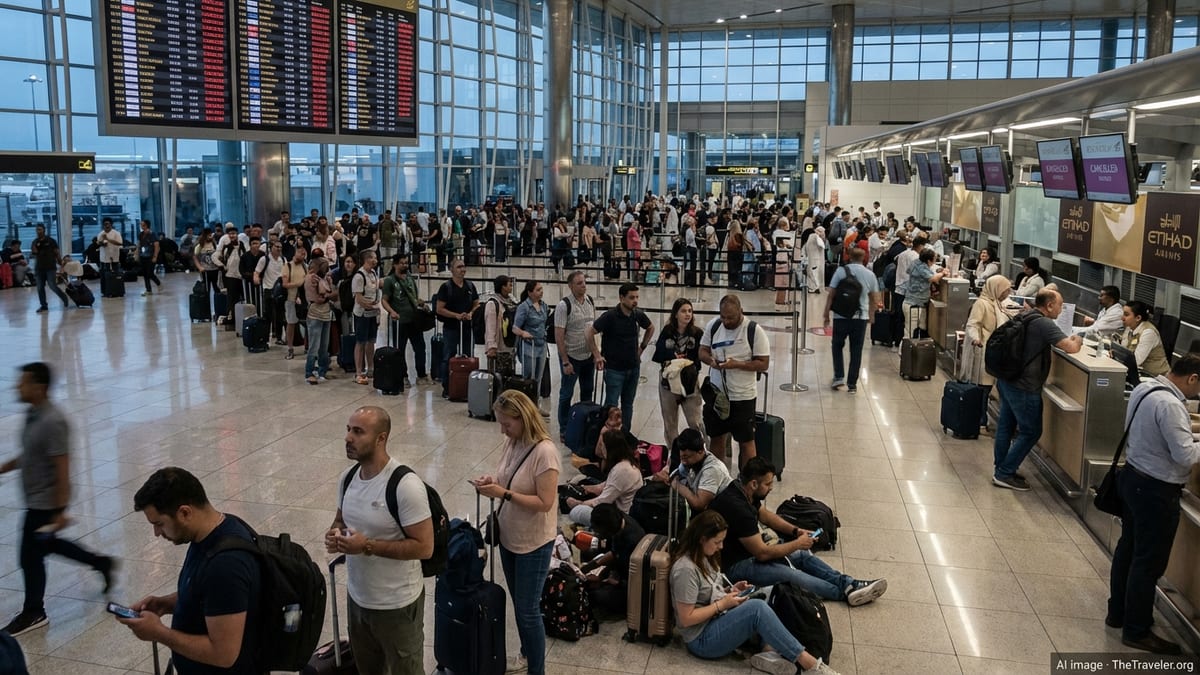
Worldwide alerts put Middle East trips under scrutiny
Recent worldwide security alerts urging travelers to reconsider journeys to and through the Middle East have pushed the region back to the top of risk radars. Publicly available notices highlight heightened tensions tied to the ongoing conflict between the United States and Iran, warning of potential attacks on U.S. interests and allied targets, and advising travelers to expect possible airspace closures and sudden flight disruptions.
Multiple government advisories now caution against nonessential travel to a swath of destinations stretching from the Gulf to the Levant. Several countries, including the United States, Australia, the United Kingdom and Canada, have raised or reaffirmed elevated warning levels for Bahrain, Israel, Jordan, Kuwait, Oman, Qatar, Saudi Arabia and the United Arab Emirates, while Iran, Iraq, Lebanon, Syria, Gaza and Yemen are generally listed under the highest risk tiers.
Security updates stress that risks are not confined to active conflict zones. Guidance for citizens abroad notes that facilities associated with Western interests, major transport hubs such as airports and ports, and crowded public places may be vulnerable, and that knock-on effects could be felt on routes that merely connect through Gulf hubs rather than terminate there.
Travel risk bulletins issued in late July also flag broader implications for global aviation. Industry and government advisories reference previous airspace restrictions and recommend that airlines and passengers be prepared for further rerouting or suspensions should regional hostilities intensify.
Call centers struggle to keep up with anxious travelers
Against this backdrop, brick and mortar agencies and online travel intermediaries say they are experiencing unusually heavy call volumes. Trade coverage and corporate travel risk trackers describe agency phone lines and chat channels “lit up” as clients seek clarity on whether to cancel, reroute or postpone itineraries touching the Middle East.
Regional monitoring by multinational consultancies notes that some major carriers and travel providers have already reported “higher than usual” call traffic from customers worried about flights via Dubai, Doha, Abu Dhabi, Riyadh and other key hubs. In some cases, agencies are fielding calls not only from booked passengers but also from family members concerned about relatives due to transit through the region.
Corporate travel departments are also turning to agencies for rapid policy guidance. Many multinational firms rely on travel management companies to interpret government advisories, assess insurance implications and help enforce internal rules on where staff may transit or stay overnight. With advisories changing quickly, agencies are having to update risk assessments and trip approvals in near real time.
Several agency-focused forums and industry boards describe staff working extended hours to process ticket changes and reassure clients, particularly for departures scheduled in the next few weeks. Advisors report that even travelers with itineraries later in the year are already seeking contingency plans in case the situation deteriorates.
Itineraries via Gulf hubs see cancellations and rerouting
The immediate pressure point is itineraries that rely on Gulf megahubs for long haul connections between Europe, North America, Africa and Asia. Government travel sites and aviation safety bodies have warned of possible airspace restrictions and operational disruptions across parts of the Gulf, prompting airlines to reassess routing and capacity.
Recent updates from travel and security agencies highlight continued cancellations and delays at major Middle Eastern airports, including Dubai, Doha, Riyadh and Kuwait City, following waves of regional missile and drone activity. Earlier crises this year produced days with hundreds of cancellations and more than a thousand delays in the region, and advisories suggest similar patterns could recur with little notice.
Some tour operators have already extended suspensions of itineraries that depend on transits through Dubai, Doha and Abu Dhabi, citing the uncertain security outlook and the risk of stranded customers. Japanese operator JTB, for example, recently lengthened its pause on certain escorted tours routed via Gulf hubs because of the Middle East situation, a move closely watched by agents handling group travel.
For independent travelers, agencies are steering clients toward routings that avoid overflying conflict zones when possible, even if that means longer travel times or higher fares. Advisors note that while many flights are still operating, itineraries involving tight connections in the Gulf carry an elevated risk of last minute change due to shifting airspace restrictions.
Tourism demand shifts as travelers seek safer alternatives
The new wave of warnings comes on top of a year in which conflict in the Middle East has already reshaped global tourism flows. Industry associations report that concerns over security and reliability have pushed many holidaymakers to favor perceived safer regions, especially within Europe, for upcoming vacation periods.
Research from trade bodies such as ABTA indicates that demand for Europe has strengthened as uncertainty in the Middle East lingers, with a large majority of those planning overseas holidays in the next 12 months choosing European destinations. Analysts attribute part of this shift to travelers avoiding itineraries that require transit through Gulf hubs, even when their final destination lies elsewhere.
Economic assessments of the Iran conflict earlier this year estimated substantial daily losses to the travel and tourism sector worldwide, driven by airspace closures, cruise ship redeployments and widespread trip cancellations. While some routes and destinations have since partially recovered, the latest advisories are prompting a fresh round of rebookings toward alternative hubs in Europe, North America and parts of Asia.
Travel marketers note that destinations positioning themselves as stable, with direct air links that bypass the Middle East, are leveraging the moment to capture last minute bookings. At the same time, agencies caution that reputational damage can linger long after flight operations normalize, suggesting that the region’s inbound and transit tourism may face a prolonged recovery curve.
What agencies are advising clients to do now
In the face of fast changing warnings, many agencies are focusing on practical steps for clients rather than blanket recommendations. Public guidance from governments and travel risk specialists consistently urges travelers to monitor official advisories for their destination and transit points, register with consular services where available and keep contact details updated with airlines and tour operators.
Advisors are also encouraging travelers to review insurance policies carefully, paying attention to clauses related to acts of war, terrorism and government advisories. Several consumer facing travel sites highlight that once a government formally urges citizens to avoid or reconsider travel to a destination, coverage for voluntary trips may be curtailed or excluded, affecting refunds and rebooking options.
For those who must travel through the Middle East, established best practice includes building in longer connection times, carrying essential medications and necessities in hand luggage in case of unplanned layovers, and maintaining flexible accommodation arrangements at the final destination. Agencies are recommending that travelers rely on airline and government channels for up to date information on airport closures and rerouting, as social media reports can be incomplete or outdated.
With the situation evolving, agencies stress that the decision to travel remains highly individual. The surge in calls suggests that many travelers are not necessarily cancelling outright, but are seeking informed, case by case advice on whether to proceed, postpone or reroute in light of the latest Middle East travel warnings.