


More news on this day
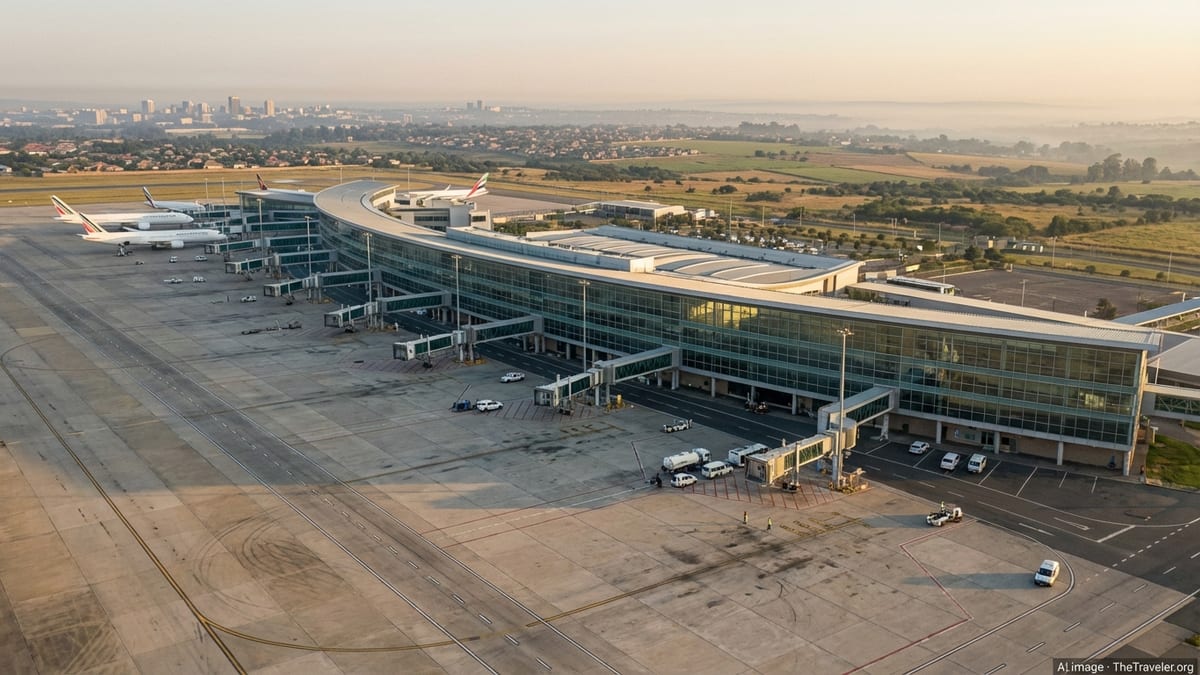
Recent flight delays and operational disruptions at Nairobi’s Jomo Kenyatta International Airport (JKIA) have underlined just how central the hub is to Kenya’s strategy to anchor trade, tourism, and connectivity across East and Central Africa.
Get the latest news straight to your inbox!
A hub whose delays ripple across East Africa
When flights back up at JKIA, the effects rarely stop at Nairobi. As Kenya’s busiest gateway and one of the top African airports by passenger volumes, the airport functions as a primary transfer point between East Africa, the rest of the continent, Europe, the Middle East, and Asia. Industry data places JKIA among Africa’s 20 busiest airports, with passenger numbers that continue to climb as regional travel recovers and new routes are launched.
That scale magnifies every disruption. Reports of delayed and cancelled services in recent months have shown how quickly congestion on JKIA’s single main runway can cascade into missed connections, rescheduled cargo departures, and itinerary changes across multiple countries. Kenya Airways and other carriers rely on tightly timed banks of arrivals and departures to feed regional routes; when one wave is disrupted, links to cities such as Entebbe, Dar es Salaam, Kigali, and Lusaka can all feel the strain.
The knock-on impacts underscore why JKIA is repeatedly described in official planning documents as a critical node for regional integration. The airport’s performance now directly shapes the reliability of passenger and freight connections for landlocked neighbors that depend on Kenyan infrastructure for global market access.
Growing demand meets single-runway constraints
Flight delays have also drawn fresh attention to structural bottlenecks. Publicly available master-plan summaries indicate that JKIA handled roughly 8.6 million passengers in 2024, with close to four out of five travelers on international journeys. Forecasts embedded in the latest planning reports project demand to more than double by around 2040 if growth trends hold, with a significant rise in transfer passengers using Nairobi as a connecting point.
For now, however, that growth is pressing on limited airside capacity. JKIA continues to operate primarily with one main runway. Advisory studies prepared for the government describe high runway occupancy times, limited rapid-exit taxiways, and constrained parallel taxiway infrastructure, all of which reduce the number of aircraft movements that can safely be handled per hour. When weather deteriorates or an aircraft requires extra time on the runway, delays can quickly build.
Technical assessments commissioned for the airport’s expansion outline the need for a second runway and associated taxiways by the mid-2030s to maintain efficiency and resilience. Without that redundancy, unplanned closures or maintenance can halt or severely restrict movements, a vulnerability that has been visible whenever incidents shut the runway and forced diversions to Mombasa or regional alternates.
Regional rivalry sharpens the stakes
These vulnerabilities matter because Nairobi is not the only city vying to be East Africa’s preferred aviation hub. Addis Ababa’s Bole International Airport in Ethiopia has expanded aggressively on the back of Ethiopian Airlines’ network, while Dar es Salaam’s Julius Nyerere International Airport and Entebbe International Airport in Uganda are steadily upgrading facilities and traffic volumes.
Industry analysis of airline connectivity in Africa points to a growing contest among the region’s main hubs to capture transfer traffic and cargo flows. Some recent commentary highlights that Nairobi currently retains an edge in East African connectivity, helped by Kenya Airways’ route structure and the presence of multiple international carriers, but Addis Ababa in particular has leveraged new infrastructure and an extensive long-haul network to capture a larger share of continental traffic.
In that context, high-profile delays at JKIA risk eroding competitive advantages that Kenya has spent years building. If transfer reliability in Nairobi slips, long-haul carriers and passengers have alternatives. Every disruption that strands travelers or postpones cargo shipments strengthens the case for airlines to schedule more connections through rival hubs with additional runway capacity and newer terminals.
Expansion blueprints link reliability to Kenya’s Vision 2030
Kenya’s long-term development agendas identify JKIA as a cornerstone of national ambitions. Vision 2030 documents and sector plans list a suite of aviation projects centered on Nairobi, including new terminal capacity, a second runway, modernized air navigation systems, and an “airport city” concept integrating logistics, commercial, and hospitality facilities around the airfield.
Recent feasibility and master-plan reports outline a phased public-private partnership model for JKIA, combining a new passenger terminal, rehabilitation of existing facilities, and potential runway expansion. The studies argue that enhancing airside capacity, streamlining passenger flows, and upgrading cargo handling are essential to transform Nairobi into a world-class hub capable of handling close to 20 million passengers per year in the coming decades.
These planning documents explicitly link airport performance to broader economic goals: boosting exports of flowers and fresh produce, deepening Kenya’s role as a financial and services center, expanding conference and safari tourism, and anchoring regional value chains stretching into Uganda, Rwanda, South Sudan, and eastern DR Congo. In each case, consistent on-time operations at JKIA are treated as a prerequisite rather than a bonus.
Connectivity, cargo and the cost of disruption
Beyond passenger inconvenience, delays at JKIA carry measurable economic costs. The airport is a key gateway for high-value, time-sensitive exports such as cut flowers, horticultural products, and fresh fish destined for European and Middle Eastern markets. Logistic chains for these goods operate on tight schedules, with cargo flights often departing at night to meet early-morning auctions and supermarket deliveries abroad.
When runway bottlenecks or terminal congestion push back departure times, exporters face potential spoilage, price discounts, or the expense of rerouting shipments through alternative hubs. The same logic applies to pharmaceuticals, electronics, and express parcels that move through Nairobi as part of global supply chains. Predictability matters as much as absolute speed, and repeated disruptions can prompt freight forwarders to reassess routings.
Domestically and across the region, JKIA also functions as the main bridge between long-haul intercontinental flights and smaller aircraft serving secondary cities and tourism circuits. Safari itineraries, business trips into emerging industrial zones, and humanitarian operations in neighboring countries often depend on precisely timed connections in Nairobi. Each extended delay reverberates into hotel bookings, ground transport, and project timelines, quietly increasing the cost of doing business in and through Kenya.
The recent wave of delays has therefore done more than frustrate travelers. It has underlined a structural reality: Kenya’s aspirations to lead regional trade, tourism, and logistics still run through a single, heavily used runway and aging terminals. How quickly and effectively the country implements its expansion blueprints at JKIA will play a decisive role in whether Nairobi remains East Africa’s preferred gateway, or gradually cedes ground to better-equipped rivals.
Sources: Citizen Digital – JKIA master plan coverage; Kenya Vision 2030 – aviation expansion projects; JKIA expansion advisory summary; AFRAA African airports passenger rankings; Uchumi360 regional hub competition analysis