


More news on this day
Travelers across the Americas are facing fresh disruption as delays and cancellations ripple outward from Bogotá’s El Dorado International Airport, affecting routes to and from Miami, Toronto and Lima on Monday, July 6, 2026.
Get the latest news straight to your inbox!
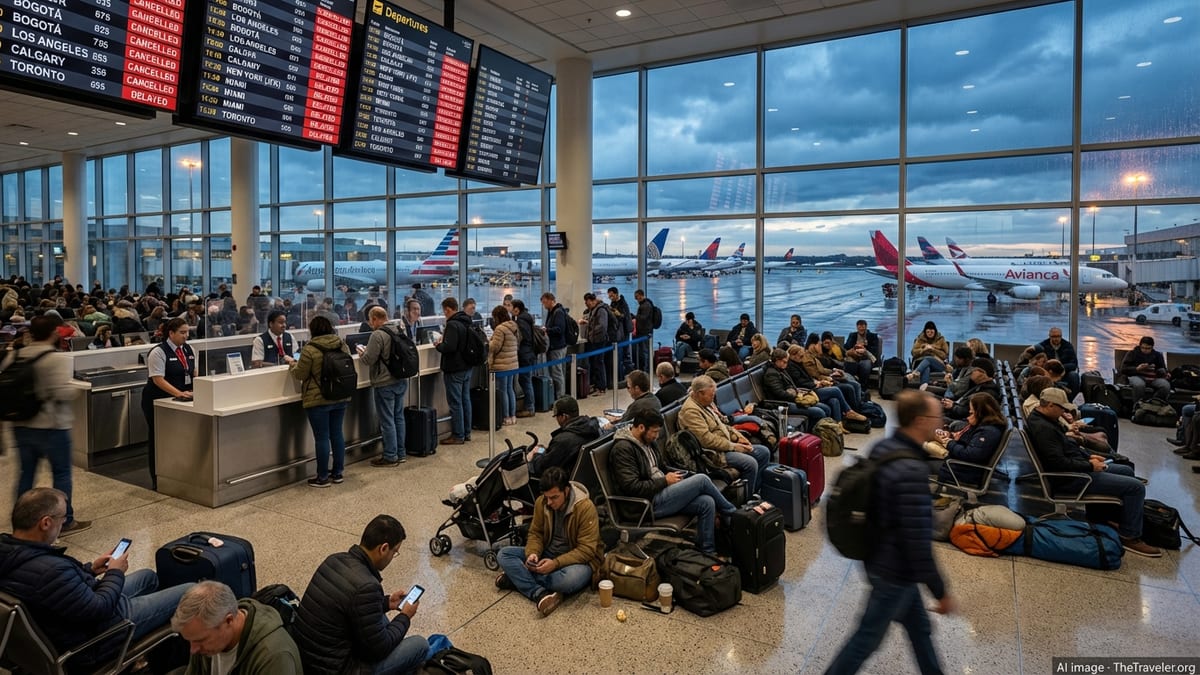
Wave of Delays at El Dorado Spills Across the Region
Publicly available flight-tracking data for El Dorado International Airport on July 6 indicates a spike in operational disruption, with at least 47 delays and 6 cancellations recorded through the day. The irregular operations are centered on Terminal 1, where most international traffic is handled, including flights operated or marketed by Avianca, LATAM, Delta and their codeshare partners.
The pattern of delays is most visible on key regional routes linking Bogotá with Lima, Miami and other North and South American hubs. Schedules show several Bogotá–Lima services, operated by Avianca and LATAM and sold under additional codes from Delta and Air Canada, experiencing revised departure or arrival times as the morning peak gave way to rolling delays.
The disruption is particularly challenging for travelers relying on tight connections through Bogotá. Trip-planning platforms and passenger reports describe itineraries built around short connection windows at El Dorado, with some journeys now stretching hours beyond their planned arrival times as aircraft depart late, crews reach duty-time limits, or incoming flights arrive behind schedule.
Although El Dorado remains operational, the volume of delayed flights is high enough to create crowded gate areas, longer queues at customer-service counters and growing pressure on rebooking options throughout the afternoon and evening wave of departures.
Key Carriers: Avianca, LATAM and Delta Under Pressure
As Bogotá’s primary hub carrier, Avianca is at the center of Monday’s disruption. The airline operates a dense network linking El Dorado with major cities across the Americas, including multiple daily departures to Lima and Miami. When delays mount at its hub, the knock-on effect can quickly reach passengers far from Colombia, especially those booked on multi-leg itineraries.
LATAM, which also maintains an extensive presence in Colombia, is seeing pressure on its domestic and regional services from Bogotá. Flight information for several LATAM departures shows minor to moderate schedule changes, with some aircraft pushed back from their original slots and others arriving late into Bogotá from previous legs. Where LATAM flights are sold under Delta codes, downstream effects can reach travelers who purchased itineraries through North American or European partners.
Delta’s role is felt mainly via codeshare and connecting traffic. The airline operates direct service between the United States and Bogotá and places its code on multiple Avianca and LATAM flights, particularly on routes linking El Dorado with Lima and other South American cities. Disruptions at the Bogotá hub can therefore impact Delta customers originating in U.S. cities such as Miami or Atlanta, even when the affected segment is operated by a partner carrier.
Other airlines with a significant footprint at El Dorado, including low-cost and regional operators, are also exposed to the same congested runway schedules and constrained gate availability. As delays build through the day, each new irregular operation can reduce the system’s flexibility to absorb further shocks.
Routes to Miami, Toronto and Lima See Growing Knock-on Effects
The impact of Monday’s disruption is most evident on a handful of high-demand international corridors. Flights between Bogotá and Lima, operated by Avianca and LATAM and marketed as codeshare services by Delta and Air Canada, illustrate how a wave of delays at one hub can reverberate along an entire route. Affected services departing Bogotá early in the day have seen adjusted departure times and estimated arrivals, compressing turnaround schedules and raising the risk of additional slippages later in the timetable.
Links between Bogotá and Miami are also under strain. Miami is a major gateway for travelers connecting between North and South America, and Bogotá–Miami flights frequently carry passengers onward to domestic U.S. destinations and the Caribbean. When departures from El Dorado run late, missed connections in Miami can cascade into new rebookings, overnight stays and luggage-handling challenges, particularly for those traveling during the busy northern summer period.
Services connecting Bogotá with Toronto have a similar vulnerability, though the traffic volume is smaller. Long-haul itineraries that combine Bogotá–Toronto segments with flights onward to European or Asian destinations are especially sensitive to even modest delays. If an incoming Bogotá flight misses its connection window in Canada, passengers may be stranded until the next long-haul departure with available seats.
For travelers, the practical effect is a spreading web of uncertainty. Even those whose individual flights remain on time may find themselves caught behind aircraft awaiting departing slots, security holds caused by congestion in departure halls, or longer taxi times as air-traffic control sequences arrivals and departures more cautiously.
Why Operations Are So Fragile at Major Hubs
Monday’s pattern at El Dorado underlines how tightly scheduled modern airline operations have become. At major hubs, turnarounds are planned in narrow time windows designed to maximize aircraft utilization. When a morning bank of arrivals and departures runs late by even a small margin, crews reach duty limits sooner, airport resources such as gates and jet bridges remain occupied longer, and the margin for recovering punctuality shrinks rapidly.
Bogotá’s geographic position and altitude add complexity. The airport serves as a central junction for north–south traffic across the Americas, funneling passengers from cities such as Miami, Toronto and Lima through a single hub. High elevation and variable weather can contribute to air-traffic flow restrictions, and if conditions deteriorate, controllers may be required to space out arrivals and departures, further tightening the squeeze on schedules.
Published coverage on aviation reliability in 2026 points to a broader pattern of airlines operating with thin staffing buffers, especially in maintenance and ground handling. When a hub like Bogotá experiences even modest operational stress, limited spare crews and aircraft can turn isolated delays into a larger disruption affecting multiple carriers and alliance partners.
Passengers with tight onward connections are particularly exposed in such environments. A delay of less than an hour departing El Dorado can translate into an overnight disruption once it triggers a missed transcontinental or long-haul link in Miami or Toronto, with ripple effects on accommodation, ground transport and travel insurance claims.
How Travelers Can Navigate Ongoing Disruptions
Travel advisories and airline policy documents emphasize the importance of real-time monitoring when conditions at a hub begin to deteriorate. Many carriers serving Bogotá, including Avianca, LATAM and Delta, encourage travelers to use mobile apps and notification services to track departure times, gate changes and rebooking options as delays accumulate.
For those scheduled to connect through El Dorado on days with elevated disruption, leaving extra time between flights is often the most effective protective measure. Some frequent travelers recommend avoiding the tightest legal connection windows at Bogotá, particularly for itineraries that link onto long-haul services from Miami or Toronto, or onto early morning departures from Lima.
Publicly available airline tariff documents and passenger-rights summaries outline compensation and care obligations when flights are delayed or canceled for reasons within a carrier’s control. These may include meal vouchers, hotel accommodation or partial refunds once delays surpass specified thresholds. Travelers affected by Monday’s disruptions are likely to consult these policies closely as they seek to recover costs and rearrange plans.
With the northern summer travel season entering a busy stretch, Monday’s events at El Dorado serve as a reminder that even routine operational hiccups can quickly escalate into region-wide travel headaches. For now, passengers flying through Bogotá, and on to Miami, Toronto, Lima and other key cities, are being urged by publicly available guidance to stay flexible, monitor their itineraries closely and prepare for longer-than-expected days in transit.