


More news on this day
Travel across Asia faced major disruption on Sunday as a cluster of airlines operating through Shanghai canceled dozens of services and delayed many more, snarling journeys for passengers bound for China, Japan, Indonesia, Singapore, Malaysia and other destinations.
Get the latest news straight to your inbox!
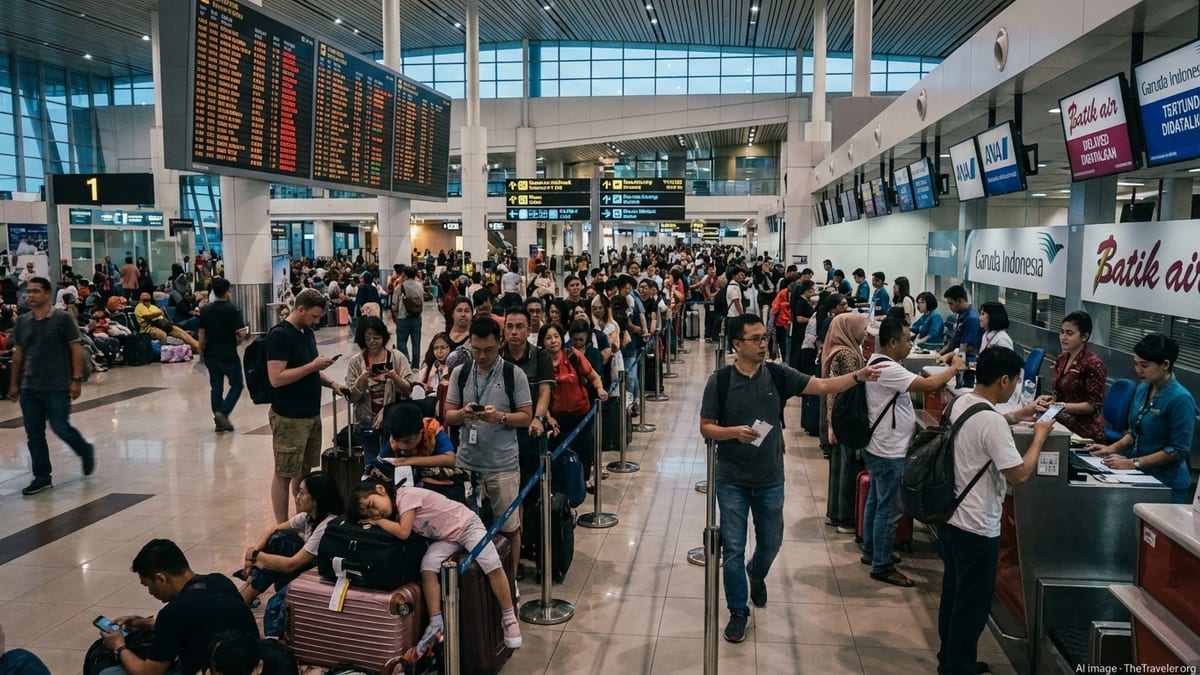
Shanghai Hubs Struggle With Sudden Schedule Shock
Publicly available flight-tracking boards for Shanghai Pudong International Airport on May 24 show an unusual concentration of disrupted services affecting regional and medium-haul routes across Asia. Data indicates that at least 65 flights linked to carriers such as Chengdu Airlines, Juneyao Air, Japan Air Commuter, Batik Air and Garuda Indonesia were canceled, while a further 117 departures and arrivals faced significant delays at the city’s main international gateway.
The disruption appears to have been clustered around peak morning and early afternoon periods, when Shanghai typically handles dense traffic to Southeast and Northeast Asia. Routes linking Shanghai with cities in Japan, Indonesia and Southeast Asia, where Juneyao Air, Garuda Indonesia and Batik Air either operate directly or through codeshares and partnerships, were among those most visibly affected.
Operational data from multiple flight-status platforms shows that some Shanghai flights to popular leisure destinations such as Phuket and Kuala Lumpur did not depart as scheduled. Juneyao-operated services from Pudong to Phuket, for example, were flagged as canceled, while other regional departures showed extended ground holds and revised departure times.
While flights to long-haul markets continued to operate, the accumulation of short- and medium-haul disruptions created a cascading effect across terminals, congesting check-in counters, security lanes and boarding areas and leaving passengers facing extended waits and unplanned overnight stays.
Key Asian Carriers at the Center of the Disruptions
Shanghai-based Juneyao Air, one of China’s largest privately owned airlines, sits at the heart of the disturbance. The carrier operates an extensive regional network from Shanghai to destinations including Singapore, Japan and Southeast Asia, and is a major player on short-haul routes that feed into broader international itineraries.
Chengdu Airlines, which operates domestic and regional flights linking Shanghai with inland hubs such as Chengdu and other Chinese cities, also features prominently in the day’s disruption. Cancellations along these trunk routes can quickly ripple into missed onward connections, especially for travelers targeting Japan and Southeast Asia via Shanghai.
Japan Air Commuter, typically focused on domestic Japanese sectors, is indirectly impacted where its services rely on feeder traffic from Chinese gateways, including Shanghai, via codeshare arrangements. Reduced reliability on China–Japan sectors, where Chinese carriers have already been trimming schedules on certain routes in recent seasons, heightens the knock-on effect on regional connections within Japan.
In Southeast Asia, Garuda Indonesia and Batik Air are among the carriers touched by the turmoil. Garuda operates and codeshares on services between Shanghai and Indonesian hubs such as Jakarta, while Batik Air and its Malaysia-based affiliate serve traffic flows linking China with Malaysia, Singapore, Indonesia and other regional destinations. Delays or cancellations involving these airlines can disrupt itineraries that string together several short segments across the region.
Travelers to Japan, Indonesia, Singapore and Malaysia Hit Hard
Passengers bound for Japan have been particularly exposed. In recent months, Chinese airlines have already made repeated adjustments to China–Japan capacity on routes from Shanghai, and the latest wave of day-of-travel cancellations compounds uncertainty for travelers heading to cities such as Tokyo, Osaka and Fukuoka. Missed connections at Shanghai can also impact domestic links within Japan operated by regional carriers like Japan Air Commuter.
Indonesia-bound travel has also suffered. Shanghai serves as a key gateway for flights to Jakarta and onward to Indonesian holiday destinations. Garuda Indonesia’s scheduled operations between Shanghai and Jakarta, together with its codeshares on Chinese partners, play a central role in connecting Chinese and international travelers to Indonesia. When departures from Shanghai run late or are canceled, the resulting missed onward flights can strand travelers far from their final island or resort destination.
Singapore and Malaysia, both heavily reliant on regional air connectivity, have seen ripple effects as well. Singapore-bound passengers using Shanghai as a transit point, including those traveling on itineraries involving Chinese and Southeast Asian carriers, reported altered schedules and extended transit times. Meanwhile, travelers heading to Kuala Lumpur or onward within Malaysia via Batik Air’s network have faced schedule shuffles and re-bookings as Shanghai-origin legs failed to operate on time.
The concentration of disrupted flights on routes linking Shanghai with these key regional markets underscores how sensitive Asia’s short-haul network remains to turbulence at a single major hub. Even where point-to-point flights continue to operate, travelers whose journeys rely on tight connections through Shanghai can still face lengthy delays.
Operational Strain and Weather Among Possible Factors
As of Sunday evening in Shanghai, there was no single, clearly identified cause publicly highlighted for the full scale of cancellations and delays affecting the group of carriers. However, a review of historical performance patterns and recent schedules suggests a combination of factors may be contributing to the situation.
Seasonal weather conditions in eastern China often lead to traffic-flow restrictions, airspace congestion and ground holds at major hubs like Shanghai, especially during periods of heavy rain or reduced visibility. When such constraints coincide with busy weekend travel peaks, airlines can rapidly accumulate delays that later necessitate strategic cancellations in order to reset schedules and crew rotations.
Operational complexity also plays a role. Carriers such as Juneyao Air, Garuda Indonesia and Batik Air operate networks that interlink multiple hubs, with aircraft and crew rotations stretching across several countries. A delay or technical issue on one leg can ricochet across subsequent flights in the sequence, particularly when aircraft are tasked with serving both domestic China routes and international sectors to Japan, Southeast Asia and beyond.
In this context, the cluster of 65 cancellations and 117 delays seen in Shanghai is consistent with a pattern in which airlines prioritize maintaining a core subset of flights while cutting or rescheduling others when external constraints stretch operational resilience.
What Passengers Can Expect in the Coming Days
Industry observers expect knock-on effects from Sunday’s disruptions to linger into the early part of the week, as airlines reposition aircraft and crew and attempt to restore normality to their Shanghai schedules. Travelers with upcoming itineraries involving Chengdu Airlines, Juneyao Air, Garuda Indonesia, Batik Air or Japan-linked services routed through Shanghai are likely to experience schedule adjustments, including retimed flights or short-notice equipment changes.
Publicly accessible airline and airport tools already show certain Shanghai departures subject to revised schedules, suggesting that carriers are working to realign rotations. Some passengers with flexible travel plans may choose to rebook onto alternative routes that bypass Shanghai, shifting instead to other regional hubs when such options are available.
For those who must travel through Shanghai in the near term, travel experts generally recommend building in additional connection time, avoiding tight same-day transfers where possible and monitoring flight status repeatedly in the 24 hours before departure. Travelers on complex itineraries that combine multiple carriers in China, Japan and Southeast Asia may face particular exposure if any single leg experiences disruption.
With Asia’s aviation recovery still in a period of recalibration and Chinese carriers continuing to fine-tune capacity across Japan, Indonesia, Singapore, Malaysia and other regional markets, Sunday’s events in Shanghai serve as a reminder that even mature hubs remain vulnerable to sudden operational shocks that can ripple quickly across borders.