


More news on this day
A new wave of flight disruption across the Middle East has resulted in 1,617 delays and 71 cancellations within a single 24 hour period, highlighting the continued fragility of air travel links between regional hubs and major long haul markets.
Get the latest news straight to your inbox!
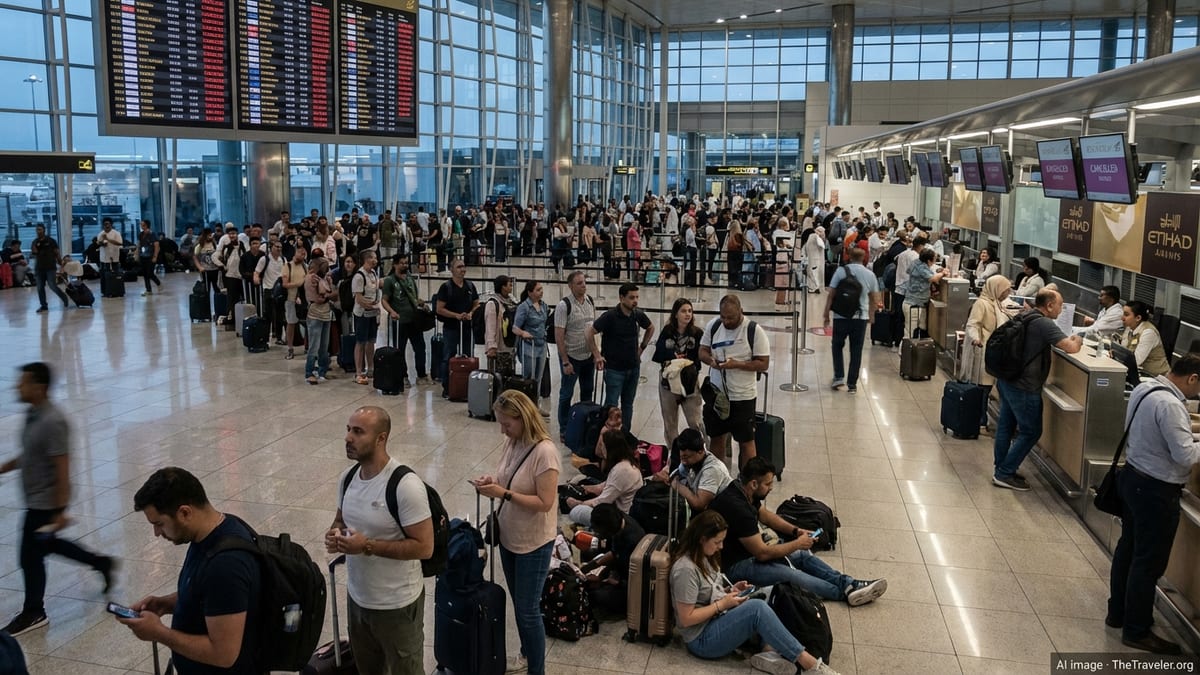
Fresh Data Underscores Scale of Middle East Disruptions
The latest disruption figures, compiled from live flight tracking dashboards and consumer facing disruption monitoring services, indicate that a total of 1,688 flights were either delayed or cancelled across Middle East airports in the most recent reporting window. The numbers point to an environment in which even relatively small operational shocks can quickly cascade across tightly scheduled networks.
While daily totals fluctuate, the current disruption stands out for both its size and timing. Recent reporting on earlier waves of problems across the region, including a period that saw 1,261 delays and 59 cancellations on August 31, 2026, showed that pressure on airport operations has been building over several weeks rather than appearing as a one off event. Publicly available coverage suggests that the latest 1,617 delay count continues that pattern of elevated stress on airport and airline operations.
Tracking sites that aggregate delay and cancellation statistics by airport and region show that Middle East hubs regularly feature among the locations with the highest proportion of affected flights on busy travel days. Although the absolute numbers remain small relative to global traffic, the concentration of long haul connections through a handful of regional hubs means that any spike in disruption can have an outsized impact on itineraries linking Europe, Asia and Africa.
Key Hubs Absorb Most of the Pressure
Recent disruption patterns across the region indicate that a limited group of airports carries much of the burden when operations become strained. Previous data releases on Middle East delays and cancellations have highlighted Dubai International, Abu Dhabi International, Hamad International in Doha, and major Saudi Arabian hubs such as Riyadh and Jeddah as frequent focal points for disruption, alongside Bahrain International and Ben Gurion Airport near Tel Aviv.
The latest wave of 1,617 delays follows earlier episodes in which Bahrain and other Gulf gateways were identified as accounting for a significant share of late running flights. Earlier coverage of a separate disruption window reported that five key hubs collectively experienced more than a thousand delayed flights, underscoring how regional networks funnel traffic through a relatively compact group of airports.
When several of these hubs are affected at once, knock on effects tend to ripple outward along connecting banks. Passengers traveling on multi segment itineraries, particularly those linking secondary European or Asian cities via Gulf hubs, are more likely to encounter missed connections or sizeable schedule changes when departure waves from the main hubs are pushed back.
Airspace Constraints and Operational Complexity
Publicly available analysis of recent Middle East disruption links recurring waves of delays and cancellations to ongoing airspace constraints affecting several flight information regions. According to published material from air passenger rights services, airspace over Iran, Iraq, Israel, and parts of the Gulf has periodically been subject to closure or tight routing restrictions in 2026, forcing airlines to divert around constrained areas.
Each additional mile flown to avoid restricted airspace adds to block times and reduces timetable flexibility. Network planners generally build some buffer into schedules, but when flight times increase across multiple routes, there is less spare capacity to absorb routine issues such as late inbound aircraft, short lived weather disturbances, or congestion in busy air traffic control sectors. The result can be a higher share of flights arriving or departing behind schedule.
Operational complexity also rises as carriers adjust routings and crew plans around constrained corridors. Aircraft and crew that would normally cycle efficiently through established patterns may find themselves out of position, increasing the likelihood of subsequent delays or, in some cases, preemptive cancellations to restore network stability. Recent regional coverage has pointed to airlines trimming frequencies or adjusting schedules on some long haul corridors in response to these pressures.
Passenger Impact Spreads Beyond the Region
The direct effect of 1,617 delayed flights and 71 cancellations across the Middle East is visible at departure gates and arrival halls within the region, but disruption often extends far beyond local airports. Because many itineraries between Europe, Asia and Africa rely on one stop connections via Gulf and Levant hubs, a late departure from a Middle East airport can translate into missed onward flights and lengthy rebooking processes for travelers who may never set foot outside the terminal.
Published disruption tallies from previous events suggest that even modest cancellation numbers can translate into thousands of affected passengers when widebody aircraft are involved. A single cancelled long haul service can displace several hundred travelers, many of whom must be re accommodated on already busy alternative flights. When combined with mounting delays across the same hub, the overall passenger experience can quickly deteriorate.
Reports from consumer advocacy and passenger rights organizations note that travelers sometimes underestimate the extent to which knock on effects from regional issues can alter their plans. This is particularly true when the initial cause relates to airspace routing rather than visible adverse weather at origin or destination. In such cases, flights may still appear to be operating on airline schedules, but actual departure and arrival times can shift significantly at short notice.
Guidance for Travelers Navigating Ongoing Volatility
With several Middle East hubs experiencing repeated waves of disruption in recent weeks, publicly available guidance from passenger rights platforms emphasizes the importance of close monitoring and flexible planning. Travelers are encouraged to track their flights using airline apps, airport flight information pages and independent flight tracking tools rather than relying solely on static itinerary documents issued at the time of booking.
Information portals specializing in air passenger rights also highlight that travelers departing from or transiting through many Middle East airports may have entitlements to assistance, rebooking or refunds under applicable regulations and airline policies when delays or cancellations reach certain thresholds. However, the specific rules can vary by carrier, origin and destination, making it important for passengers to review the conditions attached to their tickets.
Looking ahead, analysts following the region’s aviation sector indicate that the combination of constrained airspace, high summer and early autumn demand, and limited spare capacity at key hubs could keep disruption risks elevated. While airlines and airports continue publicly reporting efforts to adjust schedules and improve resilience, the recent tally of 1,617 delays and 71 cancellations underlines that travel through the region may remain vulnerable to sudden operational shocks.
AirHelp: Middle East flight delays and cancellations
AirHelp: Middle East airspace restrictions disruption overview