


More news on this day
Severe weather around Chicago and air traffic restrictions in Florida are rippling across the U.S. air network, with recent figures and published reports indicating at least 283 cancellations centered on Chicago O’Hare and more than 6,700 delays nationwide, disrupting schedules at Orlando and several other major airports.
Get the latest news straight to your inbox!
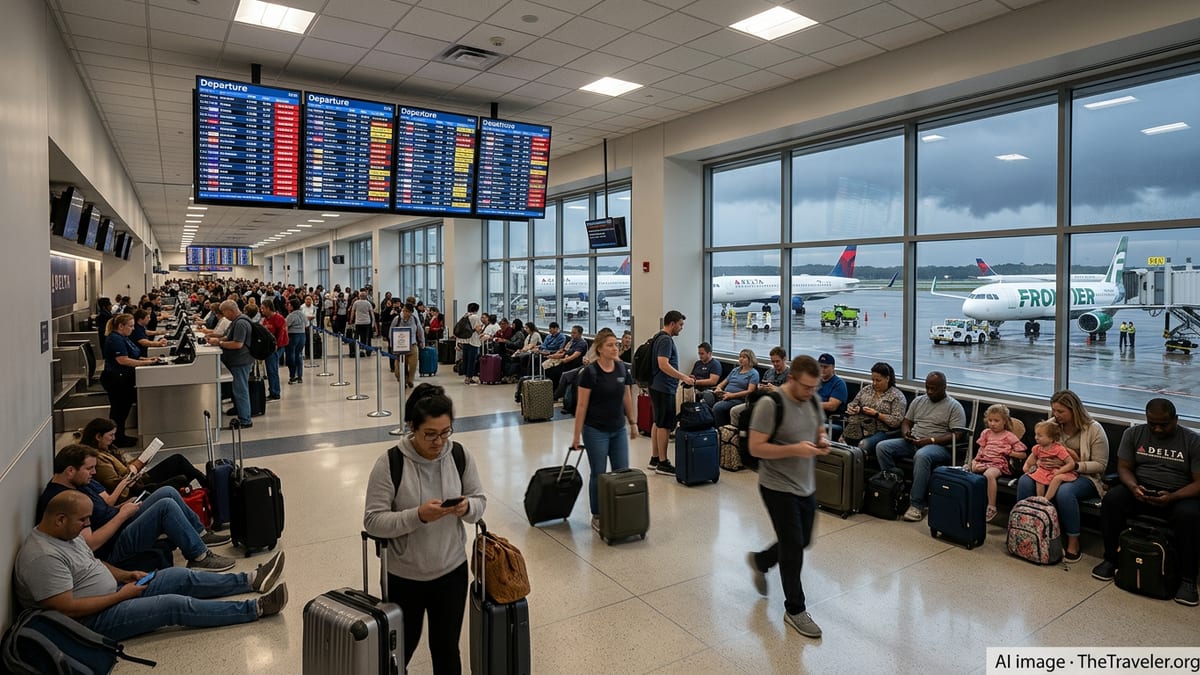
Chicago Ground Stops Drive Hundreds of Cancellations
Published coverage from June 11, 2026, shows how quickly Chicago can become the focal point of nationwide disruption. A ground stop affecting both O’Hare and Midway that afternoon led to more than 800 flight delays and at least 283 cancellations at O’Hare alone as thunderstorms moved through the region, according to local reporting that cited air traffic alerts and airport data.
That level of disruption at a single hub has outsized effects across the country. When hundreds of flights into and out of O’Hare are delayed or canceled, aircraft and crews end up out of position for later departures, forcing schedule changes on routes that may be far from Illinois. Passengers on connecting itineraries through Chicago often face missed connections, forced overnights, and rebookings on already crowded flights.
Real-time statistics from flight tracking services on more recent busy days underline how sensitive the system remains. Live data for Chicago O’Hare has shown periods with close to 1,000 delays in a single day and double-digit cancellations, while systemwide U.S. delays have topped 6,400 on some afternoons. Those numbers illustrate how a single weather event, particularly at a major hub, can spark cascading operational challenges across airlines.
Chicago’s dual-airport system, with O’Hare as a primary hub for multiple large carriers and Midway as a major base for low-cost operators, concentrates risk in one metropolitan area. When severe thunderstorms trigger traffic management measures or temporary ground stops, both airports can slow simultaneously, limiting options for rerouting and compounding the impact on travelers nationwide.
Orlando and Florida See Knock-On Disruptions
While the most dramatic cancellation figures have been tied to Chicago, Florida’s busy airports, including Orlando International, have faced their own waves of disruption connected to weather and air traffic control initiatives. Federal aviation data for Orlando shows periods of significant departure delays attributed to traffic management programs tied to weather, with gate holds and taxi waits exceeding 30 minutes and categorized as increasing.
Publicly available information and traveler accounts point to broader Florida impacts during active weather patterns. Reports indicate days when high disruption levels were recorded at airports such as Orlando, Miami, and Fort Lauderdale as storms and convective weather systems moved across the state. On such days, cancellations can remain relatively limited while delays mount into the hundreds, straining airport operations and passenger patience.
Orlando’s role as a major leisure gateway magnifies the consequences of even moderate operational stress. Many visitors travel on tight vacation schedules with fixed hotel and theme park bookings, so a missed evening arrival or overnight delay can mean lost reservation nights and additional out-of-pocket costs. When constraints upstream in Chicago or other hubs intersect with Florida’s weather-driven slowdowns, options for same-day rebooking become especially scarce.
As with Chicago, Orlando’s challenges rarely stay local. When departures from central Florida are held or slowed, aircraft scheduled to continue onward from their next stop may arrive late, and crews can run up against duty-time limits, triggering further cancellations and last-minute schedule reshuffles throughout the carrier’s network.
Systemwide Ripple Effects for Major U.S. Airlines
National cancellation and delay tallies show how conditions at a few key airports translate into widespread disruption. Recent live statistics from flight tracking platforms have documented days with more than 20,000 delays worldwide and around 6,500 within, into, or out of the United States, alongside hundreds of cancellations. On days marked by thunderstorms in Chicago or traffic control measures in Florida, the share of those disruptions linked to U.S. hubs can be especially high.
Major network carriers that rely heavily on Chicago O’Hare as a connecting hub feel the brunt of Midwest storm systems, while operators with large footprints in Florida must contend with recurring convective weather in the Southeast. Low-cost and leisure-focused airlines that concentrate flights at Midway, Orlando, and other sun destinations can see entire banks of departures compressed, delayed, or canceled when air traffic managers implement spacing or flow restrictions.
Because airlines operate tightly timed schedules, a delay of 30 to 60 minutes at the start of a flight’s day can cascade into multi-hour disruptions by evening. Aircraft that were supposed to complete several segments may end the day short of their planned rotations, and crews can time out before reaching their final legs. The result is often a mix of same-day cancellations and next-day rescheduling as carriers work to realign aircraft and staffing.
These operational ripple effects are particularly visible during peak travel periods, when flights run near capacity and spare seats are scarce. When hundreds of flights are delayed or dozens canceled at one or two major hubs, travelers across the network may find that alternative itineraries involve long layovers, overnight stays, or routings through secondary airports far from their original plans.
What Travelers Are Experiencing on the Ground
Recent months have produced multiple episodes that illustrate the passenger-level impact of large-scale disruption events linked to Chicago, Orlando, and other busy hubs. Accounts shared publicly describe travelers facing rolling delay notifications, long periods on board aircraft waiting for departure slots, and late-night cancellations that leave passengers searching for scarce hotel rooms near major airports.
When thunderstorms or air traffic control measures concentrate delays at a hub, airport concourses can quickly grow congested. Lines at customer service desks and gate podiums lengthen as multiple flights seek rebooking assistance at once. For travelers with connections, even a relatively short initial delay can be enough to miss onward flights, forcing rebookings onto later departures that may already be oversold.
Families and international passengers can be particularly affected, as changing itineraries sometimes involves coordinating with hotels, ground transportation bookings, and, in the case of overseas trips, visa or entry requirements. In leisure markets such as Orlando, missed arrivals can cut into vacation time, while in business-focused markets like Chicago, delays and cancellations may mean missed meetings or lost workdays.
In response, airlines typically encourage travelers to monitor flight status closely on official apps and websites, and to consider proactive rebooking when storms or known traffic management programs are forecast for key hubs. Published advice from airports and aviation agencies also emphasizes the importance of allowing extra time for connections, especially during summer and holiday travel seasons when weather-related slowdowns are more common.
Why Weather and Air Traffic Controls Keep Disrupting U.S. Flights
Industry and government analyses describe weather and airspace constraints as enduring drivers of flight delays and cancellations. Thunderstorms, low visibility, and strong winds can all reduce airport capacity by forcing greater spacing between aircraft or temporarily halting arrivals and departures. When such conditions coincide with peak traffic periods at large hubs, the mismatch between scheduled volume and available capacity quickly grows.
Traffic management initiatives put in place by air navigation authorities, such as ground delay programs and route restrictions, are designed to keep safety margins intact while stretching limited capacity as far as possible. However, these measures also translate directly into longer taxi times, holding patterns, and schedule changes for airlines and passengers. When storms affect multiple key corridors or hub cities at once, the margin for adjusting flows without widespread disruption narrows considerably.
Background material on flight delays underscores that a significant share of disruptions each year remains weather-related, even as airlines and airports invest in improved forecasting, more efficient routing, and technology that allows operations in a wider range of conditions. At the same time, steadily high demand for air travel means many flights operate close to full, which limits opportunities to absorb displaced passengers when irregular operations occur.
With Chicago and Orlando serving as critical nodes in domestic and international networks, periods of intense storms or air traffic restrictions at these airports are likely to continue generating outsize effects across the United States. Travelers planning trips through these hubs are encouraged, by publicly available guidance, to keep a close watch on forecasts and operational updates and to build extra flexibility into their plans when severe weather is in the picture.
Ground Stops Delay Over 800 Flights At O’Hare, Midway
Live Airline Flight Cancellations & Delay Statistics