


More news on this day
Air travelers across the United States faced another turbulent day as fresh operational strains translated into 128 flight cancellations and delays involving SkyWest, United and Alaska Airlines, compounding an already fragile summer travel season.
Get the latest news straight to your inbox!
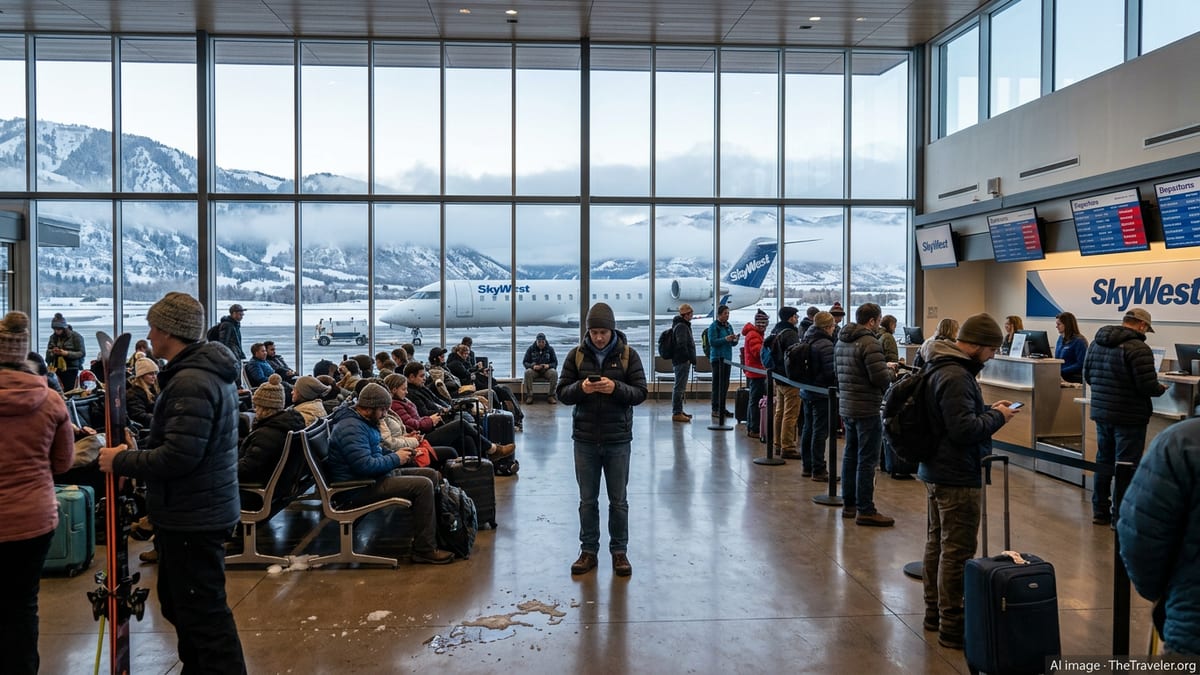
Day of Disruption Across Key US Hubs
Tracking data from multiple flight-monitoring services indicates that a combined 128 flights operated by or on behalf of SkyWest, United and Alaska Airlines were either canceled outright or heavily delayed at US airports. The disruptions were spread across major hubs and smaller regional fields, affecting both early-morning departures and late-evening connections. While the total sits below the most extreme nationwide meltdowns seen earlier this month, it still translated into missed connections and extended layovers for thousands of passengers.
The latest wave of cancellations follows a June marked by repeated operational stresses in the national airspace system, with storms, crew availability concerns and tight aircraft utilization all adding pressure. Publicly available aviation dashboards show that delay programs and ground holds have become a recurring feature at several busy hubs during peak hours. Against that backdrop, even a three-figure tally of disrupted flights can quickly ripple through carrier networks built around tight banked schedules.
For travelers, the impact was uneven but widespread. Some passengers encountered modest departure holds of under an hour, while others saw flights scrubbed entirely and were rebooked onto services later in the day or next morning. Because SkyWest operates under contract for multiple major airlines, cancellations in its operation often appear under different mainline brands, complicating the picture for those trying to assess which carrier is most affected at any given time.
SkyWest’s Outsized Role in Regional Connectivity
SkyWest Airlines once again featured prominently in the disruption patterns. As one of the largest regional operators in the United States, it flies under brands including United Express and Alaska SkyWest, linking smaller communities to large hub airports. When SkyWest’s operation experiences difficulty, the knock-on effects can be felt across several mainline carriers, particularly on shorter, high-frequency routes.
Recent federal Air Travel Consumer Reports highlight how central SkyWest is to the US route map, ranking it among the higher-volume carriers for both scheduled operations and cancellations. Although its overall cancellation percentages fluctuate month to month, any single day with dozens of affected flights can significantly disrupt connectivity for smaller markets that may have only one or two daily departures to a hub.
On the latest day of turmoil, the bulk of SkyWest-related issues were tied to short- and medium-haul segments feeding into major hubs. When those feeder flights are delayed or canceled, travelers often lose same-day options to connect onward, especially in the late afternoon and evening banks. This dynamic leaves many passengers forced into overnight stays or lengthy re-routing, even if the headline numbers for total cancellations appear modest compared with large nationwide events.
United and Alaska Face Cascading Summer Pressures
United Airlines entered the busy summer period with a network already under strain from repeated bouts of severe weather and air traffic control flow restrictions, particularly in the Midwest and along the East Coast. Flight-tracking and passenger-rights resources have documented several recent days in June when United and its regional partners recorded elevated levels of delays and cancellations compared with seasonal norms.
Alaska Airlines has also been navigating a challenging operational environment. Public discussion in traveler forums and recent data snapshots point to recurring weekend disruptions on the West Coast and at key gateway airports, where tight turn times and strong seasonal demand can leave little margin for recovery when even a small number of aircraft or crews fall out of position. As Alaska leans on regional partnerships, including flying contracted through SkyWest, irregular operations can propagate between carriers.
The latest figures showing 128 combined cancellations and delays involving SkyWest, United and Alaska fit into a broader pattern of summer volatility rather than a single isolated incident. With each carrier operating complex hub-and-spoke networks, any schedule trimming or rolling delay program ordered in response to weather or airspace constraints can lead to sudden spikes in disruption statistics for a given day.
Weather, Airspace Constraints and Thin Margins
While no single nationwide breakdown was identified, recent weather systems and capacity management measures have played a visible role in shaping airline operations through late June. Online status boards maintained by aviation authorities show recurring traffic management initiatives at busy coastal and Midwest hubs, often citing thunderstorms, low visibility or staffing-related flow limits as reasons for metering traffic into constrained airspace.
These capacity reductions require airlines to make rapid adjustments to their schedules, typically by trimming selected departures, consolidating passenger loads where possible and accepting longer ground holds. Such measures help prevent airborne congestion but shift the burden to airport terminals, where passengers experience the inconvenience of waiting on the ground or rebooking after last-minute cancellations.
Industry reporting and consumer-rights analyses over the past month have underscored how thin the operational margin has become at many carriers during peak travel periods. Fleets and crews are heavily utilized, with fewer spare aircraft and reserve staff available compared with pre-pandemic summers. In that context, a cluster of thunderstorms or localized air traffic restrictions can quickly transform a manageable day into one defined by conspicuous disruption statistics.
What Travelers Can Expect in the Weeks Ahead
With the July travel rush approaching, the pattern emerging from late June suggests that passengers flying on SkyWest-operated services and on United and Alaska mainline routes should remain prepared for intermittent disruption. Historical consumer reports from the US Department of Transportation indicate that cancellation and delay rates often rise during peak summer months, particularly when weather and airspace capacity constraints intersect with sustained high demand.
Travel experts and passenger-rights organizations consistently advise building additional buffer time into itineraries, especially when connecting through major hubs or relying on the last flight of the day from smaller regional airports. Same-day rebooking options can be limited when disruption hits a cluster of departures simultaneously, as seen in the latest round of 128 cancellations and delays.
For the airlines involved, the immediate focus is likely to remain on day-to-day recovery: repositioning aircraft, adjusting schedules where necessary and responding to rolling weather and airspace constraints. For travelers, the latest turbulence in operations at SkyWest, United and Alaska serves as another reminder that the 2026 summer travel season is shaping up to be highly sensitive to even modest shocks in the aviation system.