

More news on this day
Air travel across Canada faced severe disruption as hundreds of delays and dozens of cancellations rippled through major hubs, straining operations at Air Canada and WestJet and leaving passengers scrambling to rebook journeys nationwide.
Get the latest news straight to your inbox!
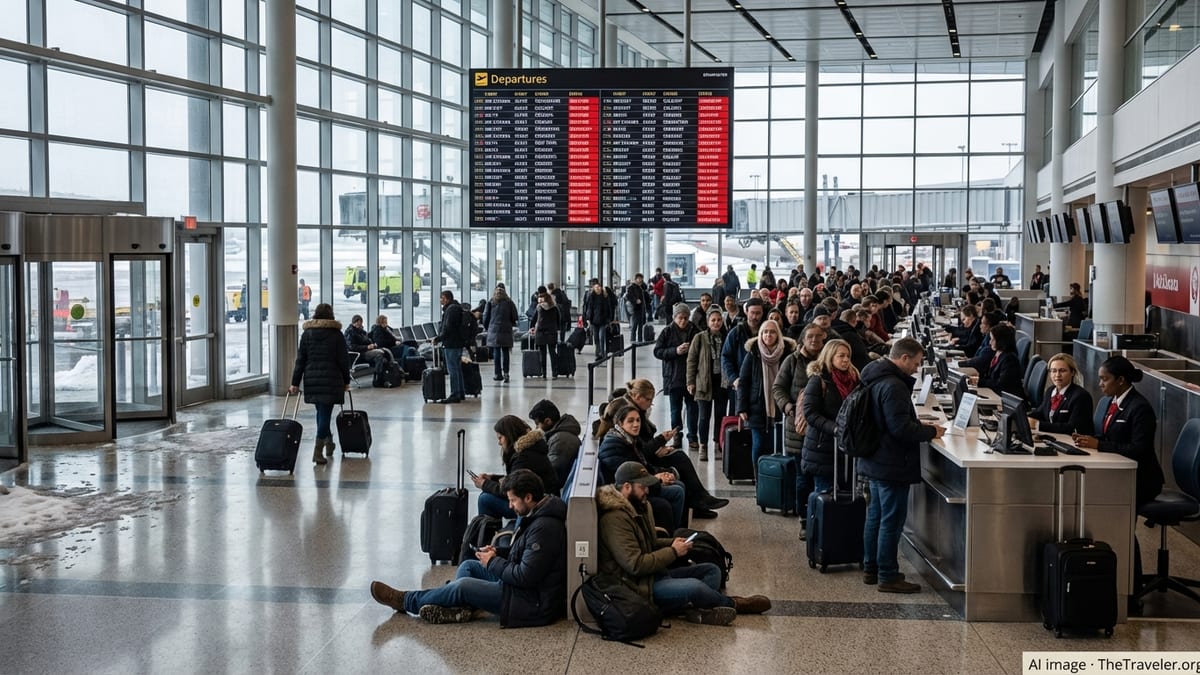
Wave of Delays and Cancellations Hits Major Canadian Hubs
Tracking data from multiple flight-monitoring platforms on June 20 indicates that more than 500 scheduled departures and arrivals across Canadian airports were affected by delays, with a further cluster of cancellations concentrated at the country’s busiest hubs. The disruptions primarily impacted services operated by Air Canada and WestJet, as both carriers attempted to stabilize their schedules during one of the peak early-summer travel weekends.
Publicly available information shows that Toronto Pearson, Vancouver, Calgary and Montreal–Trudeau bore the brunt of the operational turbulence, with knock-on effects visible at mid-sized airports such as Edmonton, Ottawa and Halifax. The combination of late inbound aircraft, tight turnarounds and weather‑related constraints in certain regions contributed to a cascading pattern of schedule changes through the day.
While the precise tally of affected flights fluctuated in real time, data snapshots pointed to several hundred delayed departures alongside dozens of cancellations for both domestic and transborder services. Travel industry coverage noted that the disruption came despite efforts by both major carriers to trim marginal routes and adjust capacity earlier in the year in response to fuel prices and staffing considerations.
Passengers reported extensive waits at check‑in counters and service desks as they sought rebooking options, with some travelers choosing to abandon same‑day travel entirely in favor of itineraries later in the weekend. Social media posts and consumer forums described long lines and limited same‑day alternatives on popular corridors such as Toronto–Vancouver and Calgary–Toronto.
Air Canada Struggles With Network Complexity and High Demand
For Air Canada, the disruptions highlighted the vulnerability of a dense, hub‑and‑spoke network during peak demand periods. Recent publicly available policy updates show that the carrier has been refining its approach to rebooking and compensation during major irregular operations, emphasizing re-accommodation on the next available flight and the use of self‑service tools where possible.
Reports from travel advisories and recent analyses of Air Canada operations indicate that the airline has been working to stabilize performance following earlier seasons marked by staffing shortages, weather‑related schedule shocks and route rationalizations. These past adjustments, including the suspension of certain cross‑border and leisure routes viewed as less economically viable, were intended to create more resilience, yet the current wave of disruptions suggests that margins for recovery remain tight when several factors converge.
Operationally, delays on key trunk routes through Toronto and Montreal can rapidly propagate throughout the network as aircraft and crews arrive late for subsequent legs. Industry observers note that, under such conditions, airlines face difficult choices between holding flights for connecting passengers or protecting on‑time performance on individual segments. The volume of delayed services on June 20 suggested that Air Canada was contending with both late‑running inbound aircraft and constrained slack in its daily schedule.
Consumer advocates have repeatedly pointed to Canada’s Air Passenger Protection Regulations as a critical framework in such events, outlining what travelers may be entitled to in terms of rebooking, care and potential compensation, depending on whether a disruption is deemed within the carrier’s control. The large number of affected flights is expected to test these mechanisms once again as passengers file claims in the coming days.
WestJet Capacity Cuts Meet Operational Headwinds
WestJet has entered the summer period after already announcing capacity reductions on select routes due to higher fuel costs and strategic refocusing on Western Canada. Recent airline and industry reports describe targeted cuts in transborder and seasonal flying, paired with a concentration of resources at key hubs such as Calgary.
Despite those pre‑emptive actions, live flight information on June 20 indicated that WestJet’s operations were still significantly disrupted, with dozens of delays and a concentrated group of cancellations across domestic and U.S.–bound routes. Network observers suggest that thinner schedules and fewer spare aircraft on some city pairs may have limited the carrier’s ability to recover swiftly once irregular operations began to build.
Commentary in travel forums and previous investigative coverage of WestJet’s handling of disruptions have highlighted ongoing scrutiny of how the carrier classifies cancellations and delays. In Canada, whether an event is deemed within or outside an airline’s control can strongly influence passenger entitlements, and any large‑scale interruption tends to renew debate on transparency and fairness in the explanations provided to travelers.
The strain was particularly apparent on routes feeding into Calgary and Vancouver, where changes to aircraft assignments and crew availability can rapidly reverberate across several provinces. With travel demand buoyed by school holidays and early‑summer events, even a relatively small number of schedule changes can leave flights sold out for hours or days, limiting rebooking options.
Passengers Face Long Queues, Confusing Options and Tight Rules
As delays accumulated, travelers across Canada encountered a familiar set of challenges: congested security lines, crowded departure halls and limited real‑time information about alternative flights. Accounts shared on social platforms described customers learning of cancellations only after arriving at the airport, or receiving multiple rolling delay notifications before a final decision was communicated.
Public guidance from consumer groups and travel‑rights commentators has stressed the importance of understanding the distinctions in Canada’s passenger‑rights regime between disruptions caused by weather or air‑traffic control constraints and those categorized as within an airline’s control. During major irregular operations, these classifications can determine access to hotel vouchers, meal credits or monetary compensation, as well as the obligation to rebook travelers on competing carriers if in‑house options are exhausted.
According to published information from travel insurers and financial institutions, many Canadian credit cards now include trip‑delay or cancellation benefits that may supplement what airlines offer. However, such coverage typically requires careful documentation of delay length and reason, something that can be difficult to obtain when airport staff are overwhelmed and communication is fragmented.
With significant numbers of passengers expecting to miss events, cruises and international connections because of the June 20 disruptions, travel advisers have reiterated long‑standing recommendations such as building extra time into connections, avoiding the last flight of the day where possible and registering contact details with airlines to receive automated updates.
Questions Over Resilience as Summer Peak Approaches
The scale of delays and cancellations across Canada has once again raised questions about the resilience of the country’s air transport system as the busiest weeks of the summer season approach. Analysts following airline schedules note that both Air Canada and WestJet entered 2026 under pressure from rising costs and competitive shifts, while airports continue to adapt to evolving security, staffing and infrastructure demands.
Recent network announcements, such as Air Canada’s new international links from Atlantic Canada and WestJet’s adjustments to European and U.S. services, highlight how carriers are still pursuing growth opportunities even as they fine‑tune capacity elsewhere. The events of June 20 illustrate how quickly those growth plans can be overshadowed by operational turbulence when several stressors collide.
Observers point out that Canada’s geography, with long domestic sectors and a heavy reliance on a small number of hubs, leaves limited room for error when irregular operations strike. Any sequence of delays at a hub can cause a backlog that is more difficult to clear than in regions with shorter stage lengths and a denser web of alternative routes.
As airlines, airports and regulators review performance data from this latest disruption, industry commentators expect renewed discussion about scheduling buffers, contingency planning and the enforcement of passenger protections. For travelers, the day’s events serve as another reminder that early‑summer flying in Canada can still be highly unpredictable, even after years of operational recalibration by the country’s two largest carriers.