


Walk west from Cannes’ Old Port, past the last gleaming hotel on La Croisette, and the city softens almost immediately. Apartment balconies replace palace facades, beach towels outnumber designer daybeds, and the chatter you hear is more likely to be French or Italian than the soundtrack of an international conference. This is Plages du Midi, the long ribbon of sand locals quietly claim as their own when they want the sea without the show.
Get the latest updates straight to your inbox!
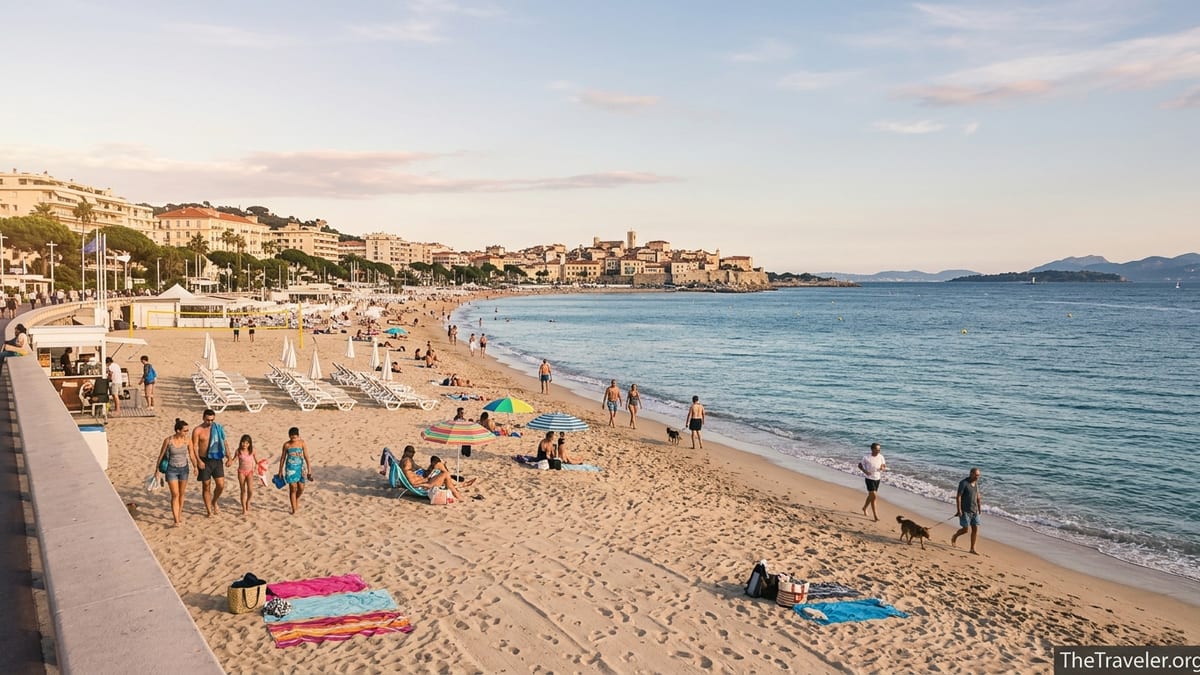
A Different Side of Cannes, Just Five Minutes from the Glamour
Plages du Midi begin just beyond the Vieux Port and Le Suquet, the old quarter of Cannes, then stretch west along Boulevard du Midi toward La Bocca and Mandelieu. In practical terms, you can stand by the ferries to the Lérins Islands, walk five to ten minutes, and suddenly find yourself on a much wider, more relaxed strip of sand than most of what lines central La Croisette.
Where La Croisette’s beaches are densely carved up by hotel clubs, Plages du Midi are dominated by public stretches. A large continuous section known simply as Plage du Midi runs for several hundred meters, broken only occasionally by more modest private concessions and casual beach restaurants. Instead of doormen and rope lines, you will see families arriving with foldable trolleys, locals in flip‑flops stopping for a quick swim after work, and year‑round residents walking dogs when the crowds thin in the evening.
The atmosphere reflects the surrounding neighborhoods. Behind the beach, you will find everyday services: small supermarkets, boulangeries selling warm baguettes, and apartment blocks with laundry waving from balconies. For travelers, that means you can grab a picnic from a corner shop for a fraction of what a cocktail would cost at a Croisette club, then eat it on the sand with a sweeping view of the Estérel massif and the Lérins Islands on the horizon.
Locals also appreciate that Midi’s orientation faces more open sea. When the afternoon light slants across the bay, the water takes on a deeper turquoise than the tighter curve in front of La Croisette, and sunsets can be spectacular, especially on clear evenings after a mistral wind has blown through.
More Space, Softer Edges, and a Calmer Crowd
Ask someone who lives in Cannes why they choose Plages du Midi, and “space” comes up quickly. The sand here forms a long, thin crescent that rarely feels fenced in. Even in July and August, you can usually find room to spread a towel without negotiating with your neighbors’ suncream. Contrast that with peak‑season afternoons in front of the big hotels, where loungers stand shoulder to shoulder and staff squeeze in one more parasol wherever they can.
The vibe is also more relaxed. At Midi you are more likely to see multi‑generation families with cool boxes, local teenagers practicing volleyball near the waterline, and residents reading under straw umbrellas they have brought from home. Festival delegates and luxury shoppers tend to stay on the Croisette side of town, so Midi feels noticeably more Riviera‑casual: think cotton dresses, t‑shirts and linen shorts, rather than high heels sinking into the sand.
Water entry is another selling point. Plages du Midi offer a gently shelving seabed that stays shallow for a good distance, which parents and less confident swimmers appreciate. On calm mornings you will see retirees wading in for laps parallel to the shore, while children play at the edge where the tiny waves break. A Blue Flag designation for parts of the Midi coastline highlights the city’s ongoing efforts to maintain clean water and manage the beach environment in a sustainable way.
The crowd changes through the day in a way that feels very local. Early mornings belong to joggers and dog walkers. Late morning brings parents with young kids and grandparents staking out a shady patch. Late afternoon, after local shops close, workers arrive for a quick dip. Around 19:00 in summer, you will see groups of friends gathering with a bottle of rosé and paper cones of socca or pizza slices from nearby takeaways, turning the end of the day into an informal beach aperitif.
Better Value: How Prices Compare to La Croisette
One of the key reasons residents favor Plages du Midi is the cost. While exact prices change season to season, the pattern is consistent: a full beach day here almost always costs less than along La Croisette. For travelers used to Riviera prices, the difference can be the margin between a single splashy day out and the ability to enjoy the beach several days in a row.
On La Croisette, front‑row sunbeds at the most prestigious hotel clubs in high summer can climb into the higher tens of euros per person for a day, with food and drink quickly doubling the bill for two people. At Plages du Midi, independent beach clubs such as Belle Plage and smaller concessions along Boulevard du Midi typically charge a noticeably lower rate for a lounger and umbrella, especially if you are happy with a second or third row. It is common for locals to reserve mid‑row beds for a weekend at a price that would barely cover a front‑row lounger for an afternoon at the grandest Croisette addresses.
Food follows a similar pattern. At Midi, options range from sit‑down beach restaurants serving grilled fish and salads to simple kiosks selling panini, crepes, and ice cream. A casual lunch might mean a grilled sea bream or a niçoise salad with a glass of house wine at a beachside restaurant, ending around the price of a single signature cocktail in a luxury hotel bar on the main promenade. Many local families simply pack a picnic stocked from a supermarket on Avenue du Docteur Picaud: tomatoes, fresh mozzarella, fruit, and a baguette turn into a sea‑view meal for a small group at supermarket prices.
This affordability has a direct impact on how people use the beach. Rather than treating Cannes’ shoreline as a once‑a‑trip indulgence, residents tend to drop by Plages du Midi several times a week in summer. For visitors who want to experience that rhythm, shifting even one or two planned Croisette days to Midi can free up budget for other Riviera treats, from a ferry to Île Sainte‑Marguerite to dinner in the backstreets of Le Suquet.
Family‑Friendly and Sporty: How Locals Actually Use the Beach
For families, Plages du Midi have a reputation as the practical choice. The sand is soft and wide enough to host impromptu sandcastle competitions, and the gentle slope into the sea reassures parents of younger children. In high season, the city installs lifeguard posts along key sections, and you will often see children’s games unfolding around them: inflatable toys, beginners learning to snorkel near the shore, and siblings paddling together in knee‑deep water.
Local authorities have gradually invested in sports facilities along the Midi waterfront. Today, it is common to find volleyball nets, small football areas, and fitness zones just behind the sand. On summer evenings, groups of young people gather for beach volleyball matches that last until the light fades, while others jog along the paved promenade. This mix of sport and sea gives the area a neighborhood‑park feel, which is part of why residents return outside of the classic holiday weeks.
Cannes’ tourism office has also emphasized kid‑friendly touches along the Midi and nearby La Bocca stretches, including colored “totem” markers that help children find their way back to a meeting point if they become separated from their families. It is a simple, low‑tech measure, but parents appreciate the extra peace of mind on busy days when the beach fills with umbrellas and towels.
For travelers, slotting into this family rhythm is straightforward. Bring water shoes or simple sandals for walking along the hotter sand, pick up sand toys from one of the seasonal stands that pop up around June, and aim to arrive either before 11:00 in the morning or after 16:00 in peak summer if you prefer a little more breathing space. Outside July and August, many locals happily swim through late September or even October on warm days, when the sea retains heat and the beaches are noticeably quieter.
Casual Beach Clubs and Simple Eats, Not Champagne Spectacles
Plages du Midi do have private beach clubs, but the tone is different from the grand establishments attached to palace hotels. Places like Belle Plage, set on the Midi sands and trading on a history that goes back to the 1920s, focus on relaxed, all‑day enjoyment instead of front‑row theatrics. Loungers tend to be arranged in a few rows with reasonable spacing, and staff are used to a mix of regulars and visitors who come for the atmosphere as much as the Instagram factor.
Menus usually reflect this informality. Expect grilled fish of the day, Mediterranean salads, pasta dishes, and shared platters rather than elaborate tasting menus. A couple might order a sea bream to share, a bowl of olives, and a carafe of rosé and settle in for an afternoon under a parasol. Families often opt for simpler plates: children’s pasta, burgers, or a croque‑monsieur with fries. Prices, while not cheap, are generally more in line with what you would pay for a decent bistro meal in town than with the premium attached to a famous hotel name.
Between the structured restaurants are kiosks that have become favorites with locals. These small, often seasonal stands sell sandwiches, salads, and ice cream that you can carry back to your towel or enjoy at a simple counter overlooking the water. On a typical summer day, an office worker in Cannes might grab a takeaway salad from one of these kiosks at lunch and eat it barefoot on the sand before returning to work. Evenings might mean a paper cone of churros shared with friends as the sun sinks behind the Estérel hills.
This kind of everyday beach life is part of Plages du Midi’s appeal. You can still find a chilled bottle of Provence rosé, but you are not constantly surrounded by bottle‑service theatrics or high‑decibel DJ sets. Background sound is more likely to be a mix of conversation, children playing, and the steady hush of waves than music blasting from a sound system.
Views, Sunsets, and Seasons: When to Go for a More Local Feel
One subtle reason locals favor Plages du Midi is the way the light works along this stretch of coast. Facing southwest, Midi catches the late‑day sun beautifully. In the golden hour before sunset, the facades of Le Suquet’s old houses glow on the headland behind you while the Estérel range turns shades of orange and red across the bay. Even without leaving the city, it can feel like you are on a mini‑escape, especially outside the busiest weeks.
Seasonality also changes the character of the beach. In winter and early spring, when the sea is too cold for most swimmers, residents use Plages du Midi as a vast seaside promenade. You will see people walking briskly along the shoreline in jackets, children in rubber boots chasing waves, and dog owners taking advantage of quieter sands. Cafes along Boulevard du Midi still open their terraces on sunny afternoons, with locals lingering over coffee while watching the changing color of the water.
In late spring and autumn, the balance can be ideal for visitors hoping to tap into the local rhythm. May and late September often bring comfortable air temperatures, a sea warm enough for swimming, and more space on the sand. You might share the beach with retirees reading novels, remote workers checking emails between dips, and local schools on supervised outings. During major events such as the Cannes Film Festival in May or the Yachting Festival in September, Plages du Midi can even become a retreat for residents, who slip over here precisely because delegates remain anchored closer to La Croisette.
Even within a single day, timing influences how local the experience feels. Early morning between 7:00 and 9:00 is dominated by residents taking quick swims before work or walking their dogs, while midday attracts more day‑trippers from nearby towns. If you want to people‑watch locals living their everyday lives, target those bookending hours, especially outside peak school holidays.
Practical Tips: Experiencing Plages du Midi Like a Local
Reaching Plages du Midi is straightforward without a car. From Cannes’ main train station, it is about a 15‑ to 20‑minute walk through the center and down past the Old Port. Alternatively, local buses loop along the coast, with several stops on Boulevard du Midi where you can hop off almost directly opposite the sand. Visitors arriving by ferry for a day trip from nearby towns often find it easy to tack on a Midi swim before heading back to the station.
Once there, decide whether you want a simple towel spot or a base at a beach club. For the most local experience and the best value, consider mixing both approaches. You might spend one morning on the free public section near a lifeguard post, then book a half‑day lounger at a more low‑key club later in your stay. Booking ahead becomes more important on sunny weekends in July and August, especially if you want front‑row beds with direct access to the water.
For supplies, look to the streets behind Boulevard du Midi rather than the tourist‑oriented minimarkets near La Croisette. A small grocery store or bakery a block or two inland will usually offer better prices on essentials: large bottles of water, fruit, sandwiches, and pastries. Local residents commonly pick up a baguette, a tub of tapenade, and seasonal produce such as peaches or cherry tomatoes, then assemble an impromptu picnic on the sand.
Finally, match your expectations to the environment. Plages du Midi are not about star‑spotting or statement outfits. They are about swimming in clear water, enjoying big‑sky views across the bay, and observing how Cannes lives when the red carpets are rolled up. Pack a light throw or sweater for staying on the beach after sunset, a reusable water bottle, and perhaps a book rather than a strict agenda. If you find yourself lingering far longer than planned, you are starting to understand why locals come here so often.
The Takeaway
Plages du Midi give Cannes a second, more relaxed shoreline that many short‑term visitors never fully discover. Just a few minutes from the Croisette’s polished parade of hotels and boutiques, this long, sandy sweep offers more space, gentler prices, and a crowd made up less of festival lanyards and more of schoolchildren, retirees, and office workers on lunch breaks.
For travelers, shifting focus from the postcard‑perfect Croisette to the everyday charm of Midi can reshape how the city feels. Instead of treating Cannes as a stage set glimpsed between scheduled events, you experience it as a place where people live: where families return to the same patch of sand each summer, where young locals play volleyball until dusk, and where the sunset over the Estérel is watched as much with supermarket picnic fare as with chilled champagne.
You can still dip into the glamour when you like, crossing back to La Croisette for a drink at a famous hotel bar or a stroll past designer windows. But if you base your beach days along Plages du Midi, Cannes turns from a destination to perform in into a coastal town you inhabit, even if only for a few days. That shift in perspective is exactly why locals love this more relaxed side of their city, and why many visitors leave wondering why they did not spend more time here.
FAQ
Q1. Where exactly are Plages du Midi in Cannes?
Plages du Midi begin just west of the Old Port and Le Suquet and run along Boulevard du Midi toward La Bocca and Mandelieu, forming a long, mostly sandy shoreline.
Q2. Are Plages du Midi cheaper than the beaches on La Croisette?
In general, yes. Public stretches dominate, and private clubs here usually charge noticeably less for sunbeds and food than the big hotel beaches on La Croisette.
Q3. Is the water at Plages du Midi safe and clean for swimming?
The city monitors water quality and parts of the Midi coastline hold environmental labels, so on normal days the water is considered safe and suitable for swimming.
Q4. Are Plages du Midi suitable for children and families?
Yes. The sand is wide and soft, the seabed slopes gently, lifeguards operate in season, and there are nearby playgrounds and sports areas that families use regularly.
Q5. Can I find sunbeds and umbrellas on Plages du Midi, or is it only public beach?
You will find a mix. Large sections are free public sand, but there are also several private beach clubs and restaurants renting loungers and umbrellas by the day or half‑day.
Q6. How do I get to Plages du Midi without a car?
From Cannes’ train station you can walk in about 15 to 20 minutes via the Old Port, or use local buses that stop along Boulevard du Midi close to the sand.
Q7. Do I need to reserve a sunbed at Plages du Midi in advance?
Outside peak summer and weekends you can often walk in, but in July and August, or during major events, reserving ahead is advisable if you want a specific club or front row.
Q8. Are there restaurants and shops near Plages du Midi?
Yes. Behind the beach you will find casual beach restaurants, snack kiosks, bakeries, small supermarkets, and cafes where locals pick up supplies or stop for a drink.
Q9. When is the best time of day to visit Plages du Midi for a quieter experience?
Early mornings and late afternoons into sunset are usually calmer, with more local residents and fewer day‑trippers than the middle of the day in high season.
Q10. Can I visit Plages du Midi outside the summer season?
Absolutely. While fewer facilities operate in winter, locals use the area year‑round for seaside walks, jogging, and sunny‑day picnics, and hardy swimmers still take quick dips.