


More news on this day
China’s busiest aviation corridors are facing fresh disruption as 57 flights are reported cancelled and at least 529 delayed across major carriers, snarling operations at Beijing, Shanghai, Shenzhen, Guangzhou, Chengdu, Kunming and Hangzhou and leaving thousands of passengers struggling to rebook or reach their destinations.
Get the latest news straight to your inbox!
Major Hubs See Cascading Operational Disruptions
Publicly available tracking dashboards and schedule data for mid-May indicate that China Eastern, Shenzhen Airlines and Air China are among the carriers most affected, with cancellations and long delays concentrated at core hubs including Beijing Capital, Beijing Daxing, Shanghai Pudong, Shanghai Hongqiao and Shenzhen Bao’an. Congestion is also visible at Guangzhou Baiyun, Chengdu Tianfu and Shuangliu, Kunming Changshui and Hangzhou Xiaoshan, where rotation issues are slowing aircraft turnarounds and knock-on delays are spreading through domestic networks.
The pattern aligns with a wider spike in irregular operations across Asia, where recent data show thousands of flights delayed or cancelled in a single day, with Chinese airports bearing a significant share of the pressure. Analysts note that China Eastern and Air China, both heavily exposed on trunk routes between Beijing, Shanghai and southern coastal cities, are particularly vulnerable when even a handful of aircraft fall out of position, forcing schedule cuts and longer ground holds.
Although exact causes vary by route, operational factors such as aircraft rotation challenges and tight turnaround windows are repeatedly cited in public explanations for the disruptions, rather than severe weather or airspace closures. The current wave of disruption comes on top of earlier episodes in April and early May, when Chinese carriers already trimmed or consolidated services ahead of peak travel periods.
Key Routes Affected Between China’s Largest Cities
On the Beijing–Shanghai corridor, one of China’s most heavily trafficked domestic markets, flight tracking logs show a mix of on-time operations and extended delays for services operated by China Eastern and Air China. While some rotations such as China Eastern’s MU5118 and MU5123 between Beijing and Shanghai have continued flying with only moderate delay, other departures on adjacent time slots have been scrubbed, reducing frequency on a route that normally operates at high density throughout the day.
Links between the eastern seaboard and inland growth centers are also feeling the strain. Air China’s flights between Beijing Capital and Chengdu Shuangliu, a key connector for traffic into western China, are among services where delays can quickly ripple into missed onward connections. Similarly, China Eastern’s Kunming and Chengdu hubs, which feed passengers into Shanghai and other coastal cities, are seeing longer-than-usual ground times as carriers work through backlog.
Services connecting Shenzhen with Shanghai and other eastern cities are another pressure point. China Eastern’s daily nonstops between Shenzhen Bao’an and Shanghai Hongqiao, alongside dense Shenzhen Airlines schedules to Beijing, Guangzhou and Chengdu, mean that a relatively small number of cancellations can displace large volumes of passengers. With some rotations scrubbed and others heavily delayed, travelers are frequently pushed onto later departures or re-routed through alternate hubs, intensifying crowding at already busy terminals.
Strain Spreads Across Guangzhou, Kunming, Chengdu and Hangzhou
Guangzhou Baiyun, a major gateway for both domestic and regional flights, has emerged as one of the most delay-affected airports in the current disruption. Traffic data point to significant numbers of late departures and arrivals on services operated by China Eastern, Shenzhen Airlines and Air China, particularly on flights linking Guangzhou to Beijing, Shanghai and secondary cities in western China. These delays, even when short, can accumulate over multiple rotations and result in late-night arrivals and missed last-mile connections for passengers.
Kunming, a critical hub for connections into southwest China and Southeast Asia, is also experiencing elevated disruption. Earlier in May, large numbers of Kunming departures across several Chinese carriers were recorded as delayed or cancelled, and the latest figures suggest that recovery remains uneven. When aircraft and crews arrive late into Kunming, outbound legs to Guangzhou, Shanghai or Chengdu are more likely to be rescheduled or merged, contributing to the current tally of 57 cancellations and hundreds of delays.
In Chengdu and Hangzhou, publicly available information highlights irregular operations on trunk routes feeding Beijing and Shanghai as well as on select regional services. Hangzhou Xiaoshan in particular has been singled out in recent operational summaries as a location where scheduling and aircraft-rotation issues have triggered extended delays, suggesting that the airport’s role as a secondary hub for China Eastern is adding complexity as the airline juggles aircraft across multiple bases.
Passenger Impact and Limited Recovery Options
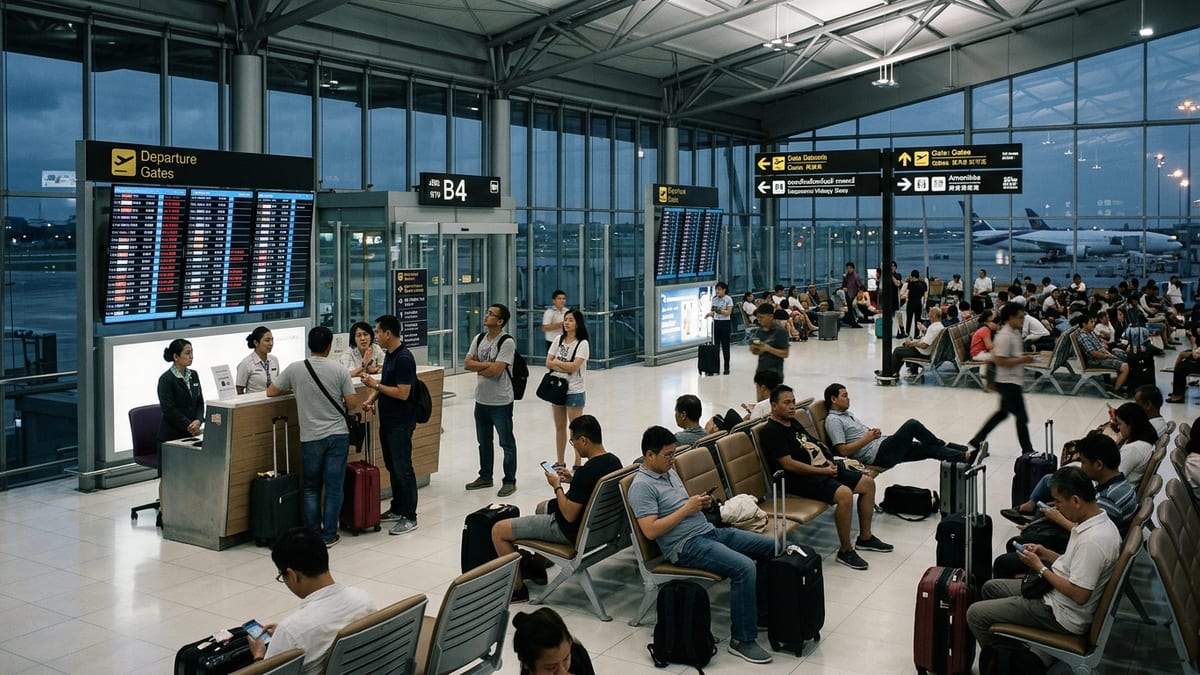
The immediate impact for travelers is visible in reports of long queues at check-in, crowded customer-service counters and extended waits inside terminals as passengers seek rebooking options. With 57 cancellations removing entire flights from the day’s schedule and more than 500 additional services running late, available seats on remaining departures are quickly absorbed, especially on core corridors such as Beijing–Shanghai, Shanghai–Shenzhen and routes linking Guangzhou, Chengdu and Kunming.
Publicly available airline conditions of carriage and disruption policies indicate that Chinese carriers typically differentiate between delays rooted in weather or air-traffic control and those classified as operational or scheduling issues. In many cases, travelers affected by operational cancellations may be eligible for rebooking, meal vouchers or accommodation, but reports from recent disruption waves suggest that passengers often must proactively request assistance at airport desks or through digital channels, and that support standards can vary by carrier and route.
As backlogs build across multiple hubs at once, recovery windows narrow. A delay on a morning departure from Kunming to Shanghai can leave the aircraft out of position for an afternoon Shanghai–Beijing rotation, which then cascades into further disruption for evening flights from Beijing to southern cities such as Shenzhen or Guangzhou. This type of rolling knock-on effect helps explain how a headline figure of 57 cancellations can be accompanied by many times more delayed flights, stretching resources across airlines and airports.
What Travelers Can Expect in the Coming Days
With demand on China’s domestic network running high into late May and early summer, aviation analysts caution that even after today’s figures subside, passengers may continue to encounter sporadic delays and isolated cancellations on the same routes that are currently under strain. Tight schedules, strong load factors and limited spare aircraft capacity at carriers such as China Eastern and Air China mean that recovery from major disruption events can take several days, particularly at complex multi-runway hubs like Beijing, Shanghai and Guangzhou.
Travel advisories and airline updates stress the importance of monitoring flight status closely before heading to the airport, especially for travelers connecting through two or more of the affected hubs on the same itinerary. Publicly accessible tracking tools now provide near-real-time visibility into delays and gate changes, which can help passengers adjust ground transport plans or seek earlier rebooking when signs of disruption first appear.
For now, the combination of 57 cancellations and 529 delays underscores the fragility of China’s interconnected domestic air network, where disruptions in one region can rapidly fan out along trunk routes linking Beijing, Shanghai, Shenzhen, Guangzhou, Chengdu, Kunming and Hangzhou. As airlines continue to fine-tune schedules and reposition aircraft, travelers using these corridors face a period of heightened uncertainty and should plan extra time and flexible arrangements where possible.