


More news on this day
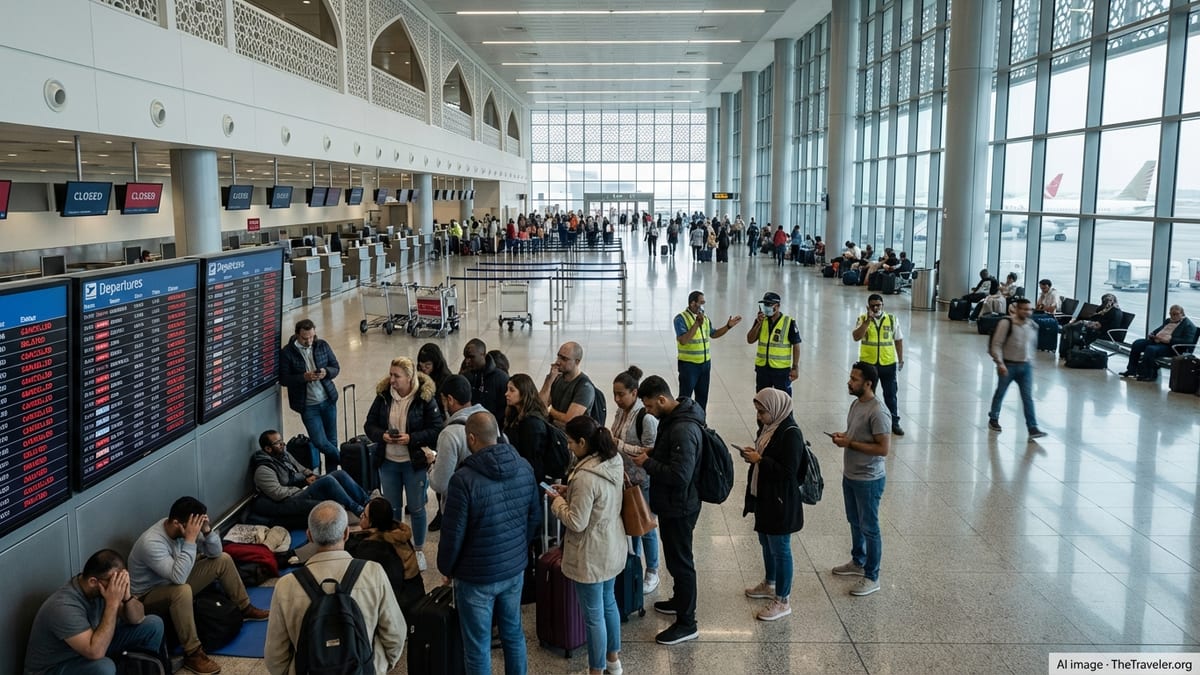
Key Gulf aviation gateways in the United Arab Emirates and Qatar are again grappling with heavy disruption, as severe weather and already fragile regional airspace conditions combine to ground at least 19 flights and delay 21 more across Dubai, Sharjah, Abu Dhabi and Doha, leaving thousands of passengers facing missed connections, long queues and overnight stays.
Get the latest news straight to your inbox!
Stormy Skies Compound an Already Stressed Gulf Aviation Network
Publicly available operational data and tracking services for 14 and 15 May 2026 indicate that a new bout of unstable weather across parts of the Arabian Peninsula has led to clusters of cancellations and delays at major hubs serving the UAE, Qatar, Bahrain, Oman and Iraq. These latest problems arrive on top of months of wider regional disruption linked to intermittent airspace restrictions and security concerns, magnifying the impact for travelers who rely on tightly timed connections through Dubai, Abu Dhabi, Sharjah and Doha.
Reports compiled from airline status pages and airport departure boards suggest that at least 19 flights were cancelled and a further 21 significantly delayed across the four Gulf hubs in the latest disruption window, affecting services operated by Emirates, flydubai, Etihad Airways, Air Arabia, Qatar Airways and several international carriers. While the absolute numbers are smaller than during the peak of regional airspace closures in March, the concentration of affected services in a short time frame has left terminals crowded and rebooking options limited for many passengers.
Weather bulletins from aviation meteorology services in the UAE point to unsettled conditions, including strong winds, convective cloud and localised heavy rain, as the primary trigger for the newest wave of delays and diversions. In a region where hub-and-spoke scheduling compresses a large share of daily flights into a few busy bank periods, even short-lived ground stops or runway flow restrictions can quickly ripple through departure and arrival patterns.
Operational summaries previously compiled for 14 May already highlighted how quickly minor shocks can spread through the system, with one analysis citing more than one hundred delays and a double-digit tally of cancellations at Dubai International Airport and Sharjah International Airport alone. Against that backdrop, the additional weather-related constraints this week have further tested recovery plans for airlines still rebuilding network reliability after earlier shocks.
UAE, Qatar, Bahrain, Oman and Iraq Feel the Knock-On Effects
Although the most visible disruption for travelers is concentrated at Dubai, Abu Dhabi, Sharjah and Doha, the latest wave of cancellations and delays is rippling well beyond those hubs into Bahrain, Oman and Iraq. Published schedules show that several of the grounded flights were due to operate on routes linking the UAE and Qatar with Manama, Muscat and Iraqi cities such as Basra and Baghdad, compounding connectivity challenges for travelers using these points as secondary gateways.
In Oman, publicly available timetable data for Muscat International Airport has for weeks reflected intermittent delays and sporadic cancellations on links to Dubai and Abu Dhabi, as airlines juggle aircraft rotations against evolving airspace and weather conditions. Network updates from regional carriers earlier in the spring had already highlighted temporary suspensions of some Oman to Gulf services in response to broader Middle East airspace closures, leaving limited slack in schedules when further disruptions arise.
Bahrain and Iraq have also experienced sustained turbulence in their aviation operations throughout the spring, as changing airspace permissions and capacity constraints at nearby hubs have forced airlines to adjust routings and frequencies. Recent industry advisories describe a patchwork picture in which Bahrain’s airspace has reopened on a restricted basis and Iraqi airports are broadly operational, yet remain vulnerable to renewed constraints. When storms or low visibility affect Gulf hubs handling the majority of regional connecting traffic, these more fragile links can be among the first to be thinned or temporarily grounded.
For travelers, the practical consequence is that a weather-induced delay in Dubai or Doha can quickly trigger missed onward flights to Bahrain, Muscat or Iraqi destinations, with rebooking options sometimes limited to only a few departures per day. This dynamic has underpinned many of the latest reports of passengers stranded in transit, particularly those traveling between Europe or Asia and secondary cities in the wider Gulf and Levant region.
Why Severe Weather Hits Gulf Hubs So Hard Right Now
Industry analysts note that Gulf aviation networks in mid-2026 are operating with less resilience than in previous years, after a series of shocks that began with widespread airspace closures across parts of Iran, Iraq, Jordan, Israel, Qatar, Bahrain, Kuwait and the UAE earlier in the year. Those restrictions forced airlines to reroute or suspend thousands of flights, stretching fleets, crew rosters and airport infrastructure and leaving limited margin to absorb additional disruptions.
As carriers including Emirates, Etihad Airways, flydubai, Qatar Airways and Air Arabia gradually restore capacity through late April and May, many are doing so under continued operational constraints, with certain routings and overflight corridors still subject to tighter safety rules and scheduling buffers. Publicly available forecasts from aviation data providers have pointed to a gradual recovery in seat capacity through late May and June, but have also stressed that the pace of improvement depends on both a stable security environment and the absence of further severe weather events.
In this context, the latest spell of poor flying conditions over the Gulf is having an outsized impact. Thunderstorms and crosswinds can trigger temporary runway closures or spacing restrictions at airports such as Dubai International and Hamad International in Doha, while dust storms and reduced visibility can slow arrivals into Abu Dhabi and Sharjah. When combined with lingering reroutes around sensitive airspace, these factors can turn what might otherwise have been manageable delays into a more systemic breakdown of punctuality.
Airports and airlines are also contending with high seasonal demand as the summer travel period approaches, leaving fewer empty seats for accommodating disrupted passengers. Publicly available passenger data from previous weeks of disruption suggested tens of thousands of travelers per day were already being affected across the wider region, even before the latest grounding of 19 flights and significant delays to at least 21 more services.
What Travelers Need to Know Before Flying Through Gulf Hubs
For travelers planning journeys through Dubai, Sharjah, Abu Dhabi, Doha and connected hubs in Bahrain, Oman and Iraq in the coming days, the latest disruptions underscore the importance of active trip management. Aviation data providers and consumer advocacy groups consistently advise passengers to monitor flight status directly with their airline and, where possible, through independent tracking tools from at least 24 hours before departure.
Travel rights in disruption scenarios vary significantly depending on the airline, the origin and destination of the ticket and the legal regime that applies. Consumer guidance platforms explain that compensation rules used in parts of Europe typically do not extend to weather-related delays or to flights wholly operated outside those jurisdictions. In many cases, severe weather or airspace restrictions are treated as extraordinary circumstances, limiting financial compensation even when passengers face substantial inconvenience, although rebooking and basic care such as meal vouchers or hotel rooms may still be provided at the airline’s discretion.
Travel insurance can help, but policies often contain exclusions for known events or force majeure. Advisories issued during earlier phases of the Middle East airspace closures in March noted that some insurers treated the ongoing situation as a known risk from a specified date, meaning that policies purchased afterward might not cover related disruptions. Passengers are therefore encouraged to scrutinize the small print of new and existing policies, paying particular attention to sections on weather, airspace closures and civil unrest.
Those with critical onward commitments, such as cruise departures or long-distance rail connections, may wish to build in longer connection times or consider routing through alternative hubs outside the Gulf if flexibility and budget allow. While airlines and airports across the UAE, Qatar, Bahrain, Oman and Iraq are working to stabilise operations as weather systems move through and airspace conditions evolve, recent experience suggests that even modest new shocks can quickly cascade through the region’s densely interconnected flight networks.
Outlook for the Coming Days
Meteorological outlooks for the wider Gulf indicate that unstable conditions, including scattered thunderstorms and periods of reduced visibility, could persist intermittently over the next several days. While not all systems will directly affect major airports, the possibility of short-notice restrictions on arrivals and departures remains, particularly during the busiest evening and overnight bank periods at Dubai, Abu Dhabi and Doha.
Operational planning documents from airlines and industry advisories point to ongoing efforts to rebuild capacity and restore more predictable schedules into June, as long as airspace over key transit corridors continues to reopen and security conditions stabilise. However, experience from March and April suggests that this progress can be fragile. Any renewed escalation in regional tensions or prolonged spell of adverse weather could again force carriers to thin out schedules, consolidate flights or temporarily suspend select routes.
For now, travelers transiting through or departing from Dubai, Sharjah, Abu Dhabi, Doha and connected airports in Bahrain, Oman and Iraq should expect a period of elevated disruption risk. Building flexibility into itineraries, keeping documentation and contact details up to date with airlines, and checking real-time status before leaving for the airport remain the most practical steps for navigating what has become one of the most challenging operating environments for Gulf aviation in recent years.