


More news on this day
Flight disruptions at Louisville’s Muhammad Ali International Airport are rippling across the national air network, with publicly available tracking data showing 52 delays and 8 cancellations affecting connections to Atlanta, Chicago, Dallas and other major U.S. cities.
Get the latest news straight to your inbox!
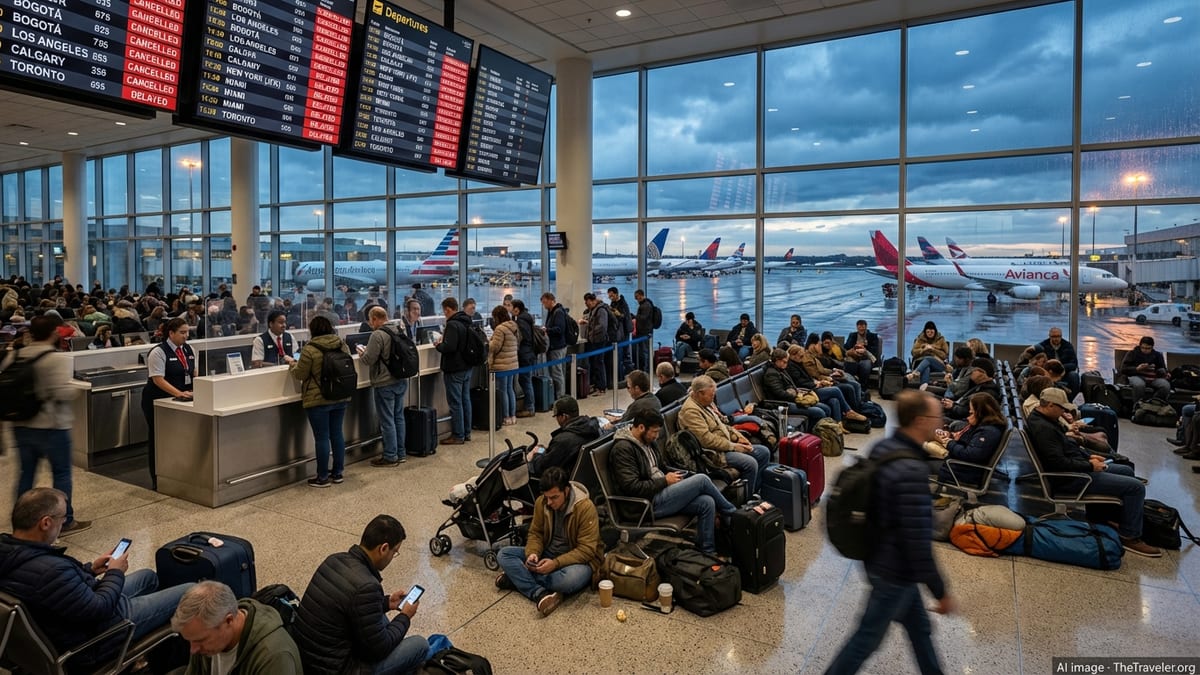
Chain Reaction at a Key Midwestern Gateway
Louisville Muhammad Ali International Airport serves as a regional passenger gateway and a major cargo hub, linking midwestern and southern cities with large national and international networks. The latest operational snapshot on June 14 indicates that a cluster of delays and cancellations at the airport is having knock-on effects for travelers whose itineraries run through Atlanta, Chicago, Dallas and other connecting points.
Publicly available flight-tracking boards for Louisville show dozens of departures and arrivals posting late times or being scrubbed, with affected flights concentrated among large domestic carriers. The disruptions involve both outbound and inbound legs, which can create a cascading pattern as aircraft and crews arrive late for subsequent segments throughout the day.
Industry data and recent coverage of national airline performance highlight how even a relatively small airport, measured by passenger volume, can exert outsized influence on the network when irregular operations develop. When flights through Louisville miss their scheduled slots, downstream schedules at hub airports in Georgia, Illinois and Texas can quickly tighten, especially during peak times.
The situation in Louisville is unfolding against a wider backdrop of weather-related and operational strain across parts of the country this weekend, according to airline bulletins and airport delay dashboards. These broader pressures add to the difficulty of recovering quickly once the first wave of local disruption takes hold.
Multiple Airlines Affected, From Mainline to Regional
The current pattern of disruption touches several of the largest U.S. carriers. Flight status boards and aviation data platforms list Southwest, Delta Air Lines, American Airlines and regional operator Republic among the airlines with delayed or cancelled services linked to Louisville.
Southwest, which maintains an extensive domestic network serving more than 100 destinations, appears among the carriers with Louisville flights experiencing schedule changes. Delays on point-to-point routes can quickly affect later departures when aircraft are scheduled to operate multiple legs throughout the day, a dynamic that has been widely documented in recent reporting on low-margin airline operations.
Delta and American, whose networks rely heavily on major hubs such as Atlanta and Dallas Fort Worth, are also showing affected Louisville-related segments. When flights into or out of Louisville run late, the connections that depend on precise bank times at these hubs can become harder to protect, leaving some travelers facing missed onward flights and the need for rebooking.
Republic Airways, which operates regional services under brand agreements for major carriers, is likewise listed among the airlines with impacted schedules. Because regional jets often feed passengers from smaller markets into big connecting airports, delays at a spoke like Louisville can lead to reduced options later in the day for travelers heading to secondary destinations.
Impacts Felt in Atlanta, Chicago, Dallas and Beyond
According to aggregated flight-status information, the 52 delays and 8 cancellations associated with Louisville extend well beyond Kentucky’s borders. Routes touching Atlanta, Chicago and Dallas are among those seeing schedule changes, reflecting the interlocking nature of the U.S. hub-and-spoke system.
Flights between Louisville and Atlanta feed one of the country’s busiest hubs, a central node for both domestic and international service. Late arrivals into that hub can leave passengers with tighter connection windows or force them onto later departures, especially on popular east coast and Florida routes that already operate at high load factors during peak travel days.
Chicago, served by both O’Hare and Midway, is another critical junction point. Delay summaries published for the Chicago airports show hundreds of affected flights across carriers this weekend, and any disruption in feeder markets like Louisville compounds the challenge of keeping those complex schedules running close to on time.
In Texas, Dallas Fort Worth in particular functions as a major connecting point for American’s network. When Louisville departures to Dallas run late or are cancelled, passengers bound for the Mountain West, West Coast and parts of Latin America can see their itineraries reshuffled. Publicly available airport delay tools for the Dallas area indicate that while most flights are operating, rolling delays are present across segments, making recovery more difficult once a disruption starts.
Weather, Congestion and Tight Scheduling Add Pressure
While no single cause has been publicly identified for all 52 delays and 8 cancellations tied to Louisville, recent bulletins and operational updates from airlines and airports across the region point to a familiar combination of factors. Intermittent storms in parts of the eastern United States, air traffic control flow restrictions, and aircraft running behind schedule from earlier legs all contribute to the day’s challenges.
Exception policies issued by major airlines in recent days have referenced inclement weather and potential disruptions across key northeastern and midwestern cities. When those conditions intersect with a busy summer travel pattern and tightly built schedules, even minor disturbances can reverberate across multiple airports, including Louisville’s passenger operations.
Airline industry commentary has also emphasized the role of staffing and fleet utilization. With many carriers operating near pre-pandemic capacity, there is limited slack in aircraft rotations and crew assignments. Any unexpected maintenance issue, crew timing constraint, or upstream weather delay can push a flight off schedule, and when that flight is part of a thinly served route to or from Louisville, passengers may have fewer immediate alternatives.
Analysts note that Louisville’s dual role as a passenger airport and a major air cargo center adds an additional layer of complexity. While cargo flights operate largely on separate schedules, overlapping use of airspace and runway capacity can influence the sequencing of arrivals and departures during busy periods, particularly when weather or visibility become factors.
What Travelers Are Being Advised to Do
Publicly available travel advisories and airline guidance continue to stress that passengers should confirm their flight status frequently on days when disruptions are reported. Same-day updates from carriers often appear first in mobile apps or online tools, and these platforms are increasingly used to process rebooking when schedules change.
Airlines typically encourage travelers departing from Louisville to arrive early during periods of irregular operations, allowing additional time for check-in, security screening and potential gate changes. Airport planning documents also outline contingency procedures for extended tarmac delays and gate holds, which can come into play when weather or congestion force aircraft to wait for takeoff or parking clearance.
Consumer advocates quoted in recent coverage of national airline performance recommend that passengers dealing with delays or cancellations keep detailed records of their itineraries, including boarding passes and digital confirmations. These documents can be useful later when seeking refunds, travel credits or other forms of compensation that may be available under airline policies or federal regulations.
With disruptions at Louisville now affecting multiple big-city connections across the United States, travel analysts suggest that conditions may remain dynamic through the rest of the weekend. Passengers with time-sensitive plans involving Atlanta, Chicago, Dallas or other major hubs connected to Louisville are being urged, through public advisories and news reports, to build in extra buffer time and monitor their flights closely.