


More news on this day
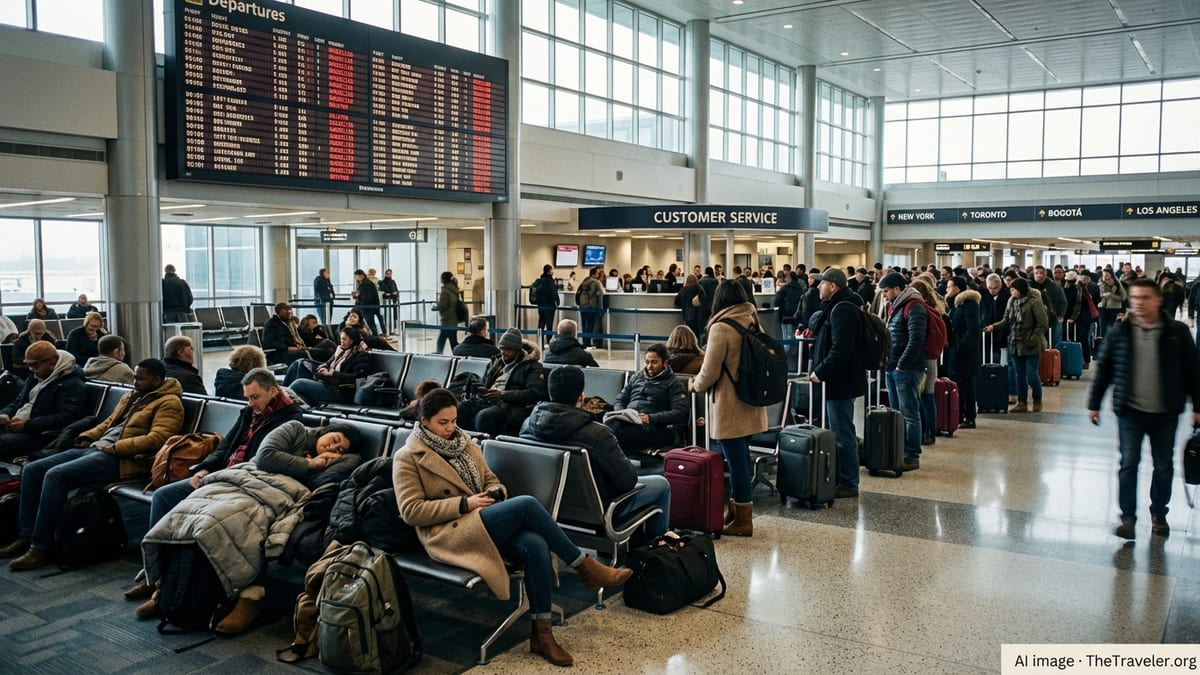
Travelers across the Northeast are facing a difficult travel day as operational disruptions at Philadelphia International Airport have resulted in 62 flight delays and 2 cancellations, affecting services operated by American Airlines, Jazz, Delta, Frontier, Southwest and United and rippling into key markets including New York and Washington DC.
Get the latest news straight to your inbox!
Operational Strains at a Major Northeast Hub
Philadelphia International Airport functions as a major hub for American Airlines and a key station for several low cost and legacy carriers, making even a modest spike in delays highly visible across the domestic network. Publicly available flight tracking boards on Tuesday showed dozens of departures and arrivals running behind schedule, with a small number of cancellations compounding the disruption for travelers with tight connections.
Data from real time flight status services indicated that the bulk of affected flights involve short haul and medium haul routes along the busy Northeast and Mid Atlantic corridor. These routes serve cities such as New York and Washington DC, where schedules are dense and minor timetable changes can quickly cascade into missed connections and rebookings through Philadelphia.
The mix of carriers involved underscores the interconnected nature of the airport’s operations. American Airlines, regional partner Jazz on codeshare services, and major competitors Delta, Frontier, Southwest and United all showed delayed operations at various points in the day. While the overall scale of disruption is limited compared with severe weather events, the concentration of delays at a single hub has added pressure during an already busy late spring travel period.
Weather, Traffic Management and Network Knock On Effects
National Airspace System advisories and airport delay trackers suggest that a combination of localized weather and air traffic management initiatives have contributed to the slower operations in and out of Philadelphia. Ground delay programs and the possibility of temporary ground stops can lengthen turnaround times, leading to later departures even after the most acute constraints ease.
Further complicating the picture, published guidance for travelers highlights that weather related slowdowns at one hub can quickly affect aircraft and crew availability at others. If aircraft arriving from congested airports are held or rerouted, the following departures from Philadelphia may be pushed back, regardless of local conditions at the time of departure. This can be especially acute on the dense shuttle style routes linking Philadelphia with major population centers along the East Coast.
Operational guidance documents from recent months emphasize that airlines across the United States have been preparing for heavier passenger volumes around long weekends and the summer season, with some carriers warning customers to expect longer connection buffers and a higher risk of schedule changes during peak days. The latest delays at Philadelphia fit into that broader pattern of a tightly stretched network reacting to minor disruptions with disproportionate impacts for travelers.
Impact on Travelers Bound for New York and Washington DC
The knock on effects of delays at Philadelphia are being felt by travelers heading toward New York and Washington DC, two of the country’s busiest air travel markets. Many itineraries between secondary cities and these hubs route through Philadelphia on American Airlines and partner carriers, meaning that an initial short delay can evolve into a missed onward connection later in the day.
For passengers booked on airlines such as Delta, Frontier, Southwest and United, Philadelphia often functions as a connecting point or as an alternative to congested airports directly serving New York or Washington. Any slowdown in departures or arrivals can therefore impact not just point to point passengers but also those with multi segment journeys ending at LaGuardia, John F. Kennedy, Newark Liberty, Reagan National or Dulles.
Travel advice materials frequently recommend that passengers traveling through busy hubs build in additional buffer time for connections, particularly when flying during high demand periods. The current pattern of delays at Philadelphia is likely to validate that guidance, with some travelers opting to accept longer layovers rather than risk misconnecting on tightly timed itineraries into New York and Washington.
How Airlines Are Managing Today’s Disruption
Publicly available airline operations briefings and consumer guidance show that carriers generally respond to localized disruption by prioritizing the regularization of their schedules, even if that means accepting short term delays. This can involve holding flights to consolidate passengers from misconnected services, swapping aircraft where possible, and adjusting crew schedules to keep as many routes operating as conditions permit.
American Airlines, as the dominant carrier at Philadelphia, typically bears the brunt of any irregular operations at the airport, and its network adjustments can influence how competing airlines manage their own schedules. Regional operators, including those flying under codeshare arrangements with major brands such as Jazz, may be used to maintain connectivity on thinner routes while mainline aircraft are reassigned to busier corridors.
Delta, Frontier, Southwest and United each maintain their own operational playbooks for days with elevated delays. These can range from targeted schedule thinning on specific time bands to encouraging voluntary rebookings onto earlier or later flights, as well as the use of mobile apps and online tools to redistribute passengers across available seats. Guidance distributed in recent months has urged travelers to rely on these digital channels when possible so they can react quickly to schedule changes.
What Passengers Can Do Next
Consumer advisories from aviation and transportation agencies consistently emphasize that passengers affected by delays and cancellations should monitor flight status closely and remain alert to schedule changes throughout the day. Because conditions and airline responses can shift quickly, a flight showing as on time in the morning can move into delayed status later if upstream aircraft or crew are affected.
Travel information resources recommend that passengers traveling today through Philadelphia, particularly those with onward connections to New York or Washington DC, check their airline’s app or website before leaving for the airport and again after clearing security. Rebooking options are often displayed automatically when a delay reaches a certain threshold, and accepting a modest schedule change proactively can sometimes prevent a misconnection later.
Published consumer guidance further notes that passengers whose flights are canceled outright may be entitled to rebooking or refunds according to the airline’s policies and federal regulations. With only two cancellations reported so far alongside a higher number of delays, most affected travelers at Philadelphia can expect to reach their destinations later than planned rather than not at all, but the disruption serves as another reminder of the importance of flexibility and preparation when flying through a major U.S. hub.