


More news on this day
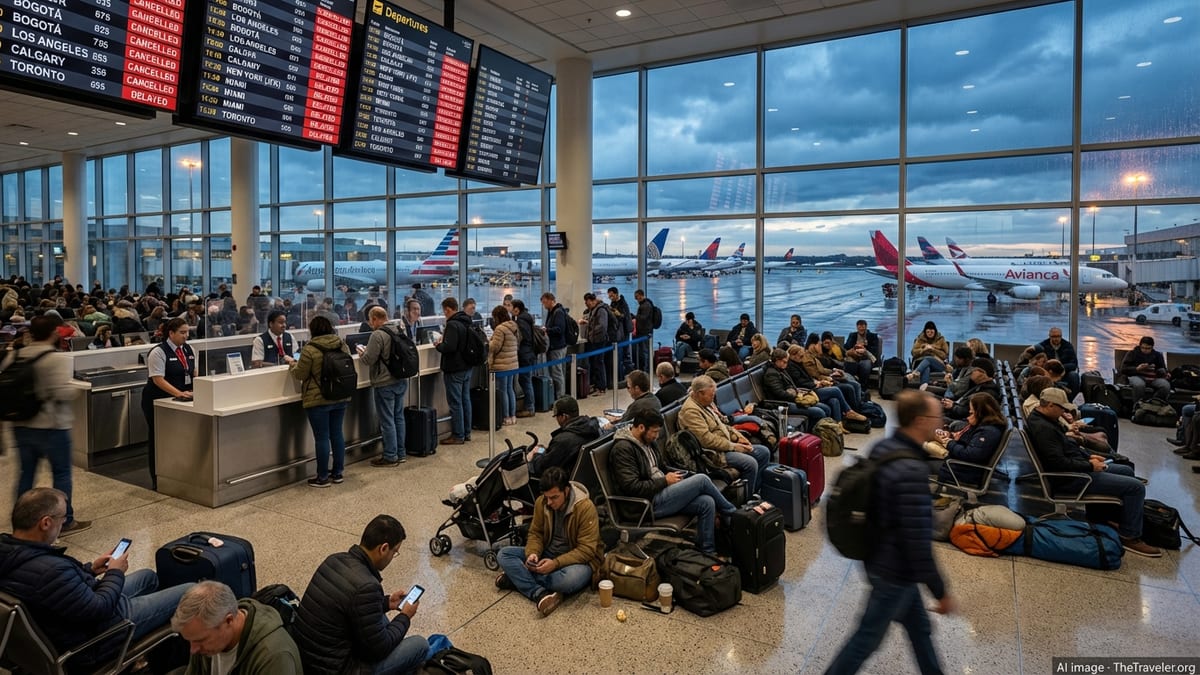
Dozens of passengers were left waiting at San Antonio International Airport on Tuesday as around 70 departures and arrivals were reported delayed and at least nine flights canceled, disrupting operations for Southwest Airlines, American Airlines, United Airlines and other carriers on some of the airport’s busiest domestic and international routes.
Get the latest news straight to your inbox!
Major Carriers See Cascading Disruptions
Publicly available flight-tracking boards for San Antonio International Airport on Tuesday showed elevated disruption levels, with roughly 70 flights facing delays of varying length and nine listed as canceled. The impact was felt across the airport’s largest operators, including Southwest Airlines, American Airlines and United Airlines, which collectively handle a significant share of daily traffic in and out of the city.
Data from route-tracking platforms indicates that San Antonio’s schedule is typically dominated by short- and medium-haul domestic services, with frequent connections to Dallas, Houston, Chicago and Denver as well as a limited number of international flights. When irregular operations begin to build, this dense network of hub connections can amplify the effect of each delay or cancellation, quickly affecting onward journeys for hundreds of travelers.
Operational statistics published on major tracking sites show that even moderate levels of late-running flights at large hubs can cascade into secondary airports such as San Antonio. As aircraft and crews arrive behind schedule from congested cities, local departure times are pushed back, creating a rolling pattern of disruption that can take much of the day to resolve.
Although the overall percentage of canceled flights out of San Antonio remained lower than at the most heavily affected U.S. airports, the concentration of delays among a handful of carriers made the disruption highly visible to travelers in departure halls and at gate areas throughout the terminal complex.
Key Routes to Dallas, Houston and Chicago Affected
Connections between San Antonio and major Texas hubs, particularly Dallas and Houston, were among the routes most sensitive to Tuesday’s disruptions, according to real-time route monitoring. These short flights are typically operated multiple times per day by the largest U.S. carriers and serve as important feeders into national and international networks.
Services linking San Antonio with Houston’s George Bush Intercontinental and William P. Hobby airports, as well as Dallas Fort Worth and Dallas Love Field, play an outsized role in connecting local passengers to long-haul and overseas destinations. When delays accumulate on these shuttle-style routes, missed connections become more likely, forcing rebookings and overnight stays for some travelers.
Flights between San Antonio and Chicago, another key connecting market, also appeared among the delayed services. Chicago’s major hubs commonly funnel passengers from Texas to the Midwest, East Coast and transatlantic destinations. A late departure from San Antonio can ripple outward, affecting connection banks several hours later at O’Hare or other large airports.
Tracking data suggests that, while most of Tuesday’s delayed services eventually departed, even moderate hold times at origin or during ground handling can be enough to unravel tightly timed itineraries, particularly for travelers with international legs that operate less frequently.
Domestic and International Travelers Face Extended Waits
Inside the terminal, delayed departure times translated into extended waits at gates and check-in areas. Domestic passengers bound for nearby Texas cities and regional hubs often saw their boarding times revised more than once as aircraft arrived late or crews repositioned from other parts of the network.
For international travelers, the impact could be more complex. San Antonio maintains a smaller portfolio of cross-border services compared with larger Texas airports, meaning that missed connections in Houston, Dallas or other hubs may be harder to replace on the same day. Travelers with onward journeys to Mexico, Central America or other international destinations are particularly dependent on punctual feeder flights from cities like San Antonio.
Travel planning resources note that even when an international sector operates on time, a late-arriving domestic connection can strand passengers short of their destination. In many cases, travelers must then seek hotel accommodation, meal vouchers or alternative routings, depending on airline policy and the cause of the disruption.
On busy travel days, these compounding issues can lead to crowded customer-service desks and longer waits for rebooking assistance, as multiple flights worth of passengers seek solutions at the same time.
Possible Weather and Network Factors Behind Irregular Operations
While a single dominant cause for Tuesday’s disruptions at San Antonio had not been clearly isolated by midday, recent national statistics highlight how a combination of weather, airspace constraints and airline scheduling pressures frequently converge to create similar patterns of delay. In the past two weeks, several major U.S. airports have experienced heavy disruption as storms and convective weather systems moved across key corridors.
Industry analyses of recent irregular operations show that even when San Antonio is not in the direct path of severe weather, knock-on effects from affected hubs can still reach the airport. Ground delay programs or traffic management initiatives at busy coastal and hub airports can force airlines to adjust departure times system-wide, which may surface hours later in secondary markets.
Operational data from recent days also underscores the sensitivity of airline schedules to late-arriving aircraft. When one flight segment runs behind schedule, aircraft and crews can arrive at their next origin city late, testing the buffer times built into daily rotations. In tightly utilized fleets, there may be limited spare capacity to absorb such shocks.
Because several of San Antonio’s most important routes connect directly to major hubs for Southwest, American and United, disruption in any one of those networks can quickly manifest as a cluster of delays on the local departure board, even if local conditions at the airport appear relatively calm.
Advice for Passengers Navigating the Disruptions
Travel advisers consistently recommend that passengers rely first on airline mobile apps and official flight-status tools during periods of disruption. These platforms typically provide the earliest indication of changing departure and arrival times, as well as gate changes, and often allow travelers to rebook onto alternative flights when space is available.
Airport information screens and public flight-tracking websites can also help travelers monitor broader patterns, including whether delays at a specific airport are part of a localized issue or reflect wider network challenges. Observing disruption trends at large hubs such as Dallas, Houston or Chicago may give San Antonio passengers a better sense of how long irregular operations could last.
Consumer-rights organizations emphasize that passengers should review airline policies related to delays and cancellations before traveling, paying particular attention to rules on rebooking, meal vouchers and accommodation during overnight disruptions. These policies can differ significantly between carriers and may depend on whether the cause is considered within the airline’s control.
With delays and cancellations likely to remain a recurring feature of busy travel periods, experts generally suggest building longer connection windows, traveling with carry-on baggage when possible to ease rebooking and maintaining flexibility in itineraries, especially when traveling through weather-prone hubs or relying on a series of short connecting flights like those linking San Antonio to other major U.S. airports.