


More news on this day
Transport Canada has appointed a ministerial observer to follow the aftermath of the July 5 freight train derailment in Repentigny, Quebec, a move that highlights renewed federal attention on rail safety and the transparency of investigations after a string of high-profile incidents on Canada’s rail network.
Get the latest news straight to your inbox!
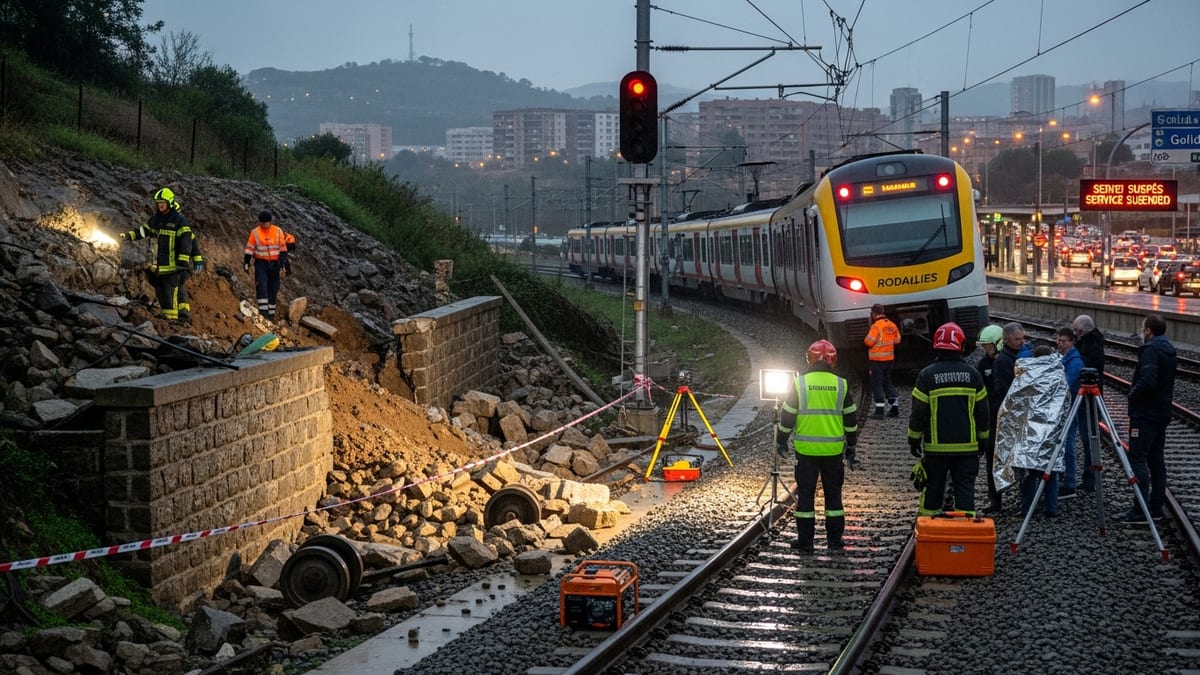
A derailment that disrupted a commuter corridor
The derailment occurred on the afternoon of July 5 at a level crossing near Le Bourg-Neuf Boulevard and Émile-Genest Street in Repentigny, northeast of Montreal. Publicly available municipal updates indicate that several freight cars from a Canadian National Railway Company train left the tracks, prompting an immediate perimeter, power interruptions in the area and the evacuation of nearby homes as a precaution.
Initial information made public by the City of Repentigny and provincial media coverage indicates that there were no injuries and that the derailed cars were not carrying dangerous goods. Local authorities later reported that air quality readings remained within acceptable limits and that structural assessments of surrounding residences did not reveal major damage.
By July 6, municipal communications stated that the area had been deemed safe and that evacuated residents were allowed to return home. Rail traffic through the corridor progressively resumed, although Canadian National publicly committed to keeping heightened inspection measures in place while the damaged section of track and related infrastructure were being repaired and monitored.
The incident nevertheless caused delays and diversions on a key freight artery that shares space with passenger services elsewhere in the Montreal region, adding to concerns among commuters and residents about the resilience of rail operations in densely populated suburban communities.
Role and scope of the ministerial observer
The appointment of a ministerial observer by Transport Canada is being presented in public documentation as a mechanism to ensure direct reporting to the federal transport minister on how the situation in Repentigny evolves. An observer of this type typically does not replace or interfere with technical investigations, but instead tracks the implementation of safety measures, community engagement and coordination among agencies.
Based on past practice described in government responses to Parliament and previous rail occurrences, ministerial observers are often tasked with reviewing publicly available information from the railway, municipal partners and the Transportation Safety Board of Canada, and then briefing the minister on whether additional regulatory tools or ministerial orders might be warranted. Their presence signals heightened political and policy interest rather than a finding of fault at this early stage.
In the Repentigny case, the observer is expected to follow how Canadian National restores operations, how quickly interim safety measures are implemented and whether residents and local officials are kept informed of evolving risks and mitigation steps. The observer’s reporting can inform decisions on potential temporary speed restrictions, infrastructure investment priorities or targeted inspections in similar suburban corridors.
Transport Canada’s use of observers and special oversight steps has expanded in the last decade as rail traffic volumes and public concern about hazardous materials movements have grown. The Repentigny derailment adds a new test case for how these tools are deployed when an incident occurs close to homes but without immediate casualties.
TSB investigation focuses on track, heat and operations
Separate from Transport Canada’s policy role, the Transportation Safety Board of Canada (TSB) has confirmed through its deployment notices that a team of investigators was sent to Repentigny on July 6 to examine the derailment. The independent agency typically gathers data on train operations, track condition, weather, maintenance records and signal systems to reconstruct what happened and why.
Local media reports and expert commentary have already raised the possibility that intense early-July heat could have affected the track structure, a factor that has been examined in previous rail investigations across North America. Public coverage indicates that TSB personnel are documenting conditions on site and collecting components from the damaged section of rail, but the agency has not yet released any hypothesis about the cause.
Investigations of main-track freight derailments often take many months and result in detailed reports that may include findings on human factors, infrastructure design, equipment performance and risk management practices at the railway. While the Repentigny occurrence did not involve a fire or hazardous materials release, the proximity of the derailment to homes and a major roadway is likely to keep public interest high as the TSB’s work progresses.
Any recommendations emerging from the eventual TSB report would be addressed to Transport Canada and the rail operator. The newly appointed ministerial observer is expected to follow these developments closely and inform the minister on how potential recommendations might fit within broader rail safety initiatives and regulatory reforms already under way.
Community concerns and rail safety expectations
Residents of Repentigny and the Le Gardeur sector have voiced concerns in local coverage about noise, vibration and safety along the busy freight corridor that crosses their neighbourhoods. The July 5 derailment, though contained and injury-free, has amplified these anxieties and reignited debate over train speeds, inspection regimes and the transportation of hazardous materials through suburban areas.
Publicly available information from the City of Repentigny indicates that the municipality has been in regular contact with Canadian National regarding clean-up operations, track reconstruction and the progress of environmental assessments. Citizen comments reported in Quebec media highlight calls for clearer risk communication, improved emergency preparedness and consideration of additional physical protections along stretches of track that closely border residential streets.
Transport Canada’s observer is expected to pay particular attention to how these local concerns are addressed in the months ahead. This may include monitoring commitments on track maintenance cycles, reviewing information releases about the incident and ensuring that lessons from Repentigny are considered alongside findings from other recent derailments in Canada when national policy is updated.
The Repentigny derailment comes amid a broader public conversation about rail safety, shaped in part by the legacy of the Lac-Mégantic disaster and subsequent federal efforts to strengthen tank car standards, crew requirements and risk management practices. While the circumstances in Repentigny are very different, the incident underscores that the interface between freight rail operations and rapidly growing communities remains a central challenge for Canadian transport policy.
Implications for Canada’s wider rail network
Although the Repentigny derailment was localized, industry analysts and safety advocates are watching how it might influence discussions about infrastructure investment and federal oversight across the national rail network. The corridor that runs northeast from Montreal carries substantial freight volumes and serves as a connector toward Quebec’s regions, making its reliability and safety important for both economic and community reasons.
Recent federal publications on rail safety priorities emphasize modernizing inspection technologies, improving data collection on track condition and derailment precursors, and refining risk-based approaches to regulatory oversight. The Repentigny occurrence provides another data point that may shape where resources are allocated, particularly when it comes to sections of main line that pass close to homes, schools and commercial districts.
For travelers, the incident is a reminder that freight operations and passenger mobility share the same finite rail corridors in many parts of Canada. Disruptions to freight traffic can ripple into passenger schedules, just as passenger-focused capacity projects can affect freight routing. How Transport Canada, the TSB, Canadian National and local partners respond in Repentigny will be watched closely by communities along other busy routes that are weighing the benefits of rail connectivity against perceived safety risks.
As the technical investigation advances and the ministerial observer continues monitoring the file, attention is expected to remain on whether visible changes follow in track standards, operational practices or community engagement. For Repentigny and other rail-adjacent communities, those outcomes will likely shape public confidence in the safety of trains moving through their neighbourhoods for years to come.