


More news on this day
An early-morning freight train derailment near Portland’s Steel Bridge is disrupting rail travel and access along the city’s central riverfront, with multiple cars off the tracks and service changes affecting regional and long-distance passengers.
Get the latest news straight to your inbox!
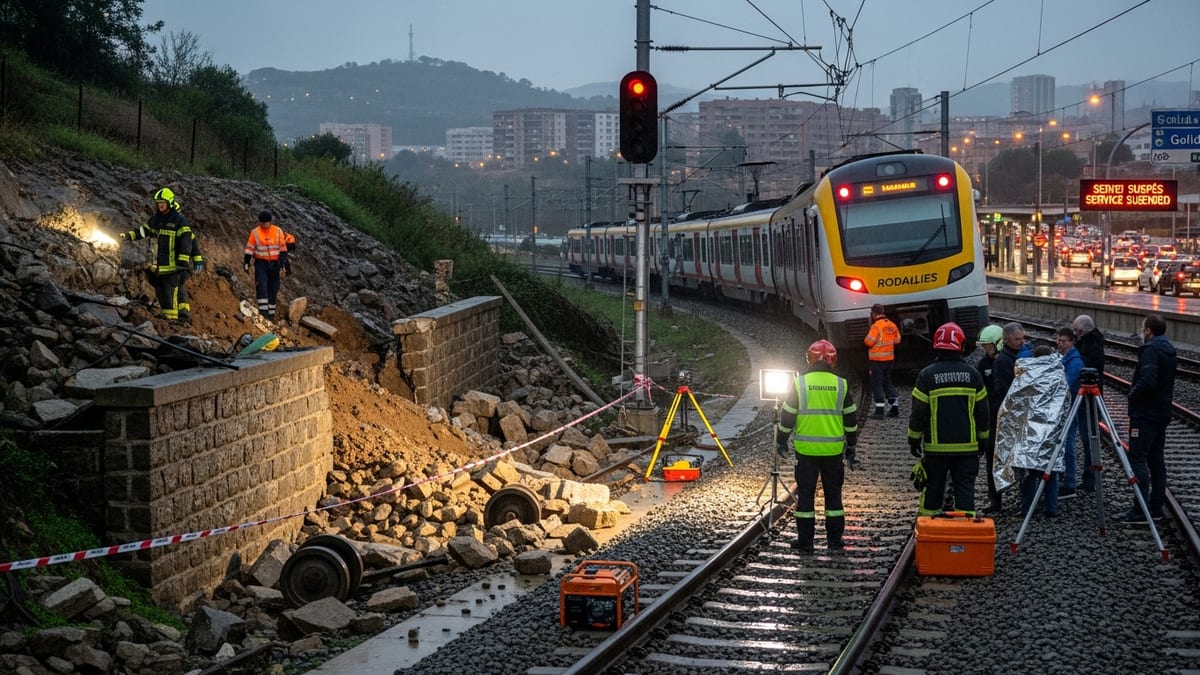
Freight cars off the rails near key Willamette crossing
Reports from the Portland riverfront indicate that several Union Pacific freight cars left the tracks on the northwestern side of the Steel Bridge, a double-deck span that carries rail on its lower level and road and transit traffic above. Images shared on local forums show a string of derailed cars beside the lower deck approach, with some leaning at sharp angles but remaining upright.
The incident occurred in the early hours of the morning, in an area where tracks curve tightly as trains approach the bridge. Witness accounts describe at least eight cars derailed on or near the curve, creating a tangled line of rolling stock that blocks one of the main freight routes into central Portland.
There have been no early indications of fire or hazardous material release, and the cars involved appear to be part of a mixed freight consist rather than a unit train of tankers. The location beside the riverfront rail corridor, however, has made the scene highly visible to morning runners, cyclists and early commuters on nearby paths and streets.
The Steel Bridge itself remains a critical link in Oregon’s passenger rail network, carrying Amtrak services across the Willamette River and connecting to the busy rail junctions that fan out through the city. Any disruption at its approaches can ripple quickly through regional operations.
Amtrak and regional passengers face delays and detours
The derailment has immediate implications for Amtrak services that use the north bank line to reach the Steel Bridge. Early reports from passengers describe trains being held outside central Portland as dispatchers work around the blocked track, with some northbound services pausing as far away as Oregon City to await clearance.
Published information indicates that at least some Amtrak Cascades and Coast Starlight departures are experiencing delays as traffic is funneled over remaining open tracks or re-timed to avoid the bottleneck. Travelers connecting through Portland’s Union Station are being advised to allow extra time and to check departure boards frequently for changing gate and schedule information.
Because the Steel Bridge sits at the intersection of freight and passenger routes, the effects are not limited to long-distance trains. Commuters who rely on morning rail arrivals into downtown may see slower journeys, altered stopping patterns, or short-notice platform changes while rail traffic is re-sequenced around the obstruction.
For visitors using Portland as a hub for trips along the Pacific Northwest corridor, the incident underlines the value of flexible travel plans. Same-day connections to buses, flights or cruise departures may need adjustment, particularly for travelers booked on early trains through the city.
Bridge approaches remain a historic trouble spot
The location of the derailment fits a long-standing pattern of operational challenges around the Steel Bridge. Publicly available engineering and planning documents describe sharp curves and constrained clearances on the approaches, a legacy of early twentieth century design that must accommodate twenty-first century freight volumes.
In past incidents near the same structure, freight cars have derailed in similar positions, prompting calls from transportation advocates for ongoing investment in track maintenance, bridge monitoring and system redundancy. The combination of heavy freight trains, tight geometry and a shared passenger corridor has made the area one of the more closely watched points in Portland’s rail network.
Recent regional planning efforts have highlighted the Steel Bridge bottleneck as a vulnerability not only for everyday commuters but also for intercity travel and freight reliability. For travelers, that means that incidents at this location tend to have outsized effects, particularly during peak hours when multiple services converge on the river crossing.
The current derailment will likely renew discussion about long-term strategies to improve resilience, including alternate routings for both freight and passenger trains and potential upgrades to the aging infrastructure around the bridge.
Clean-up, inspections and expected restoration timeline
Based on similar derailments near complex bridges elsewhere in the United States, recovery work is expected to unfold in stages. Initial efforts typically focus on stabilizing derailed cars, checking for leaks or structural damage, and creating safe access for heavy equipment. Once cranes and rerailing gear are in place, cars can be lifted or winched back onto the tracks or removed from the scene entirely.
After the rolling stock is cleared, track crews usually replace damaged ties, rail segments and fasteners, and conduct detailed alignment checks on the approaches to the bridge. Where incidents occur next to major river crossings, engineering teams often perform additional structural inspections to verify that bridge members, bearings and support systems have not been compromised.
While early visual reports from the Portland scene do not indicate obvious damage to the Steel Bridge itself, the need for thorough safety checks means that full restoration of regular traffic can take many hours. Partial service, using available tracks around the work zone, often returns first for lighter passenger trains, followed by gradual normalization of freight schedules.
Travelers planning to use Portland as a rail gateway today should anticipate residual delays into the afternoon and possibly beyond, particularly if additional inspections reveal issues that require extended repair. Those with fixed onward connections may find it prudent to explore backup options, such as intercity buses, rental cars or short-haul flights along the I-5 corridor.
Advice for rail passengers and visitors in Portland
For visitors already in Portland, the area around the Steel Bridge remains an important access point for riverfront walking and cycling routes, but temporary closures of paths or underpasses are possible while rail crews and emergency responders move equipment in and out. Travelers heading out for early sightseeing or runs along the Willamette should be prepared to follow detour signs and obey temporary barriers around the rail corridor.
Passengers with same-day Amtrak tickets are encouraged, through publicly available advisories, to monitor real-time train status before leaving hotels or homes and to build in a buffer of at least an hour for reaching Union Station. Those connecting from Portland’s airport via light rail or rideshare should keep an eye on how any congestion around the bridge affects traffic on adjacent streets.
Visitors arriving by car who plan to return home or continue their journeys by train may wish to park in locations that allow an easy shift to alternative transport if schedules change further. Downtown lodging providers can often assist guests in arranging last-minute transfers to bus depots or the airport if rail disruptions extend longer than initially expected.
As crews work to clear the derailed cars and restore full use of the Steel Bridge approaches, travelers can expect a dynamic situation throughout the day. Checking multiple information sources, keeping itineraries flexible and allowing extra time between connections will be key strategies for minimizing disruption to summer journeys through Portland.