


More news on this day
India’s regional aviation ambitions received a major boost this week as FLY91 unveiled a landmark deal for 40 ATR 72-600 turboprops, a nearly 1 billion dollar fleet expansion that positions the Goa-based carrier as a pivotal player in connecting the country’s smaller cities and remote islands.
Get the latest news straight to your inbox!
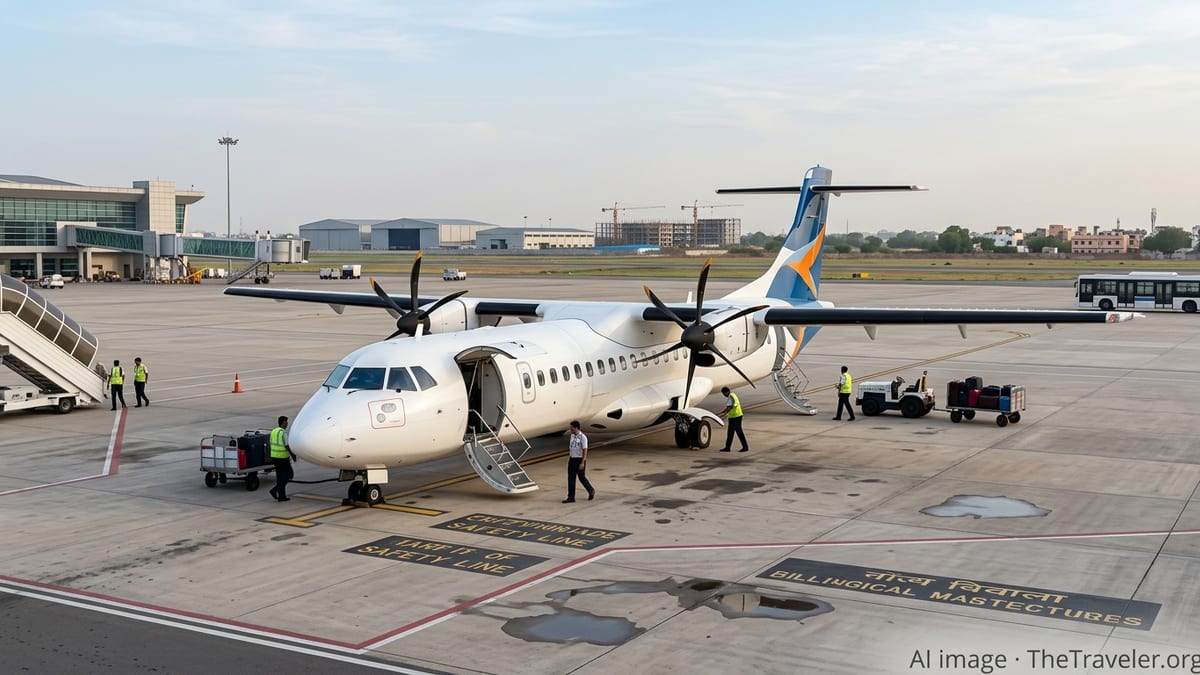
A Record-Breaking ATR Commitment From a Young Regional Airline
Publicly available information shows that FLY91 has signed a firm order for 40 ATR 72-600 aircraft, one of the largest single purchases of the type by a regional airline worldwide. Coverage in Indian business media values the commitment at close to 1 billion dollars at list prices, underscoring both the scale of the deal and the airline’s long-term growth ambitions.
The order builds on FLY91’s decision to make ATR turboprops the backbone of its fleet since the start of commercial operations in March 2024 from its base at Goa’s Manohar International Airport. Industry reports indicate that the carrier currently operates a small fleet of ATR 72-600s on routes that knit together tier 2 and tier 3 cities, as well as leisure destinations that are challenging for larger jets to serve efficiently.
According to published coverage, the 40 new aircraft will be delivered over several years and are expected to support a sharp increase in the airline’s network breadth and frequencies. For the Franco-Italian manufacturer ATR, the deal reinforces its strong foothold in India’s sub-100-seat market, which already includes fleets at IndiGo and Alliance Air, and now a fast-growing presence with FLY91.
Observers note that such a sizable regional aircraft order from a relatively young carrier highlights confidence in both India’s domestic demand trajectory and in the economics of turboprop operations on short sectors of under 500 nautical miles.
Expanding the Map: Smaller Cities, Islands and Tourism Hotspots
Since launch, FLY91 has focused on regional connectivity from Goa to under-served points including tier 3 cities and island destinations, aligning closely with the government’s UDAN regional air connectivity scheme. Reports highlight early routes linking Goa with locations such as Agatti in Lakshadweep and Jalgaon in Maharashtra, demonstrating the airline’s strategy of tapping niche markets where runway length, demand patterns and yields favor turboprop aircraft.
The expanded ATR order is expected to help FLY91 deepen service on such routes and add new spokes into its network, including additional coastal, pilgrimage and industrial towns that have historically relied on long surface journeys or limited flight options. The ATR 72-600’s ability to operate from shorter runways with lower fuel burn per seat is seen by analysts as a critical enabler for these markets.
Industry commentary suggests that these aircraft could also support greater connectivity between regional cities without the need to transit through metro hubs such as Mumbai or Delhi. This “point-to-point” regional model not only saves time for passengers but also relieves congestion at major airports, a growing concern as India’s overall air traffic climbs.
For tourism-driven states and island territories, more frequent and reliable regional flights can stimulate visitor arrivals, enabling shorter leisure breaks and making lesser-known destinations more accessible to domestic travelers and, in some cases, international tourists connecting via larger hubs.
How the ATR 72-600 Fits India’s Regional Aviation Strategy
ATR’s 72-600 model has gradually become a mainstay of India’s regional operations, and the FLY91 order reinforces that status. The aircraft typically seats around 70 passengers, offering a capacity sweet spot for routes where demand is too thin or variable for narrowbody jets, but robust enough to support multiple daily frequencies with turboprops.
According to ATR’s own communications and sector analysis, the 72-600 is designed for fuel efficiency and short takeoff and landing performance, which are central concerns for operators serving smaller airports with limited infrastructure. Lower operating costs per trip make it easier for airlines to offer competitive fares on regional sectors while maintaining viability.
The aircraft’s performance characteristics are particularly relevant to India’s geography, where high-altitude locations, coastal strips and short runways coexist within a rapidly growing aviation market. Observers also point to the type’s relatively small environmental footprint compared with jets on short routes, an increasingly prominent consideration as India works toward broader sustainability goals.
With the new order, FLY91 joins the ranks of Indian carriers that are doubling down on turboprops as a strategic tool for penetrating new catchment areas. Industry reports indicate that India already fields a substantial ATR fleet across several operators, and FLY91’s expansion is set to increase the overall presence of the type on domestic routes in the coming years.
Strengthening the FLY91–ATR Partnership Through Maintenance Deals
Beyond the headline aircraft order, FLY91 and ATR have been steadily deepening their partnership through long-term maintenance and support agreements. ATR announced in 2024 that FLY91 had selected its pay-by-the-hour Global Maintenance Agreement, initially covering two ATR 72-600 aircraft over five years, with provisions enabling the airline to scale the fleet significantly within the contract period.
Subsequent updates from ATR describe an expanded, multi-year maintenance arrangement signed in early 2026, reflecting the airline’s fleet growth and the need for predictable support as more aircraft enter service. Such agreements typically encompass component repair and overhaul, pooling of spares, propeller services and engineering assistance, helping carriers stabilize costs as they ramp up operations.
For a regional airline pursuing rapid expansion, these structured maintenance programmes can be as important as the aircraft order itself. Analysts note that they reduce the risk of unexpected technical downtime and support more reliable scheduling, both of which are vital for passengers who may have limited alternative travel options on regional routes.
The reinforced collaboration around maintenance and support suggests that FLY91 is planning its ATR-based growth with a long-term operational lens, seeking to ensure that an enlarged fleet can be deployed consistently and cost-effectively across a widening route map.
Implications for India’s Next Phase of Regional Air Growth
The timing of FLY91’s order coincides with a broader push to deepen air connectivity beyond India’s major metros. Government-backed schemes have encouraged airlines to serve smaller markets by offering viability gap funding and incentives, while infrastructure providers continue to invest in regional airports and upgraded facilities.
Publicly available policy documents and industry analysis indicate that regional connectivity is viewed as a key catalyst for economic development, enabling faster movement of people and supporting sectors such as tourism, services and light manufacturing. In this context, the addition of 40 new regional aircraft dedicated to domestic routes carries significance beyond a single airline’s balance sheet.
Experts tracking fleet trends argue that such a large turboprop commitment can spur competitive responses, prompting other carriers to reassess their own strategies for tier 2 and tier 3 markets. More broadly, the move reinforces the idea that the next phase of India’s aviation growth story will depend not only on widebody and narrowbody jets connecting big cities, but also on fleets of smaller aircraft stitching together the country’s vast interior.
If FLY91 executes its expansion as planned, passengers in several currently under-served regions could see more frequent flights, shorter travel times and expanded choices in the years ahead. For the global turboprop segment, the deal underscores India’s role as one of the most dynamic frontiers for regional aviation.
Business Standard: FLY91 places 1 billion dollar order for 40 ATR 72-600 aircraft
Economic Times: FLY91 plane order and India’s regional expansion