


Abu Dhabi’s rebranded Zayed International Airport has quickly become a major Gulf hub, and for budget-conscious travelers the city’s public buses are one of the most useful tools for keeping arrival costs under control. With clear routes from the terminal to central neighborhoods and a simple smart-card payment system, it is entirely possible to reach downtown Abu Dhabi for little more than the price of a coffee, provided you know where to stand, which bus to board, and how to pay.
Get the latest updates straight to your inbox!
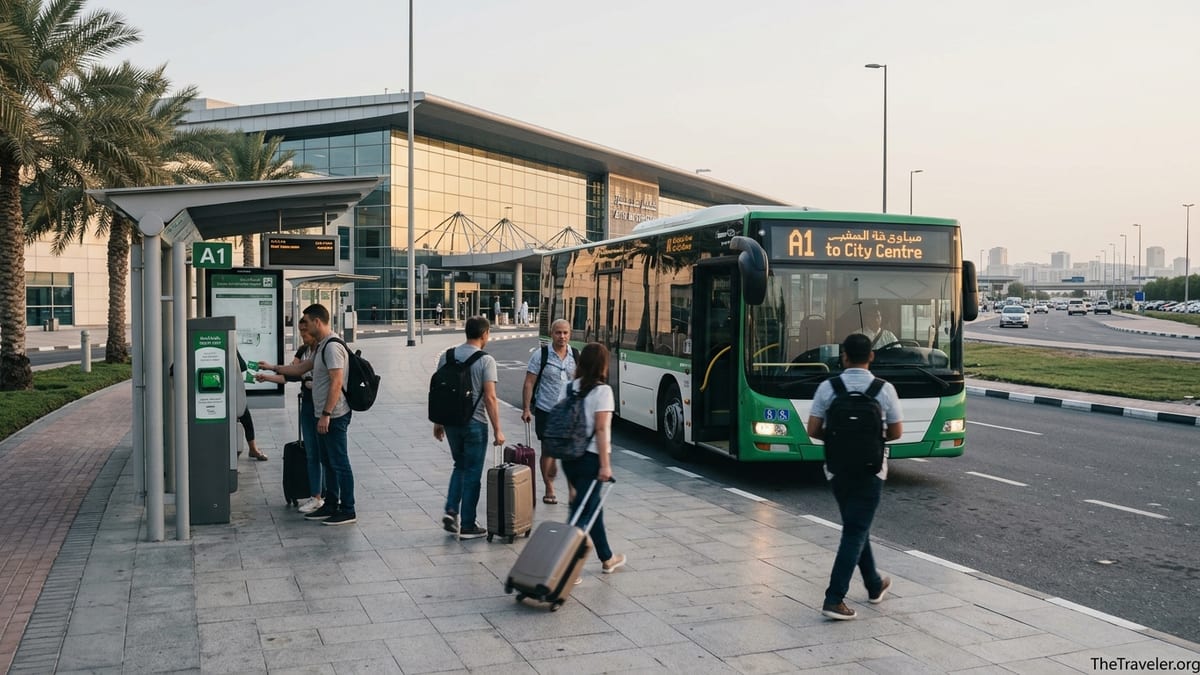
Understanding the Airport’s Public Bus Options
Zayed International Airport sits to the east of Abu Dhabi Island, roughly a 30 to 40 minute drive from the Corniche when traffic is light. The Integrated Transport Centre, which runs the emirate’s buses, operates dedicated airport routes that connect the terminal with key downtown districts. The most important for visitors are routes A1 and A2, both of which run 24 hours a day between the airport and central Abu Dhabi areas such as Al Zahiyah and Khalidiya.
These airport buses are standard city buses with air conditioning and low floors rather than premium shuttles. You will board them from marked bus stops directly outside the arrivals hall, where you will also find ticket machines and Hafilat smart-card vending points. Service is typically frequent, with waits of around 20 to 30 minutes during much of the day and slightly longer at quieter night-time hours, which is why many backpackers and solo travelers consider them an easy default option when flights land late.
In addition to A1 and A2, you may see other routes such as A10 or N2 on timetables or apps; these connect the airport with other residential and commercial areas and can be useful if your accommodation is outside the usual tourist zones. For most short-stay visitors, however, the simplest approach is to use A1 for the Tourist Club and Al Zahiyah area or A2 for destinations around Khalifa Street and Khalidiya, then transfer to a local bus or take a short taxi hop for the final stretch if needed.
Because routes and stop names can be adjusted when new developments open or when roadworks change traffic patterns, it is wise to double-check the current airport routes on the official Darbi journey-planning app or the airport’s own transport page just before you fly. Even a quick look while you wait at baggage reclaim can confirm which bus currently serves your hotel’s neighborhood.
Finding the Bus at Arrivals and Airport Stops
Once you exit customs into the arrivals hall at Zayed International Airport, follow signs for public buses. Unlike some airports where buses depart from distant parking areas, here the bus stops are close to the terminal doors, a short walk outside the building on the ground level. Look for the green and white Abu Dhabi bus branding, covered shelters, and electronic screens that display route numbers and minutes until the next departure.
Ticket machines and Hafilat card top-up kiosks are usually positioned beside or just before the bus shelters. They are designed to be straightforward for visitors: on-screen instructions are available in English as well as Arabic, and the machines accept local currency and bank cards. It is a good idea to sort out your card and credit before you approach the shelter, as drivers do not handle cash and cannot sell tickets on board.
Each shelter is clearly marked with route numbers such as A1 and A2, and bus fronts display both their number and their main destination. For instance, an A1 bus will show that it is heading toward Al Zahiyah or the city centre, while A2 signage highlights Khalifa Street and Khalidiya. If you are uncertain, it is perfectly acceptable to step up to the front door and ask the driver whether the bus passes your district before tapping your card.
If you arrive during a busy wave of flights, the first bus that pulls in may already have a good number of passengers on board. Buses have standing room and grab rails, so you can still board if there is space, but families with small children or travelers with large suitcases might prefer to wait for the next vehicle if the current one looks uncomfortably crowded. Airport security and transport staff often patrol the area and are used to confused new arrivals, so do not hesitate to ask for help with interpreting route displays.
Fares, the Hafilat Card, and How to Pay
Abu Dhabi’s city bus network uses a smart card called Hafilat for payment, which you tap on a reader when you board and again when you get off. You cannot pay cash to the driver, and there is no disposable paper ticket option, so obtaining a Hafilat card at the airport is the crucial first step in any budget bus plan. For visitors, the anonymous card sold from machines at the arrivals level is the most practical version, as it requires no local ID and is ready to use immediately.
Prices can change as the transport authority updates its tariff system, but in recent years a typical city bus fare from the airport into central Abu Dhabi has been in the range of a few dirhams, often around the price of a basic coffee at a chain cafe. Many kiosks sell the physical card for a small fee with preloaded credit, for example a card sold with around 20 to 30 dirhams ready to spend, which is enough for several rides, including your first airport transfer. Because the card is reusable across the entire city network, topping it up with a slightly larger amount is usually more convenient than risking running out of balance mid-journey.
Using the card is similar to systems in cities such as London or Singapore. As you climb onto the bus, hold the card against the reader next to the driver until you hear a beep and see your remaining balance on the small display. When you leave the bus, tap the card again at the back or front door. This check-in and check-out system ensures you are charged the correct fare and avoids you being debited the maximum journey cost. If you change buses within the city, you repeat the same tap-in and tap-out actions on each vehicle.
For visitors staying a week or more, there are also time-based Hafilat products, such as weekly or monthly passes, which can cap your spending if you plan to use buses daily. However, these are designed more with residents and commuters in mind. A typical tourist who uses the bus mainly for airport transfers, a visit to the Sheikh Zayed Grand Mosque, and a couple of rides to Yas Island will usually find standard pay-as-you-go credit more than adequate.
What to Expect On Board: Luggage, Seating, and Comfort
Airport buses in Abu Dhabi are city vehicles rather than dedicated shuttles, so there are no individual luggage racks like those you might find on an intercity coach. Instead, the area opposite the middle or rear doors is open and often used for strollers and suitcases. If you have a single medium suitcase and a small backpack, you will usually find it easy to stand nearby and keep an eye on your bags. Buses operate with air conditioning and tinted windows, which is particularly welcome in the warmer months.
There is no extra baggage fee for typical tourist luggage, but very large or bulky items may not be accepted during busy periods. As a rule of thumb, what you can comfortably carry up the bus steps should be acceptable. If you are traveling with surfboards, very large sports equipment, or several big suitcases, it can be more considerate to hire a taxi or a ride-hailing car rather than squeeze into a public bus with commuters.
Inside the bus, seating is generally divided into a front section reserved for women and families and the rest of the bus for mixed seating, a pattern that is common across the emirate. Signs on board make this clear, and drivers may politely redirect solo male travelers who unknowingly sit in the front rows. Priority seats for people with reduced mobility are clearly marked near the doors, and bus floors are low and level with the curb to help passengers board with strollers or small bags.
The ride from the airport to downtown generally takes 40 to 60 minutes depending on traffic and the number of intermediate stops. For example, a late-evening journey on A1 might feel almost direct, gliding along the highway and then making a handful of stops on Al Reem Island and in the Tourist Club area. During morning commuter peaks, however, the same bus may be slower across bridges and through central streets. In all cases, buses are air conditioned, and it is common to see a mix of residents going to work, airport staff, and a scattering of tourists with roller bags sharing the same vehicle.
Reaching Key Areas of Central Abu Dhabi by Bus
For many visitors, the first question after clearing customs is how to get from Zayed International Airport to a specific area such as the Corniche, Al Zahiyah, Yas Island, or the Grand Mosque. The good news is that A1 and A2 are designed to plug directly into the wider city bus network, so you can often reach your hotel or a major sightseeing area with either a single ride or one simple connection.
Travelers staying in budget hotels around the Al Zahiyah and Tourist Club district, a traditional choice for reasonably priced accommodation, typically use route A1. This bus runs toward Al Reem Island and then continues into Al Zahiyah, stopping within walking distance of many mid-range hotel brands and serviced apartments. A traveler landing at midnight, for example, might board A1 at the airport, ride for about 45 minutes, then walk 10 minutes to a hotel on Hamdan Street, all for a fraction of the price of a late-night taxi.
If your accommodation is closer to the Corniche or Khalidiya, A2 is more useful, as it threads through central Abu Dhabi via Khalifa Street and continues toward established residential and hotel zones. From these corridors, short local bus rides or inexpensive taxis can take you the last few blocks to specific beachfront or inner-city addresses. It is common for travelers to ride A2 into town and then change to a local route such as those serving the Corniche, Marina Mall, or the government district around the city’s monumental buildings.
For major attractions beyond the immediate downtown grid, airport routes interconnect well with other lines. To reach the Sheikh Zayed Grand Mosque on a budget, for example, travelers often ride A1 or A2 into the city, then transfer at a central stop to a route that stops near the mosque’s visitor entrance. Similarly, for Yas Island’s theme parks and malls, a change to one of the Yas-serving city routes from central Abu Dhabi can keep the total transport cost low, particularly if you are visiting outside of the hottest hours of the day.
When the Bus Is Not the Practical Choice
Despite their low fares, public buses from Zayed International Airport are not always the smartest choice. One of the clearest cases is when you are arriving with a family and multiple pieces of luggage in the middle of the summer heat. Waiting at an outdoor bus stop with small children and several heavy cases, then standing on a crowded bus for up to an hour, can be a false economy compared with a door-to-door taxi or ride-hailing trip that might cost ten times more but save considerable stress.
Time of arrival also matters. Although the core airport routes operate 24 hours a day, frequencies in the early morning window between roughly 2 am and 5 am can be thinner, and delays are occasionally possible if there are roadworks or an incident on the highway. A solo backpacker arriving at 3:30 am might be comfortable waiting 30 minutes for the next A1, but a couple arriving after a long-haul flight with only a few hours to spare before a business meeting often find that a metered airport taxi is a better investment.
Another scenario where the bus is less suitable is when your final destination lies in a suburb with limited late-night service. For example, if you are heading directly from Zayed International Airport to a villa in Khalifa City or a compound on the mainland, you may be looking at an airport bus into town plus one or two local buses out again, with late-evening frequencies on those local routes far lower than daytime levels. In such cases, a direct ride-hailing service from the terminal, using apps such as Uber or Careem, can collapse what might be a long multi-leg bus journey into a single 25-minute drive.
Travelers connecting onward to other emirates also need to factor in transfer time. If you are catching an intercity bus to Dubai or Al Ain from Abu Dhabi’s main bus station, using the airport bus first is often economical when your schedule is flexible. However, if you are aiming for a specific departure and your incoming flight is delayed, a taxi from the airport straight to the intercity terminal may be the only way to make your connection. In short, the bus is excellent when you have time and modest baggage, but less so when precision timing or comfort is a priority.
Practical Tips for a Smooth Budget Bus Journey
The simplest way to make the airport bus work for you is to prepare before your plane lands. Install the Abu Dhabi transport or Darbi journey-planning app on your phone while you still have reliable Wi-Fi, and save the address of your hotel or accommodation so you can quickly compare suggested routes. Taking a screenshot of the A1 and A2 route maps or of your intended stop name can be especially helpful if your mobile data is slow or roaming costs are high on arrival.
At the airport, aim to buy or top up your Hafilat card before you exit the terminal building. Having enough balance for at least two or three rides gives you flexibility for a day or two of city exploration at very low cost. If the machine offers a choice of language, select English and follow the prompts carefully, checking that the amount loaded matches your intention before confirming payment. Keep the card somewhere you can reach quickly, such as a front pocket or small card wallet, as fumbling for it on a crowded bus doorway can delay boarding and attract impatient looks from regular commuters.
When boarding, think about how you will manage your luggage in the aisle. If you are carrying a single suitcase, it is efficient to wheel it to the open space near the middle doors and stand beside it, keeping handles out of the walking path for other passengers. With a backpack, remove it from your shoulders before you step on so that you do not accidentally bump seated passengers. On quieter rides, drivers may indicate that you can place a smaller bag on an empty seat, but during busy times it is courteous to keep luggage off the seats so that more people can sit.
Finally, remain flexible. If you reach the bus stop and discover that an unusually long wait is predicted due to road congestion or a disruption displayed on the electronic board, be ready to pivot to an alternative such as the official airport taxi stand or a ride-hailing pickup area. Budget travel in Abu Dhabi, as in any large city, works best when you use low-cost options by default but keep a little financial room for a quicker solution when circumstances demand it.
The Takeaway
Catching a public bus from Zayed International Airport into Abu Dhabi is one of the simplest ways to trim the cost of your trip without sacrificing safety or reliability. The dedicated A1 and A2 routes link the terminal to key downtown neighborhoods for a modest fare, and the Hafilat smart-card system, once set up, makes paying for journeys straightforward for both residents and short-stay visitors.
That said, the bus is not a one-size-fits-all solution. The combination of heat, luggage, family needs, and time pressure can make a metered taxi or app-based ride-hailing car the better option, particularly in the middle of the night or when connecting to time-sensitive intercity services. By thinking through your arrival time, baggage, and onward plans before you fly, you can decide whether a 40 to 60 minute budget ride into town is right for you or whether convenience is worth the extra dirhams.
For solo travelers with flexible schedules and light bags, the airport bus is often ideal: an inexpensive, predictable, and authentic way to ease into Abu Dhabi life. For families, business travelers on tight deadlines, or anyone carrying outsized luggage, it works best as one tool among several, to be used when conditions line up in its favor. Either way, understanding the routes, payment system, and practical realities of riding the bus ensures you arrive in the city informed and in control of your budget.
FAQ
Q1. Can I pay cash for the bus from Zayed International Airport to Abu Dhabi?
No, you cannot pay cash on board. Abu Dhabi’s city buses, including A1 and A2 from the airport, only accept payment with the Hafilat smart card, which you should buy and load at the machines near the arrivals bus stops before boarding.
Q2. How much does the airport bus to central Abu Dhabi cost?
Exact fares can change, but in recent years the airport to city ride has typically cost only a few dirhams, roughly comparable to a basic coffee in a chain cafe. The cost is charged automatically from your Hafilat card when you tap in and tap out.
Q3. Where do I buy a Hafilat card at Zayed International Airport?
You can purchase a Hafilat card from the ticket machines located near the public bus stops just outside the arrivals area. These machines usually accept cards and local currency and offer instructions in English and Arabic.
Q4. How long does the bus from the airport to downtown Abu Dhabi take?
Journey time varies with traffic and time of day, but most travelers should expect around 40 to 60 minutes between the airport and central areas such as Al Zahiyah, Khalifa Street, or Khalidiya.
Q5. Is it safe to take the bus late at night from the airport?
The airport routes operate 24 hours and are generally considered safe, with a mix of workers and travelers using them. However, frequencies are lower at night, so you may wait longer, and some passengers prefer taxis or ride-hailing in the very early hours for added convenience.
Q6. Can I bring large suitcases on the airport bus?
Standard suitcases and backpacks are normally fine, and there is open space inside the bus where you can stand with your luggage. Very bulky or numerous bags can be awkward on a crowded bus, in which case a taxi or ride-hailing car is often the kinder option for you and fellow passengers.
Q7. Do the airport buses stop near the Corniche and beach hotels?
Routes A1 and A2 run into central Abu Dhabi and pass relatively close to many Corniche and city hotels, especially around Khalidiya and Khalifa Street. In some cases you may still need a short taxi or local bus ride from the nearest stop to reach specific beachfront properties.
Q8. How will I know which stop to get off at for my hotel?
The easiest method is to use a journey-planning app such as Darbi or to check the route map in advance, then watch the stop names on the bus’s interior display. You can also tell the driver your hotel name when boarding and ask which stop is closest.
Q9. Is the Hafilat card useful beyond the airport trip?
Yes. The same Hafilat card works on almost all Abu Dhabi city buses, including routes to sights such as the Sheikh Zayed Grand Mosque and Yas Island. Loading a bit of extra credit at the airport allows you to move around the city cheaply for the rest of your stay.
Q10. When is it better to skip the bus and take a taxi from the airport?
A taxi or ride-hailing car is usually better if you arrive with several large bags, are traveling with small children in hot weather, are landing during the quietest night-time hours, or need to reach a meeting or intercity bus departure at a specific time with minimal risk of delay.