


More news on this day
Travelers moving through Argentina’s busiest air corridors are facing fresh disruption, as Flybondi, British Airways and Aerolíneas Argentinas register more than a dozen cancellations and delays affecting Buenos Aires, Córdoba, Bariloche, Rio de Janeiro and other key routes this weekend.
Get the latest news straight to your inbox!
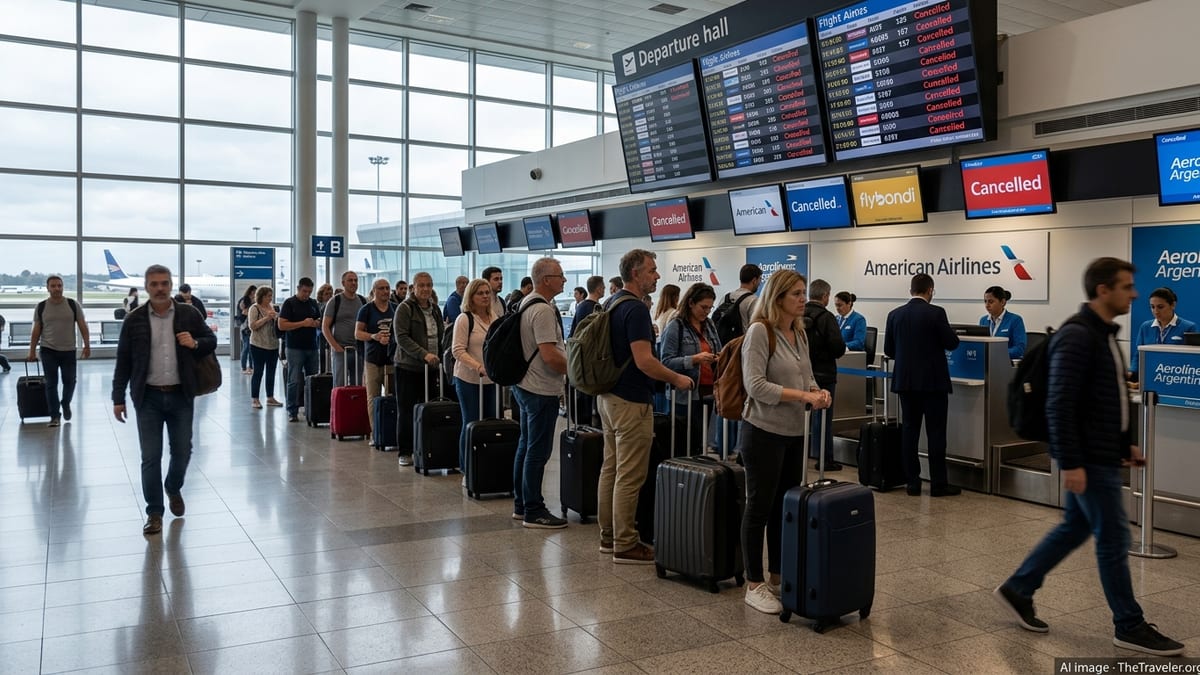
Wave of cancellations ripples across Argentina’s main hubs
Publicly available tracking data and local monitoring sites show a cluster of cancellations and delays impacting domestic and regional flights serving Buenos Aires area airports, along with knock-on effects at Córdoba and Bariloche. Low cost carrier Flybondi is again drawing scrutiny after several of its services were scrubbed or heavily delayed on routes linking the capital with major tourism and business destinations.
On services touching Ezeiza International Airport, recent boards have listed Flybondi flights to or from Bariloche and Rio de Janeiro as delayed or canceled, while certain Aerolíneas Argentinas services, including long haul sectors such as Buenos Aires to Miami, have also appeared as canceled. These operational changes come on top of previously scheduled adjustments and highlight how quickly itineraries can shift for travelers relying on Argentina’s main international gateway.
Although the overall volume of flights operating remains high, the concentration of cancellations on popular leisure routes means that relatively small schedule changes can strand hundreds of passengers at a time, especially on peak travel days or overnight departures with limited same day alternatives.
Flybondi’s reliability under renewed spotlight
Flybondi’s network, which connects Buenos Aires with cities including Córdoba, Bariloche and Rio de Janeiro, appears to be bearing a significant share of the latest disruption. A volunteer-run site that tracks the airline’s operations reported more than a dozen cancellations and multiple delayed departures on recent days, including flights between Buenos Aires and Bariloche and services between Argentina and Brazil.
The low cost carrier has faced mounting criticism over its operational reliability since expanding rapidly across Argentina’s domestic market. Background information compiled from flight tracking platforms and traveler reports points to recurring patterns of last minute schedule changes, airport swaps between Aeroparque and Ezeiza, and outright cancellations that can upend carefully planned itineraries.
For visitors connecting from long haul flights into domestic segments operated by Flybondi, these latest cancellations heighten the risk of missed onward trips to Patagonia, the northwest and other remote regions where frequencies are lower and seats on competing airlines may already be scarce.
Aerolíneas Argentinas trims services amid cost and labor pressures
Argentina’s flag carrier Aerolíneas Argentinas is also appearing in the latest wave of cancellations, though for somewhat different reasons. Recent coverage in regional outlets highlights the airline’s decision to cancel certain special flights planned around the 2026 World Cup period, including services from inland cities such as Córdoba, Rosario and Tucumán to Miami with technical stops in the Caribbean.
Reports indicate that sharp increases in jet fuel costs and broader cost cutting efforts have made some of these long haul operations difficult to sustain. Earlier in the year, Aerolíneas Argentinas also canceled hundreds of flights during a nationwide labor strike, underscoring the carrier’s exposure to domestic economic and industrial tensions that can quickly filter through to its timetable.
In the near term, the latest cancellations visible on departure boards at Ezeiza, including selected long haul routes, suggest that travelers using Aerolíneas Argentinas should monitor their bookings closely, particularly for international services and peak season flights aligned with major sporting events.
British Airways adjustments affect Argentina bound travelers
While Flybondi and Aerolíneas Argentinas handle the bulk of domestic and regional flying in and out of Argentina, British Airways remains a key option for travelers connecting between Europe and Buenos Aires. Recent schedule information and customer reports show that the carrier has been making broader cuts and adjustments across its global network in 2026, ranging from selected European routes to flights in the Middle East and other long haul markets.
Published summaries of these changes describe a strategic reshaping of the airline’s schedule that has, in some cases, translated into cancellations or rebookings for passengers, sometimes only days before departure. Although the adjustments are not limited to Argentina, travelers planning to use British Airways to reach Buenos Aires, or to connect onward from there, could face itinerary changes if their specific departure dates fall during periods of reduced frequency.
The situation is particularly sensitive for passengers combining British Airways long haul services with separate tickets on Argentine domestic carriers, as any significant delay or cancellation on the international leg can leave limited options for same day recovery on popular routes like Buenos Aires to Bariloche or Córdoba.
What travelers through Argentina should do now
Given the combination of tactical cancellations by Aerolíneas Argentinas, reliability concerns around Flybondi, and ongoing schedule reshaping at British Airways, travelers heading to or within Argentina over the coming weeks face an elevated risk of disruption across multiple carriers. Publicly available flight status boards for Ezeiza and Aeroparque already show a mix of delays and cancellations affecting both domestic and regional services, including routes to Bariloche, Córdoba and Rio de Janeiro.
Travel industry commentary and traveler experiences shared on forums point to several practical steps that can help mitigate the impact. These include checking flight status repeatedly in the 24 to 48 hours before departure, allowing extra buffer time for tight domestic connections after long haul arrivals, and considering fully flexible or refundable tickets where possible, especially for key long haul segments into and out of Argentina.
Passengers already in Argentina, or about to depart, may also benefit from monitoring alternative airports and carriers for backup options, since some routes are served by multiple airlines and both Buenos Aires airports. With operational conditions still fluid, the latest wave of cancellations serves as a reminder that even routine hops between the capital, major inland cities and nearby international destinations can be subject to sudden change.