


More news on this day
Hundreds of travelers across Mexico and the wider Americas are facing abrupt itinerary changes as Aeromexico, Volaris, Delta and other partner airlines record clusters of cancellations and delays on routes touching Mexico City, Guadalajara and Tijuana, disrupting onward connections to cities including Lima, Atlanta and New York and leaving some passengers struggling to find a way out.
Get the latest news straight to your inbox!
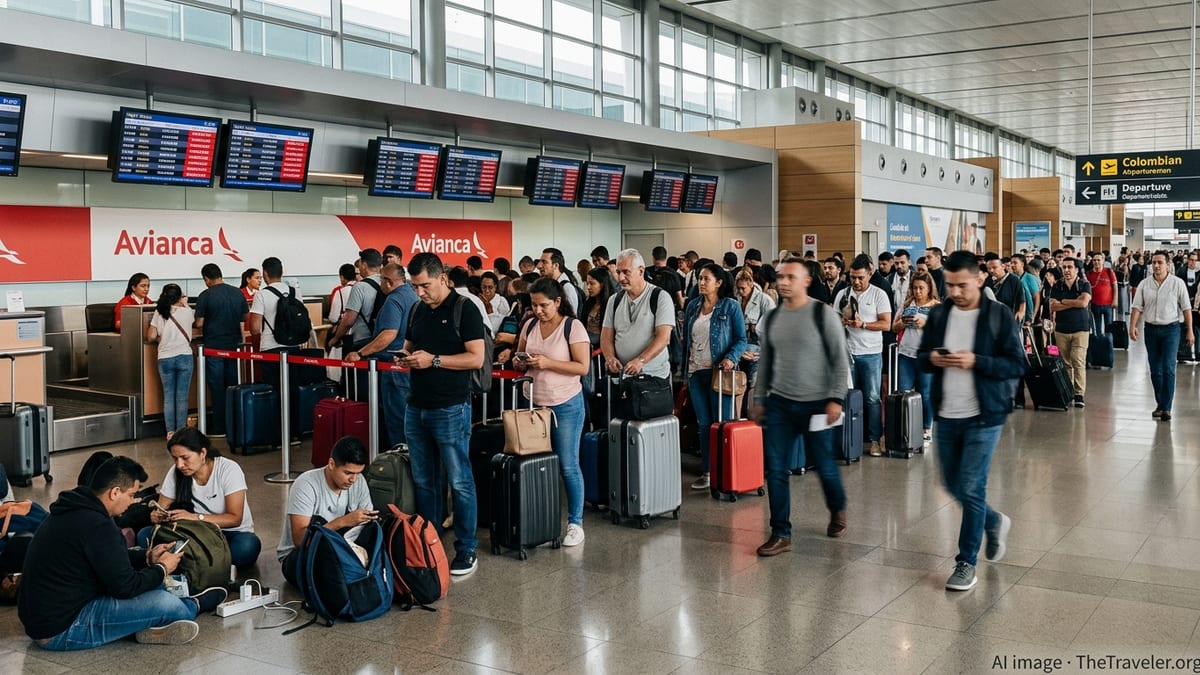
Clusters of Cancellations Hit Mexico’s Busiest Gateways
Mexico’s largest air hub, Mexico City International Airport, is again at the center of a wave of operational turmoil. Publicly available data for Saturday 23 May and Sunday 24 May show repeated cancellations and late operations affecting multiple domestic and international departures and arrivals, including services operated or marketed by Aeromexico, Volaris and Delta. Local media roundups of disrupted flights list both Mexican low cost carriers and major U.S. partners among the hardest hit, underlining how intertwined the networks have become.
Similar pressures are being reported at Guadalajara and Tijuana, two key secondary hubs that feed cross border and long haul traffic. Flight tracking boards show a patchwork of scrubbed or heavily delayed departures, particularly on routes that connect through Mexico City or rely on tight connection windows to reach the United States and South America. Passengers on social platforms describe being rebooked multiple times or routed through unfamiliar airports as airlines attempt to reposition aircraft and crews.
In several cases, cancellations are not confined to a single carrier. Codeshare arrangements between Aeromexico and Delta, and overlapping point to point services by Volaris and other Mexican airlines, mean that a disruption on one metal often ripples across multiple flight numbers. For travelers, a single cancellation can translate into multiple booking alerts and conflicting information in airline apps and at airport departure boards.
Knock-On Effects for Routes to Lima, Atlanta and New York
The operational strain is especially visible on international corridors linking Mexican hubs to major cities such as Lima, Atlanta and New York. Mexico City’s role as a primary gateway to South America means that cancellations there can quickly cascade onto itineraries bound for Peru and beyond. When an early domestic leg from Guadalajara or Tijuana into the capital is scrubbed, passengers booked onward to Lima can find themselves effectively isolated from their long haul connection with limited same day alternatives.
Northbound traffic is also feeling the impact. Atlanta and New York, both served by combinations of Aeromexico mainline, Aeromexico Connect and Delta joint venture services, have seen pockets of cancellations and significant delays associated with the latest disruption cycle. A recent tally of Delta’s network performance for 24 May cites a double digit number of cancellations and hundreds of delays across hubs including Atlanta and Mexico City, highlighting how a single day of irregular operations can reverberate across the carrier’s international schedule.
New York area routes are particularly vulnerable when knock on disruptions overlap with already dense schedules. Published timetables show a tightly timed pattern of flights from Mexico City and Guadalajara into New York, complemented by additional capacity from Tijuana via U.S. border airports. When any one segment is pulled for operational or commercial reasons, connecting options shrink rapidly, and rebooking often requires backtracking through alternate gateways or accepting overnight stays.
Fuel Costs, Capacity Adjustments and Structural Strains
Beyond day to day weather and congestion, structural pressures are adding to the fragility of Mexico’s air connectivity. Recent financial commentary on the country’s aviation sector highlights a steep rise in jet fuel prices since late 2025, with Mexican carriers such as Aeromexico and Volaris reporting higher operating costs and thinner margins. According to business press coverage, airlines have responded with a mix of fare increases, cost cutting and targeted capacity reductions on less profitable routes.
Some of those adjustments are now visible in the network. Earlier this year, Aeromexico announced cuts or frequency reductions on several domestic routes including services to Guadalajara and other key regional cities, reflecting a focus on higher yielding markets and joint venture flows. While such changes are often planned months in advance, they can amplify the impact of unforeseen disruptions when they reduce the number of alternative flights available on a given city pair.
At the same time, infrastructure constraints at Mexico City’s main airport continue to exert pressure on operations. Publicly available information describes a saturated facility that has seen its overall market share eroded by the opening of a secondary airport for the capital region, yet remains heavily relied upon by Aeromexico, Volaris and their foreign partners. Frequent gate changes, airspace congestion and tight turnaround times all reduce the margin for error when irregular operations hit.
Passengers Report Being Stranded and “Isolated” From Alternatives
For travelers caught in the latest wave of cancellations, the practical effect is often a sense of isolation, especially when disruptions occur at night or in smaller airports. Recent posts on traveler forums and social platforms describe passengers stuck in Mexico City or Guadalajara after missed connections, facing limited staff availability and sparse information about rebooking options. Some recount being offered replacement flights 24 hours later or being rerouted through distant airports that drastically lengthen travel time.
Similar frustrations appear in accounts involving joint Aeromexico and Delta itineraries, where a cancellation on one segment leaves the other airline’s systems temporarily out of sync. In these cases, passengers report that one carrier’s app may still show an active reservation while the partner system reflects a canceled leg, complicating attempts to secure timely alternatives. These anecdotal reports echo broader complaints about communication gaps during irregular operations and the difficulty of obtaining refunds or compensation.
Domestic travelers on Volaris and other low cost carriers share parallel experiences when flights are consolidated or canceled for commercial reasons. With leaner schedules on some secondary city pairs, a single scrubbed departure can mean there is no same day alternative at all. Passengers without the means to purchase last minute tickets on competing airlines can find themselves effectively stranded, particularly when disruptions involve cross border routes where ground transport is not a realistic fallback.
What Travelers Can Do as Disruptions Persist
Consumer advocates note that the current pattern of cancellations underscores the importance for passengers of understanding their rights and preparing for irregular operations. In the United States, recently strengthened regulations guarantee cash refunds when airlines cancel a flight and the traveler chooses not to be rebooked, and similar rules apply to many international itineraries. Public guidance from regulators stresses that travelers are not obligated to accept vouchers in lieu of a refund when a flight is canceled by the carrier.
For itineraries linked to Mexico City, Guadalajara or Tijuana, travel experts recommend building longer connection windows, especially when connecting to long haul flights to Lima, Atlanta, New York or other distant destinations. Monitoring flights in real time through independent trackers, not just airline apps, can also provide early warning of disruptions and improve the chances of securing scarce rebooking options before they disappear.
Ultimately, the combination of higher fuel costs, infrastructure bottlenecks and complex cross border partnerships suggests that Mexico’s key hubs may continue to see periodic waves of cancellations and delays. Until carriers can build more resilience into their schedules, passengers flying through Mexico City, Guadalajara and Tijuana are likely to face an elevated risk of disruption and should plan accordingly.