


More news on this day
Passengers flying out of the UAE today are navigating a mix of busy summer terminals, ongoing regional disruptions and fresh route launches, as Emirates, Etihad, Air Arabia and flydubai adjust schedules and guidance across their networks.
Get the latest news straight to your inbox!
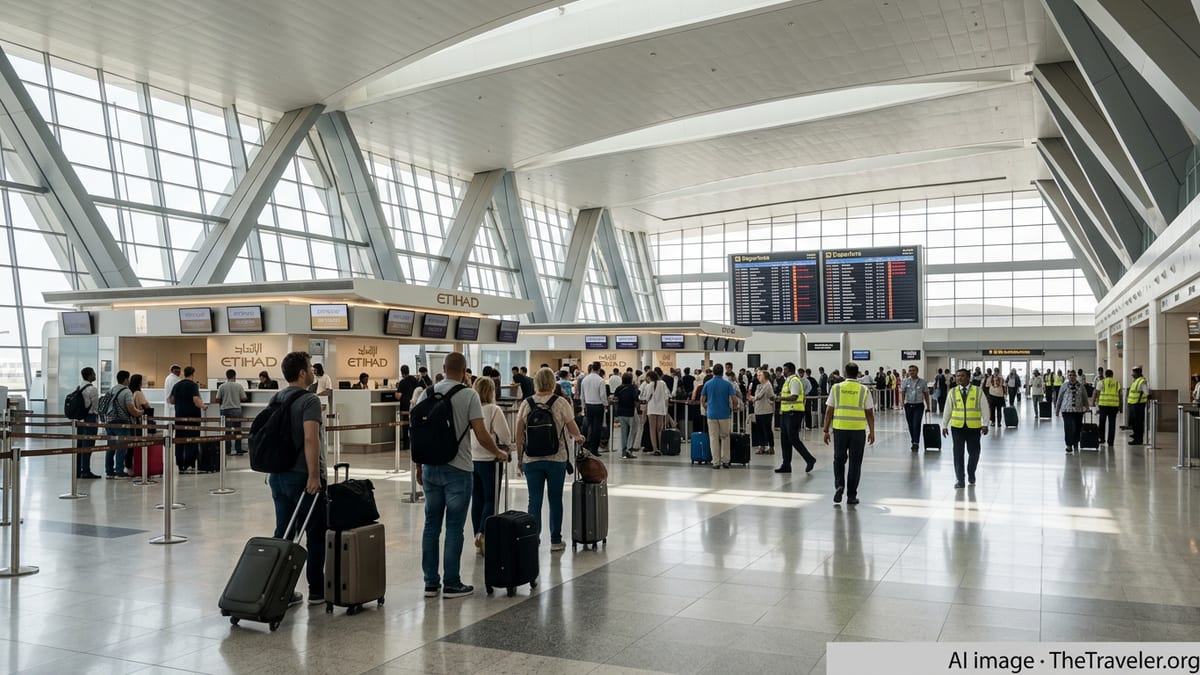
Emirates: regional disruption and busy summer peaks
Emirates continues to operate a large global schedule from Dubai, but recent advisories highlight lingering regional airspace disruption and a particularly heavy summer travel period. Published information on the airline’s travel updates page notes limited operations linked to the broader regional situation earlier this year, alongside guidance for affected customers on rebooking options and policy flexibility.
Travel updates also flag sustained pressure on some long‑haul routes, especially during major events and holiday peaks. For example, customers departing from several North American gateways have been advised to allow additional time for extended security screening and airport congestion, with recommendations to arrive around four hours before departure during the busiest travel windows.
Separate guidance addresses new European Union border procedures. Non‑EU passengers heading from Dubai into the Schengen Area are now subject to the EU Entry/Exit System, which replaces manual passport stamping with biometric registration. Emirates points travellers to official resources and urges extra time at European border controls, particularly for first‑time registrations.
For passengers flying today, the practical takeaway is to verify flight status before leaving for the airport, allow generous check‑in and immigration time at Dubai International, and review any additional entry rules at their final destination, including health‑ or security‑related restrictions that may apply on arrival.
Etihad: closely monitoring regional conditions
From its base in Abu Dhabi, Etihad Airways reports a broadly stable operation while continuing to monitor regional airspace and security conditions. Publicly available notices and third‑party travel alerts reference the carrier within a wider set of Middle East operators that have adjusted routings, schedules or equipment on certain routes in response to evolving geopolitical risks.
Etihad has also been pressing ahead with network development. Industry listings show new and returning destinations coming into service during 2026, including added connectivity into Eastern Europe. These additions signal that, despite regional uncertainty, the airline is planning for sustained demand into and out of Abu Dhabi, particularly from Europe and Asia.
For travellers flying today, the main advice is to double‑check any sectors that traverse sensitive airspace or connect through cities affected by the regional security situation. Many itineraries are operating normally, but some flights may be retimed or rerouted. Passengers are encouraged to keep contact details up to date in their booking profiles so they receive automated notifications if any change occurs close to departure.
Given the concentration of departures from Abu Dhabi International during peak evening bank times, fliers should build in additional buffer for check‑in, security and boarding. Travellers with tight onward connections, particularly to Europe or North America, may want to confirm minimum connection times and consider earlier departures from regional feeder cities where possible.
Air Arabia: new European routes and visa checks
Low‑cost carrier Air Arabia, headquartered in Sharjah, has used the northern summer to expand its network even as regional operational risks remain in focus. The airline’s latest news updates show a series of route announcements in August 2026, including new services from Sharjah to Frankfurt in Germany and Katowice in Poland, as well as an earlier launch to Rome as its second Italian destination.
These additions give UAE‑based travellers more low‑fare options into continental Europe at a time of strong outbound demand. Fares displayed on the airline’s booking channels for late August and early September illustrate competitive pricing across popular city pairs such as Riyadh to Sharjah, with multiple departures available most days and entry‑level fares varying by date.
At the same time, Air Arabia reminds certain customer segments about document checks that must be completed before departure. Guidance on the carrier’s help pages explains that passengers travelling to the UAE on specific visa types may require an advance “OK to Board” clearance linked to their booking, which must typically be processed at least 24 hours before the scheduled flight time.
For passengers flying today, that means ensuring visa approvals, “OK to Board” messages and itinerary details are correctly reflected in the booking record before arriving at the airport. Those connecting through Sharjah on the way to newly launched European destinations should also confirm any Schengen visa requirements and leave extra time for security and transfer formalities at the carrier’s busy hub.
flydubai: high loads and advisory on disruptions
Dubai‑based flydubai, which focuses on short‑ and medium‑haul routes from Dubai International’s Terminal 2 and selected Terminal 3 flows, is seeing strong demand on regional services while keeping a close eye on geopolitical developments. Corporate communications and policy documents outline how the airline handles disruption, stating that passengers are contacted via the phone number or email stored in their booking if flights are cancelled or heavily rescheduled.
The carrier’s published disruptions policy sets out options that can include rebooking on the next available service or issuing refunds in line with fare rules, particularly when schedule changes are initiated by the airline. This framework is particularly relevant today on routes crossing more volatile parts of the region, where airspace restrictions or short‑notice security measures can trigger last‑minute adjustments.
Operational pages on flydubai’s website also emphasise the importance of checking real‑time flight status and planning connections carefully. For travellers linking between flydubai and other airlines in Dubai, the carrier encourages the use of its journey‑planning tools and, where needed, assistance from travel shops across the UAE to ensure that minimum connection times and terminal transfers are properly accounted for.
With many summer departures running close to full, passengers flying with flydubai today are advised to reach the airport early, use online check‑in where available, and monitor both airline and airport channels for any late‑breaking advisories that could affect departure times or gate assignments.
Regulatory backdrop and traveller checklist for today
Behind the operational updates from individual airlines, UAE‑bound and outbound passengers are also navigating a shifting regulatory backdrop. Updated travel advice from foreign ministries, including the latest guidance from the United Kingdom for the United Arab Emirates, draws attention to regional security risks, changing airspace usage and occasional short‑notice adjustments to flight paths or schedules.
For many travellers, this environment translates into a handful of practical steps on the day of departure. These include confirming flight status directly with the airline before leaving for the airport, allowing additional time at check‑in and immigration, and reviewing the latest entry, transit and health requirements for the destination country using official government sources.
Passengers connecting through Dubai, Abu Dhabi or Sharjah today are also encouraged to think through contingency plans if onward flights are disrupted, particularly on itineraries involving multiple carriers. Flexible tickets, comprehensive travel insurance and a clear understanding of each airline’s disruption policy can reduce stress if schedules change at short notice.
While Emirates, Etihad, Air Arabia and flydubai all continue to operate substantial networks from the UAE, published updates underline that conditions remain dynamic across parts of the wider region. Travellers flying today who stay informed, build in extra time and keep documentation in order are best placed to navigate any last‑minute changes with minimal interruption to their plans.