


More news on this day
Thick fog settling over Sydney has disrupted airport operations, with early-morning reports indicating reduced visibility, delayed departures and warnings of wider knock-on impacts across domestic and international flight networks.
Get the latest news straight to your inbox!
Visibility Plunges As Dense Fog Settles Over City
Travellers waking up in Sydney on May 27 were greeted by a blanket of fog stretching across the metropolitan basin, sharply reducing visibility on roads and at Sydney Airport. Publicly available weather briefings from the Bureau of Meteorology described extensive fog and low cloud over the Sydney Basin in the early hours, with conditions expected to lift only gradually through the late morning.
The reduced visibility has prompted flight operations to slow, as aircraft movements are spaced further apart and some services are held on the ground. Similar fog events at major airports routinely lead to curtailed take offs and landings until runway visual conditions return to safe operating thresholds, and early indications suggest Sydney is following that pattern.
While the fog is forecast to lift into low cloud later in the morning, its timing in the early peak has made disruption more likely. Airlines rely heavily on early departures out of Sydney to position aircraft and crews around Australia and beyond, so any constraint at the start of the day can ripple through schedules for hours.
Delays, Cancellations And Network Knock On Effects
According to published coverage collating airline and airport updates, passengers are being advised to prepare for a mix of delayed services and potential cancellations as the day progresses. Sydney Airport has warned of disruption across the broader network, signalling that the operational impact will not be limited to a handful of morning flights.
Australia’s busiest aviation hub typically operates near its movement limits during peak periods, meaning that when a weather event reduces capacity, there is limited scope to recover lost time later in the day. Government demand management papers for Sydney Airport note that once schedules fall behind during a disruption, it can be difficult to fully catch up before the evening curfew comes into force.
Domestic routes linking Sydney with Melbourne, Brisbane and other east coast cities are particularly vulnerable, because aircraft on those sectors often operate multiple legs in a single day. When an outbound flight leaves late, the same aircraft may arrive late into its next port, creating a chain of minor delays that, taken together, can significantly slow the system.
What Travellers Can Expect At Sydney Airport Today
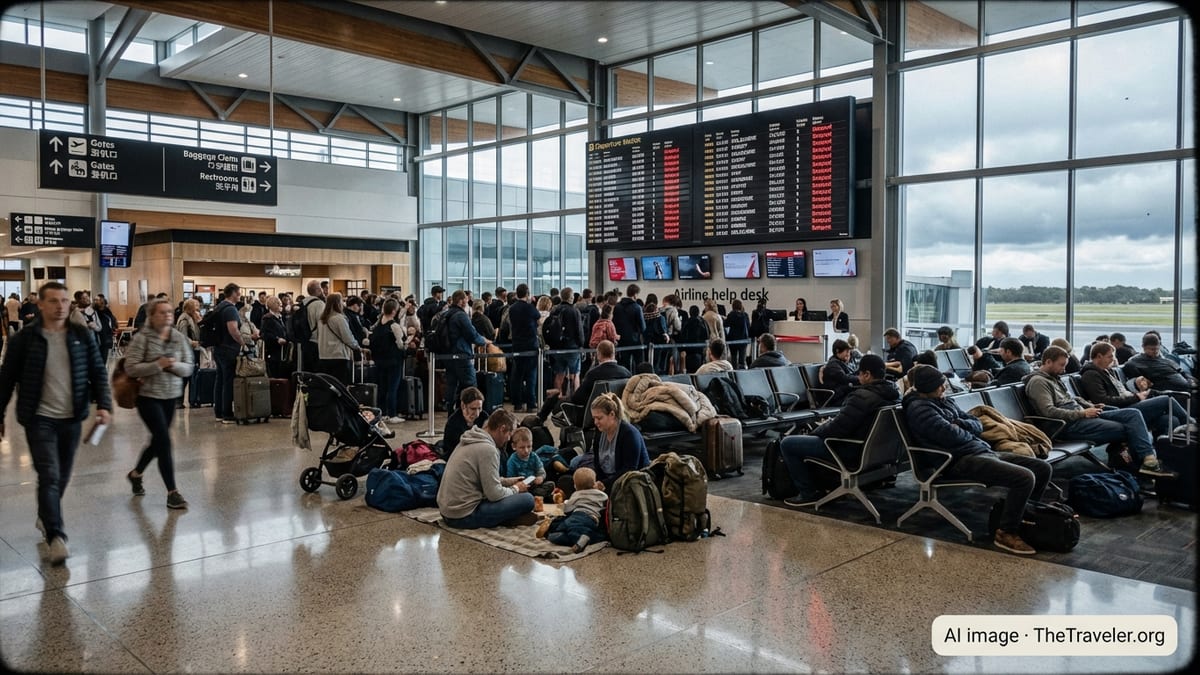
Based on recent fog incidents at major airports in Australia and overseas, travellers can expect longer check in and boarding processes, busy terminal areas and frequent changes to departure information boards as airlines adjust their schedules. Some aircraft may depart later than advertised while others are swapped or consolidated to make better use of available runway slots once conditions improve.
Passengers connecting in Sydney are likely to feel the impact most acutely. Tight connection windows may become unworkable if inbound flights are held in holding patterns or diverted, forcing airlines to rebook travellers onto later services where seats are available. For international passengers, this can mean extended layovers or overnight stays if onward flights operate only once daily.
Publicly available information from previous weather disruptions in Sydney indicates that some carriers prioritise maintaining long haul departures while trimming or delaying shorter domestic sectors that have more frequent services. Travellers on regional or leisure routes may therefore see a higher risk of being re timed or re accommodated.
Advice For Passengers Navigating The Disruption
Travel industry guidance around fog related disruptions consistently stresses the importance of checking flight status before leaving for the airport, and again upon arrival at the terminal. With conditions and schedules changing hour by hour, real time updates from airlines and airports are often the best indicator of whether a flight is operating on time, delayed or cancelled.
Passengers already at Sydney Airport may experience longer queues at customer service counters as rebooking demand increases. Many airlines encourage travellers to use digital tools to change flights or confirm alternative options, which can sometimes be faster than waiting in line during peak disruption periods.
For those with time sensitive appointments at their destination, such as onward international connections or important events, publicly available travel advice suggests building in extra contingency where possible. In some cases it may be prudent to consider flexible tickets or travel insurance products that specifically cover weather related delays, particularly during seasons when fog and low cloud are more common.
Fog Becoming A Familiar Hazard For Global Aviation
Although today’s conditions are centred on Sydney, the disruption fits into a broader pattern seen across global aviation, where dense fog routinely affects operations at large hubs. Recent seasons have seen major airports in Asia, the Middle East and Europe experience significant schedule interruptions when visibility falls below the thresholds required for many aircraft and runways.
Aviation and meteorological agencies note that while advanced landing systems and pilot training have improved the ability to operate safely in low visibility, not all aircraft, crews or airports are equipped to the highest standards. As a result, some services must still be delayed, cancelled or diverted when fog thickens, even if a limited number of flights can continue.
For Sydney, today’s event is a reminder that weather remains a key variable for travellers, even on routes that are otherwise routine. As airlines and airport operators refine their procedures and contingency plans, passengers are likely to keep facing occasional mornings where a blanket of fog turns a normal commute into an exercise in patience.