


More news on this day
A thick blanket of fog descended on Sydney on Tuesday morning, severely reducing visibility across the metropolitan area and triggering widespread disruption to flights at Australia’s busiest airport.
Get the latest news straight to your inbox!
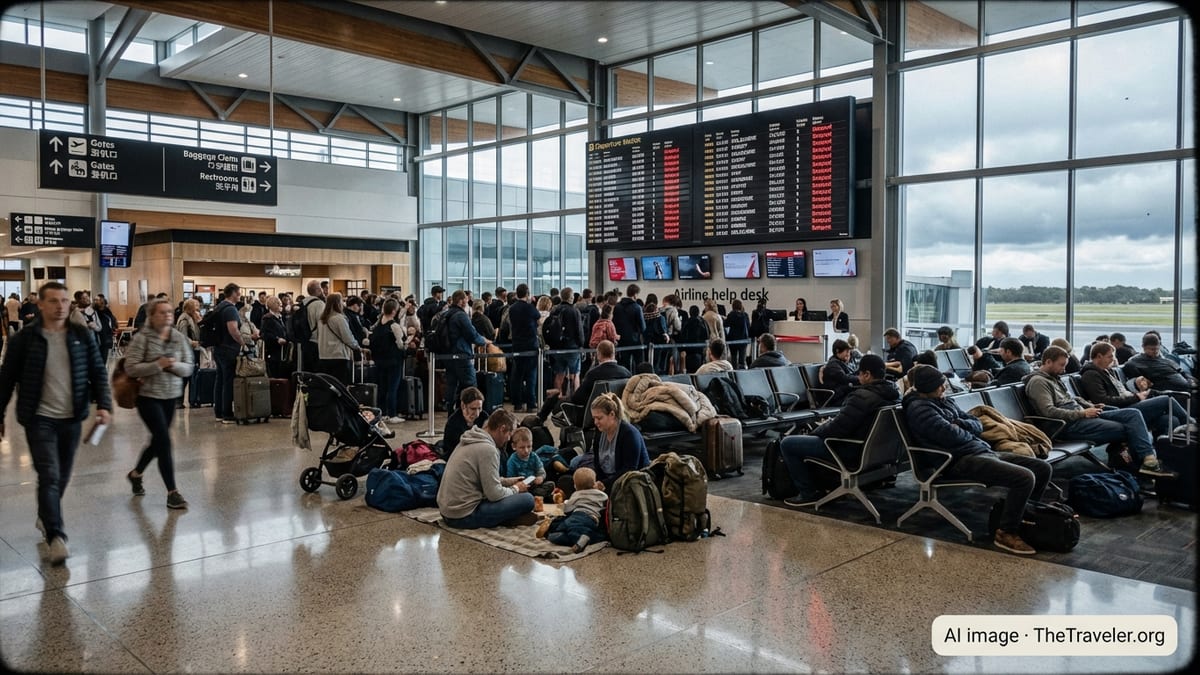
Low Visibility Chokes Morning Peak at Sydney Airport
Publicly available flight tracking boards and media reports show that dense fog settled over Sydney around daybreak on May 26, shrouding both the city skyline and runways in low cloud. Visibility at times dropped to a few hundred metres, forcing air traffic controllers to slow arrivals and departures into Kingsford Smith Airport.
Operational data and local coverage indicate that airlines imposed flow restrictions through the morning peak, with services stacking in holding patterns offshore and on the inland approach corridors. Some inbound jets diverted to alternative airports when conditions on approach fell below the visibility thresholds required for safe landings on specific runways and aircraft types.
Departure banks were also hit as ground operations adjusted to the slower tempo of movements. With fewer takeoff slots available each hour, even on-time aircraft joined growing queues at the gates and holding points, adding to rolling knock-on delays for the rest of the day.
By mid-morning, live departure boards showed a growing cluster of delayed services across domestic and short-haul international routes, particularly on the heavily trafficked corridors linking Sydney with Melbourne, Brisbane and Canberra. Some services were cancelled outright when aircraft and crews slipped too far out of position to recover their schedules.
Passengers Face Long Queues, Missed Connections and Rebookings
Travelers passing through the terminal reported packed check-in areas and security lanes as the disruption took hold. Social media posts and broadcast footage showed long lines at service desks as passengers sought new connections or compensation under airline disruption policies.
According to publicly accessible airline operational updates, multiple flights between Sydney and other state capitals were delayed by an hour or more, while a smaller number were cancelled or consolidated. Passengers booked on early-morning sectors were among the hardest hit, with some domestic travelers advised to return home or wait several hours for the next available seat.
Connecting traffic felt the impact as missed links cascaded through airline networks. Flyers with onward journeys from Sydney to regional centers, as well as to New Zealand and Pacific destinations, faced tight turnarounds or unexpected overnight stays when their inbound flights arrived outside scheduled connection windows.
Publicly available travel advisories urged affected passengers to check their flight status before leaving for the airport and to use airline apps or online tools where possible, in an effort to relieve pressure on airport staff who were dealing with mounting queues.
Fog Exposes Fragility in Australia’s Tightly Timetabled Networks
The latest bout of fog-related disruption comes amid broader operational strains across Australian and New Zealand aviation networks. Industry-focused coverage notes that even modest clusters of cancellations and delays can rapidly snowball, given the tight aircraft rotations and lean staffing levels that carriers have relied on since the pandemic recovery.
On Tuesday, data compiled from multiple airports in the region pointed to elevated delay rates on key domestic and trans-Tasman routes, with Sydney and Melbourne acting as critical chokepoints. When one of these hubs slows, aircraft and crews fall out of sequence, creating a rolling backlog that can linger well into the evening.
Analysts point out that weather accounts for a significant share of so-called reactionary delays, where a single late arrival forces a chain of late departures across the network. Fog is particularly disruptive because, unlike thunderstorms that may pass quickly, low cloud and poor visibility can persist for hours, forcing prolonged use of low-visibility procedures that reduce runway capacity.
Recent submissions from airport and aviation bodies highlight how Australia’s major gateways already operate close to their declared capacity under clear skies. In such a tightly calibrated system, even a single morning of dense fog is enough to reveal structural bottlenecks in ground handling, gate availability and air traffic management.
How Fog Grounds Flights in an Era of Advanced Technology
Despite modern navigation systems and instrument landing procedures, dense fog remains one of the most stubborn weather hazards for aviation. Guidance material from meteorological and aviation agencies explains that when cloud and moisture drop to ground level, pilots lose vital visual cues during the critical phases of takeoff and landing.
Airports can mitigate some of this risk with high-intensity runway lighting, approach aids and carefully calibrated instrument landing systems, while crews train for low-visibility operations that rely heavily on cockpit instruments. However, each runway, aircraft type and airline has strict minima that specify the lowest visibility under which they are permitted to operate.
When real-world conditions fall below those published limits, operations must slow or pause. Even when aircraft and crews are certified to land in poor visibility, the overall flow of traffic is reduced because controllers must space out arrivals and departures to maintain safety margins. This explains why some flights still land while others are delayed or diverted during the same fog event.
Forecasting fog also remains a challenge. Meteorologists can often predict the likelihood of its formation overnight in cooler seasons, but the exact timing of onset and clearance is less certain. As a result, airlines face difficult decisions on whether to pre-emptively adjust schedules or wait and risk last-minute disruptions if the fog lingers longer than expected.
Travel Advice as Disruptions Ripple Beyond Sydney
The morning’s fog in Sydney coincided with a broader patch of weather-related disruption across parts of Australia and nearby regions in recent weeks, where low cloud, coastal fog and unsettled autumn conditions have periodically affected smaller airports as well as major hubs.
Consumer advocates and travel commentators recommend that passengers build extra time into itineraries during the fog-prone months of late autumn and winter, particularly for early-morning departures. Flexible tickets, longer connection windows and comprehensive travel insurance are frequently cited as practical ways to reduce the stress of unexpected delays.
Those planning to fly into or out of Sydney in the coming days are being encouraged, via public advisories and airline updates, to monitor weather forecasts and check the status of their flights regularly. Early awareness of potential issues can give travelers more options to adjust plans, change flights or secure accommodation if schedules unravel.
With the city’s busy event calendar and holiday traffic keeping demand high, aviation observers suggest that Tuesday’s fog episode is a reminder of how quickly a single weather system can upend thousands of journeys, even in a mature, technology-rich aviation market like Australia’s.