


More news on this day
Travelers moving through Ronald Reagan Washington National Airport faced a fresh wave of disruption on May 26, as publicly available tracking data showed more than 130 flight delays and several cancellations affecting major US carriers and spreading knock-on impacts across Washington DC, Arlington, Alexandria and other cities nationwide.
Get the latest news straight to your inbox!
Reagan National Becomes a Fresh Bottleneck
Ronald Reagan Washington National Airport, one of the primary gateways to the US capital region, experienced mounting delays on Tuesday as a combination of airspace flow constraints and peak-period congestion slowed operations. Federal aviation status dashboards indicated that a ground delay program was possible at the airport later in the afternoon, a step often associated with extended departure queues and arrival metering during busy periods.
The disruption translated into more than 130 delayed flights and at least four cancellations tied to services operating in and out of Reagan National. The imbalance between scheduled demand and available airspace capacity left many departures holding for new takeoff slots, while arrivals were spaced out to maintain safe traffic levels. Weather in the broader East Coast corridor, along with volume-related traffic management, appeared to be contributing factors rather than any single, localized incident at the airport itself.
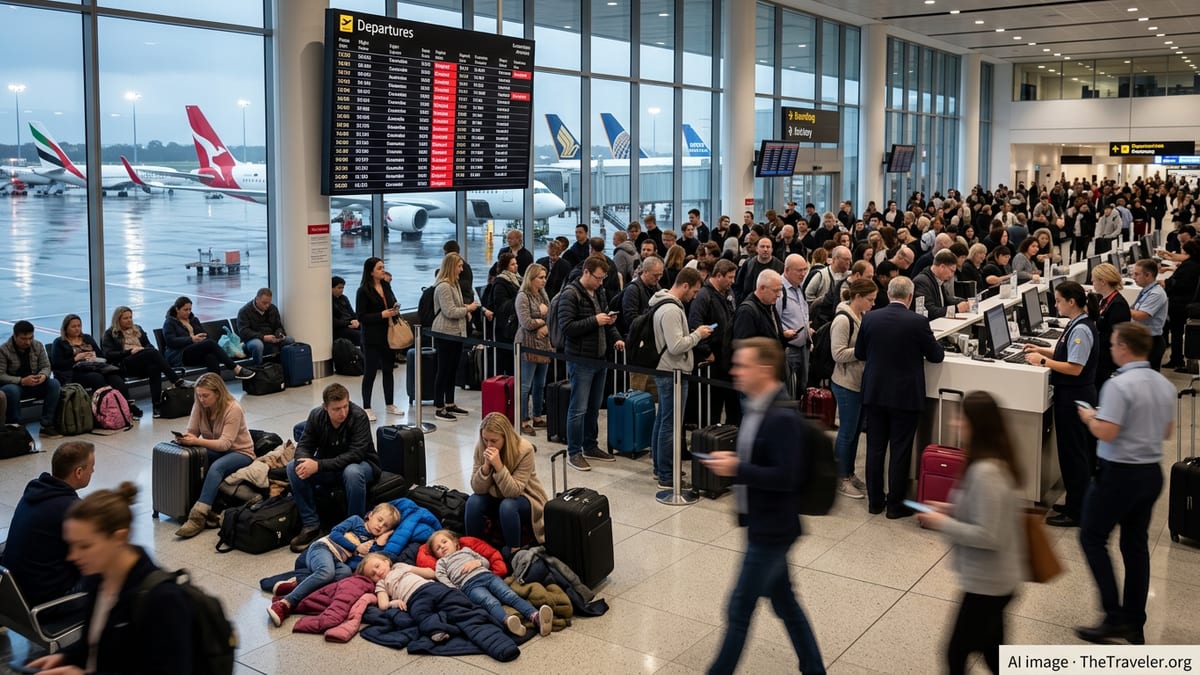
Passengers reported longer than usual waits at gate areas and crowded terminal concourses as revised departure times continued to shift through the day. Airlines advised travelers through their apps and digital boards to arrive early and monitor flight status closely, with some carriers proactively offering rebooking options for those facing significant delays.
Major Carriers and Regional Partners Affected
The latest disruption swept across a broad mix of airlines that serve Reagan National, including American Airlines and its regional affiliate PSA Airlines, as well as Southwest, Delta Air Lines, JetBlue and United. American, which operates a hub-style schedule at the airport, bore a substantial share of the delayed departures and arrivals, reflecting the size of its network at the Washington-area facility.
Regional operator PSA Airlines, which runs flights under the American Eagle brand, was affected where smaller regional jets feed passengers into the larger American network. Delays on these short-haul segments created a cascade of missed connections for travelers attempting to link through Reagan National to other parts of the country.
Southwest, Delta, JetBlue and United also recorded disrupted operations, particularly on routes connecting the capital region with major hubs and high-demand business markets. Published flight-tracking boards showed hold-ups on services to and from cities such as Atlanta, Boston, Chicago, Dallas and New York, compounding pressure at both origin and destination airports.
Ripple Effects Across the Washington Region
The knock-on impact of delays at Reagan National stretched well beyond the airport’s perimeter roads into the wider Washington metropolitan area. Travelers based in Arlington and Alexandria, who often rely on the airport’s close-in location and quick transit links, encountered unexpected changes to their Tuesday plans as departure times shifted and arrival estimates slipped deeper into the evening.
With flights to other regional and national centers running behind schedule, public information feeds indicated that connecting airports across the United States began to feel the strain. Disruptions at a high-density facility serving the capital can easily propagate throughout the network, particularly when multiple large carriers are affected on the same day and during the same peak windows.
Ground transport providers around the airport, including taxi and rideshare services, saw uneven surges in demand as some travelers opted to adjust plans or divert to or from alternate airports in the broader Washington-Baltimore area. Hotels near the airport prepared for the possibility of additional short-notice stays from travelers missing last connections or facing late-night arrivals.
Part of a Wider Pattern of US Flight Disruptions
The difficulties at Reagan National formed part of a wider pattern of flight disruptions emerging across the United States in late May. Recent days have brought weather-related slowdowns and operational challenges to several major hubs, with tracking services showing thousands of delays and hundreds of cancellations nationwide as the busy summer travel season begins to ramp up.
Published analyses of recent performance trends highlight that large network carriers, including American, Delta and United, alongside low-cost operators such as Southwest and JetBlue, have all contended with elevated levels of schedule disruption as demand rebounds to or above pre-pandemic levels. Congestion in tightly controlled airspace around major metropolitan areas, particularly in the Northeast and Mid-Atlantic, has been a recurring stress point.
Reports indicate that Washington’s close-in Reagan National Airport, constrained by its location on the Potomac River and longstanding perimeter and slot rules, is especially vulnerable to small shifts in demand or airspace availability. When flow programs or weather-related restrictions are introduced, even briefly, the airport’s limited room for maneuver can quickly translate into widespread delays across multiple carriers.
What Travelers Can Expect and How to Prepare
For passengers with upcoming trips through Reagan National, the latest round of disruptions serves as a reminder that conditions can change rapidly, particularly during busy holiday-adjacent periods and summer peak travel days. Publicly available guidance from aviation and consumer resources emphasizes the importance of monitoring flight status closely and building additional time into connections, especially when routing through congestion-prone hubs.
Travelers affected by Tuesday’s delays and cancellations were advised through airline communication channels to review rebooking options, consider alternative routings, and keep digital boarding passes and notifications enabled for real-time updates. Same-day changes, standby lists and waivers can sometimes offer more flexibility during systemic disruptions, although availability varies by airline and route.
Observers note that as US carriers adjust schedules and staffing for the summer season, airports such as Reagan National will likely remain under close scrutiny from both airlines and passengers. With American Airlines, PSA Airlines, Southwest, Delta Air Lines, JetBlue and United all playing significant roles at the airport, any future operational constraints could again reverberate quickly across Washington DC, Arlington, Alexandria and a wide network of connected US cities.