


More news on this day
What was sold as an “endless” life at sea has ended abruptly in the Cambodian port of Sihanoukville, where hundreds of residents from the MV Odyssey have been told their long world cruise is over and that they must disembark with little notice.
Get the latest news straight to your inbox!
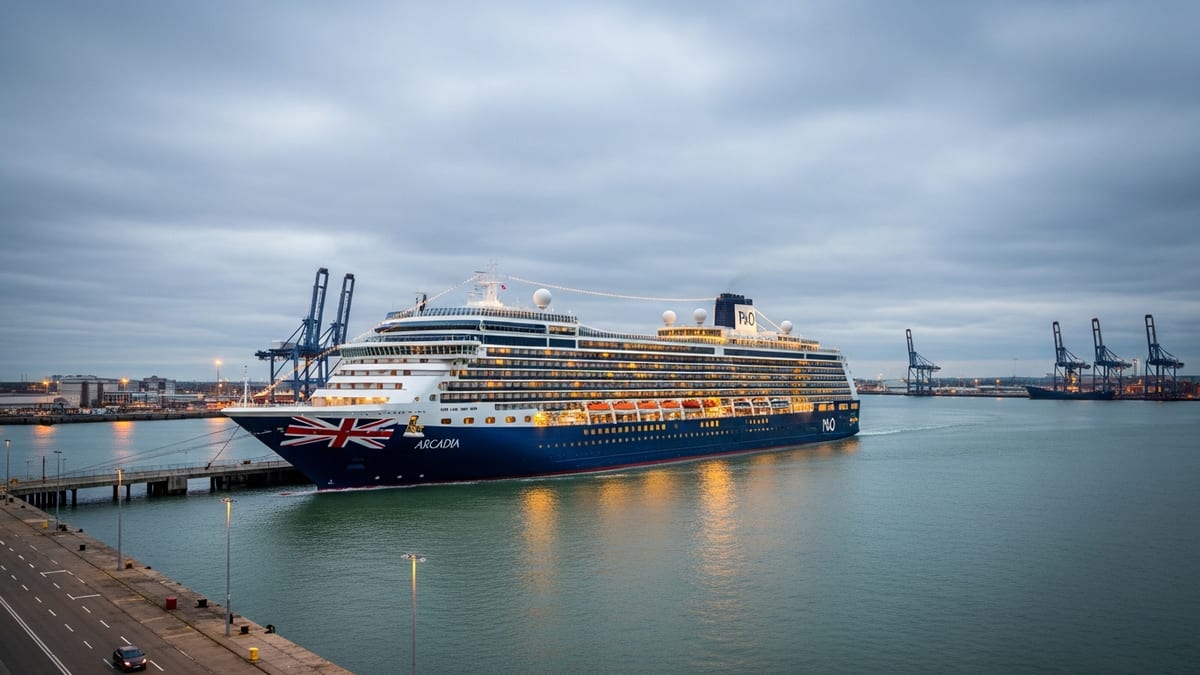
A three-year dream cut short in Sihanoukville
The MV Odyssey, operated by Florida based company Villa Vie Residences, arrived in Sihanoukville on 23 October after departing from Thailand, according to publicly available vessel tracking and local port information. The 196 metre Bahamas flagged ship had been marketed as a residential world cruise combining long term living at sea with a three and a half year itinerary touching all seven continents.
Reports indicate that 203 guests and around 150 crew members were on board when the company announced that rising fuel costs had made it impossible to continue. The halt comes roughly two years into a voyage that began in October 2024 and was expected to run until 2027, with some packages promoted as effectively allowing residents to “live at sea” indefinitely.
Passengers describe being instructed to leave the ship in Cambodia with their belongings after being informed that operations were being suspended. The Odyssey is now laid up in Sihanoukville, with no confirmed departure date and uncertainty over whether the current operator will be able to resume service.
Publicly available corporate statements and news coverage link the decision to global fuel price spikes following the conflict involving Iran, which have sharply increased operating costs for long haul cruise itineraries. For a vessel that must cover long ocean segments between ports, fuel is among the largest single expenses.
Fuel price shock and a fragile business model
Villa Vie Residences bought and refitted the former cruise ship in 2023, positioning it as a floating residential community that would continuously circle the globe. The company promoted multi year and long term stays, with some residents reportedly selling or renting out homes on land to finance life on board.
According to published coverage, the operator had already faced financial pressure in recent months, with residents asked for additional cash contributions to cover operating and fuel costs. Those appeals now appear in hindsight to have been warning signs that the business model was vulnerable to market shocks.
The recent surge in marine fuel prices, tied in part to oil market volatility following the Iran war, appears to have pushed the project beyond its financial limits. Trade and industry reporting has highlighted how fuel accounts for a significant share of cruise operating budgets, and residential style itineraries with extended distances between ports have less flexibility to shorten routes or slow down to save fuel without disrupting the product sold to guests.
In this context, suspending operations in Sihanoukville may have been a last resort to prevent the company from taking on further fuel costs it could not cover. The abruptness of the decision, however, has amplified the impact on travellers who had planned to remain on board for years.
Residents face sudden housing and travel scramble
Unlike conventional cruise passengers, many of those stranded in Cambodia had structured their lives around long term residence at sea. Public accounts from passengers indicate that some had invested substantial savings into cabins or multi year packages, treating the ship as a primary home rather than a temporary vacation.
The sudden halt has therefore created two overlapping emergencies for travellers: finding immediate accommodation and travel out of Sihanoukville, and rethinking longer term housing and financial plans now that their “endless” cruise has stopped. Social media posts and interviews cited in international coverage describe residents rushing to book flights, hotels and apartments with little advance warning.
Cambodian officials and port information show that the Odyssey is currently docked at Sihanoukville Autonomous Port on the Gulf of Thailand, a growing but still relatively small tourism gateway compared with major hubs such as Bangkok or Ho Chi Minh City. Travellers seeking to leave typically connect through Phnom Penh or nearby regional airports to reach long haul flights, adding cost and complexity.
Insurance coverage is another open question. Standard travel insurance often treats cruise line insolvency or early termination differently from medical emergencies or weather disruptions, and residential cruise contracts can have their own refund and compensation terms. Public documents available so far suggest that passengers are still waiting for clarity on how much of their upfront payments, if any, will be returned.
Impact on Cambodia’s port city and local tourism
Sihanoukville has become familiar with unexpected cruise arrivals in recent years. During the early stages of the COVID 19 pandemic, another ship turned away by multiple countries was eventually allowed to dock there, briefly putting the port city in the global spotlight. The arrival of the Odyssey with hundreds of long term cruise residents has again thrust Sihanoukville into an unplanned supporting role in a global travel story.
For local businesses, the sudden presence of several hundred relatively high spending foreign travellers in need of hotels, restaurants and transport represents both a short term opportunity and a logistical test. Reports from local media describe increased demand for mid and upper range accommodation as former passengers seek somewhere to stay while they reorganise travel or wait for news from the cruise operator.
The port itself, situated on Cambodia’s southern coast, is the country’s main deep water gateway and has been expanding cargo and cruise capacity. The lay up of a 196 metre residential ship alongside container traffic underscores how global shocks in energy markets and tourism can intersect in places that are still diversifying their economies.
For travellers already in Cambodia, the situation is a reminder of the importance of having flexible exit options and understanding regional air and land connections. Sihanoukville is linked by road to Phnom Penh and by domestic flights to other Cambodian destinations, but long haul itineraries often require additional connections through regional hubs in Thailand, Vietnam or Singapore.
Questions for the future of residential cruising
The abrupt end of the Odyssey’s voyage raises broader questions about the viability of residential and “endless” cruise concepts at a time of volatile fuel prices and shifting travel patterns. Industry analysts note that such projects typically operate on thin margins, relying on high occupancy and predictable costs over many years to remain sustainable.
Public information about Villa Vie’s model shows that it combined cabin sales, long term leases and all inclusive service fees to fund operations. When core assumptions about fuel and financing changed, the strain appeared quickly. The decision to suspend operations in Cambodia has become one of the most visible examples of how quickly complex, multi year travel products can unravel when confronted with external shocks.
For prospective passengers considering similar ventures, the Cambodia episode is likely to sharpen attention on financial safeguards, contingency plans and the legal structure of long term cruise contracts. Travel advisers are already pointing to the Odyssey case as a reminder that “endless” does not always mean guaranteed, and that buyers should closely review what happens if an operator suspends or ends a voyage ahead of schedule.
As the MV Odyssey remains idle in Sihanoukville and its former residents disperse across Cambodia and beyond, the end of this particular “endless” cruise is still unfolding. What began as a promise of permanent life at sea has instead become a complex repatriation and housing challenge, watched closely by both the cruise industry and travellers drawn to the idea of turning a ship into home.