


More news on this day
A yearslong around-the-world “residential” cruise marketed as a floating home has been abruptly suspended in Cambodia, leaving about 200 passengers scrambling for flights, housing and refunds after being told their global voyage was over with little notice.
Get the latest news straight to your inbox!
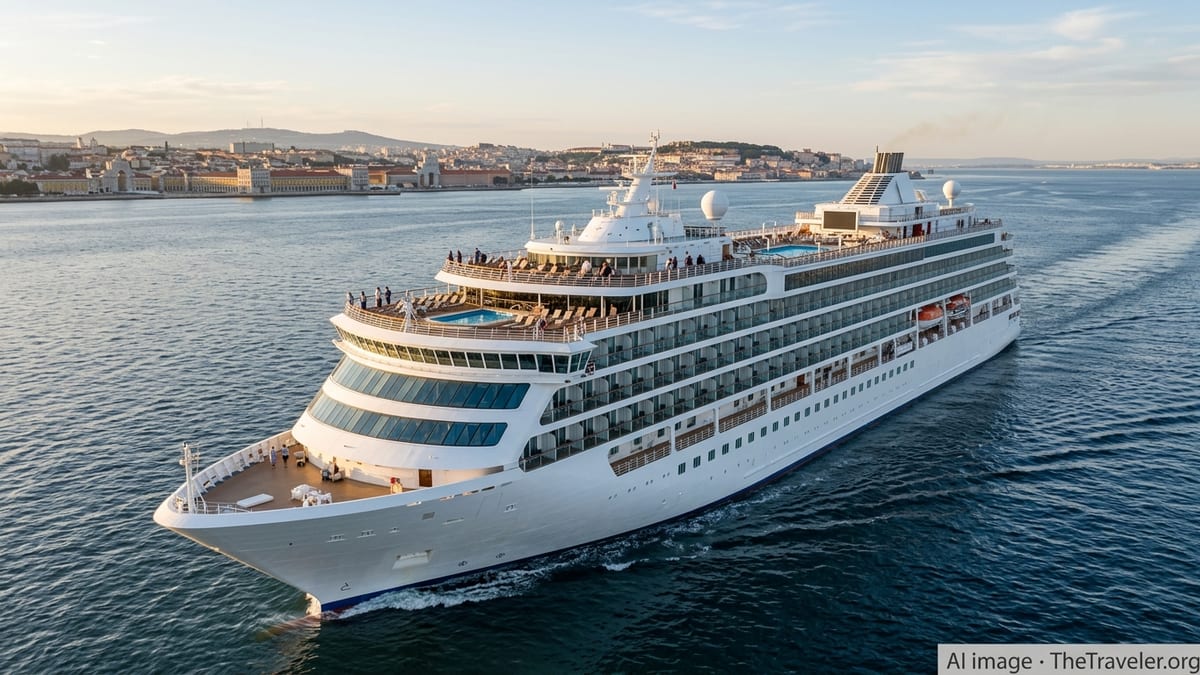
Voyage cut short in Sihanoukville after fuel cost surge
According to published coverage by the Associated Press and regional outlets, the US-based cruise ship MV Odyssey was ordered to end its itinerary in the Cambodian port city of Sihanoukville after its operator said soaring fuel prices had made the multiyear voyage financially unsustainable. The ship, which promoted itself as a long-term living community at sea, had been on a planned three-and-a-half-year journey to all seven continents.
Reports indicate the Odyssey set sail about two years ago, inviting guests to purchase long-duration stays in private cabins that functioned as apartments, with the promise of continuous travel and an onboard lifestyle that resembled a residential resort. Marketing materials highlighted the appeal for digital nomads, retirees and remote workers seeking to combine global exploration with a fixed home base.
The decision to halt the journey in Southeast Asia came after the operator cited the rising cost of marine fuel along the ship’s route. Publicly available information shows that the company described the measure as a suspension of the voyage rather than a permanent closure, but passengers currently disembarked in Cambodia have been informed that their time on board has effectively ended, at least for the foreseeable future.
Coverage from US and Asian news outlets notes that the suspension affects several hundred people in total, with about 200 passengers understood to be on board for the current segment of the voyage when the announcement was made. Crew members also face uncertainty, with the ship’s future operations and deployments yet to be clarified.
Residents turned sudden ex-guests in Cambodia
For many of those on the Odyssey, the disruption is more than the cancellation of a holiday. The ship was marketed as a residential community, and some passengers had given up conventional homes, sold property or placed belongings in storage in order to live full time at sea. Published accounts describe guests being told in recent days that they would have to disembark in Sihanoukville and arrange onward travel on their own.
Reports indicate that the operator has provided limited assistance beyond the voyage refund framework, leaving passengers to secure hotel rooms in Cambodia or book seats on international flights at short notice. Some travelers had pets and extensive luggage on board, complicating their exit from the ship and their immediate accommodation plans on land.
Sihanoukville, a coastal city on the Gulf of Thailand, has seen rapid development as a regional port and tourism hub, but it is not a standard turnaround port for large US-based cruise operations. As a result, the logistics for hundreds of people suddenly disembarking with residential volumes of possessions have proven challenging, with local transport and storage options stretched by the unexpected influx.
Travelers who joined the voyage with the expectation of a continuous global itinerary now face a choice between remaining in Cambodia while they reorganize their lives or undertaking hurried multi-leg journeys back to their home countries. Several media reports highlight stories of long-haul passengers who had budgeted for shipboard living rather than high one-off costs for last-minute international flights.
Fuel economics and the business of residential cruising
The Odyssey’s suspension underlines how sensitive long-range cruise operations can be to fuel costs and operational expenses, particularly when a ship is marketed as a residential community rather than a series of short, high-yield itineraries. Industry coverage has noted that extended world voyages, repositioning cruises and niche expedition routes are all exposed to fluctuations in global energy prices.
Publicly available information on the residential cruise concept shows that the Odyssey’s operator relied on multi-year cabin sales and long-stay contracts rather than traditional per-week cruise fares. While that model can provide more predictable revenue, it also commits a company to providing housing, services and worldwide itineraries at prices agreed long before future fuel and port costs are known.
Analysts quoted in earlier coverage of residential cruising have observed that the economics are particularly tight for ships that promise slow circumnavigations with frequent, fuel-intensive repositioning segments across oceans. When bunker fuel prices jump or when port fees and regulatory costs rise along key routes, margins can narrow quickly, leaving operators little flexibility without renegotiating passenger contracts or altering itineraries.
In the Odyssey’s case, reports indicate that the company framed the halt as a necessary measure to safeguard its broader financial stability and future projects, including a second planned residential vessel. However, public statements referenced in news coverage have not provided a concrete timeline for any relaunch or clarified whether existing residents would be prioritized for cabins on future sailings.
Passenger rights, refunds and travel protections
The sudden end of the Odyssey’s voyage raises questions about what protections exist for travelers who commit to yearslong cruise contracts rather than standard holiday bookings. According to widely available consumer guidance, US and European regulations offer some safeguards for package tours and conventional cruises, but multi-year residential arrangements can fall into more complex contractual territory.
Reports on the Odyssey indicate that the operator has offered partial refunds or credits for the unused portion of the voyage, though specific terms have not been published in detail. Some passengers are expected to seek additional compensation for relocation costs, unused shore arrangements and the expense of securing new housing on land.
Travel industry advisories commonly recommend that long-term cruise residents maintain robust travel insurance and retain a land-based mailing address or storage solution, in case voyages are disrupted by mechanical issues, port access disputes, public health emergencies or financial pressures. However, publicly available information does not yet clarify how many Odyssey residents held comprehensive policies covering trip interruption and unexpected accommodation.
Consumer advocates quoted in previous cruise disruptions have also emphasized the importance of booking with operators that participate in recognized financial protection schemes or maintain segregated client funds. In emerging sectors such as residential cruising, oversight and guarantees may be more limited, putting more onus on travelers to investigate the financial health and contingency planning of the companies they choose.
Implications for long-term life at sea
The halt of the Odyssey’s global voyage is being closely watched within the growing niche of long-term and residential cruising, where ships are marketed not only as holidays but as alternative lifestyles. Recent years have seen a proliferation of projects offering floating apartments, multi-year world itineraries and subscription-based “liveaboard” programs targeting remote workers and retirees.
Publicly available coverage suggests that the Odyssey’s experience could prompt other operators to review their exposure to fuel costs, their contractual promises to residents and the clarity of their contingency plans. Travelers considering similar ventures may now scrutinize cancellation clauses, refund structures and the mechanisms that would apply if a ship had to terminate its voyage far from passengers’ home countries.
For destinations like Sihanoukville and other emerging cruise ports, the episode highlights the role local infrastructure plays when large numbers of visitors must suddenly disembark. Hotels, ground transportation providers and regional airports face pressure to accommodate unexpected demand, while local tourism authorities are left managing the reputational impact of a high-profile disruption they did not cause.
Although the operator has described the change as a suspension rather than a permanent shutdown, there is currently no confirmed restart date for the Odyssey’s around-the-world itinerary. Until further plans are announced, the ship’s former residents must navigate the practical realities of life back on land, and the broader concept of multiyear residential voyages at sea will face renewed scrutiny from travelers and the wider cruise industry.