


More news on this day
An ambitious three-year residential world cruise marketed as an “endless” life at sea has abruptly ground to a halt in Cambodia, with around 200 long-term passengers ordered to leave the Villa Vie Odyssey and find accommodation on land after the operator halted operations, citing soaring fuel costs.
Get the latest news straight to your inbox!
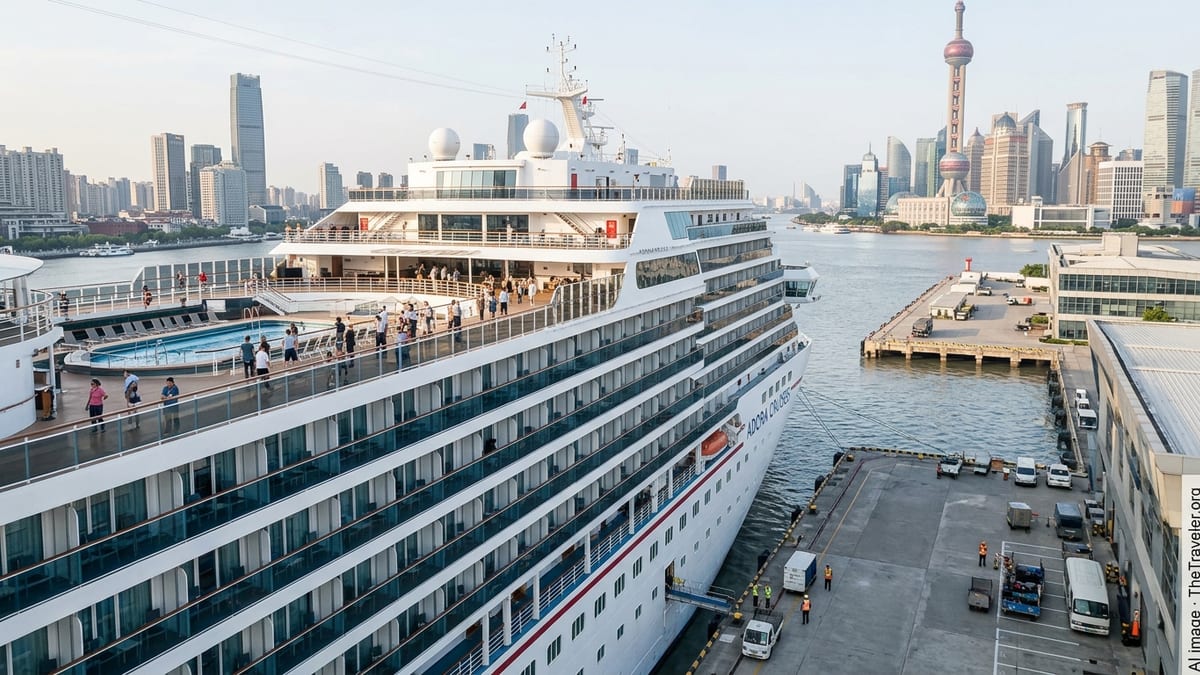
Around-the-World Dream Ends Abruptly in Sihanoukville
The Florida-based company behind Villa Vie Odyssey announced on 27 October 2026 that it was suspending the ship’s continuous world voyage while it attempts a 60-day financial restructuring. The vessel, which departed Belfast, Northern Ireland, in October 2024 on a 3.5-year global itinerary, had been marketed as a residential cruise where guests could buy or rent cabins as long-term homes at sea.
According to published coverage, the ship had sailed for more than 750 days and was among only a handful of vessels worldwide offering permanent or semi-permanent residency on board. Many passengers were retirees or remote workers who had sold property or exhausted savings to fund multi-year stays, expecting predictable monthly fees to cover accommodation, food, and port calls as the ship circled the globe.
The sudden change of plan unfolded during a scheduled call at Sihanoukville, a port city on Cambodia’s Gulf of Thailand coast. Reports indicate that residents were informed early in the morning that the company could no longer secure fuel at viable prices and that they had only a few hours to pack and disembark, turning what had been marketed as an “endless voyage” into an unplanned relocation.
Seven Hours to Pack Up a Life at Sea
Local officials in Cambodia quoted in international media described a narrow window for passengers to organize their lives ashore. Accounts from the port suggest residents were given roughly seven hours between an early-morning notice and an afternoon deadline to leave the ship, effectively treating the stopover as the end of the cruise rather than a temporary pause in the itinerary.
Publicly available information shows that Odyssey has capacity for around 650 residents and guests, but only about 200 people were on board at the time of the shutdown. Many had lived aboard since the early stages of the voyage, moving personal belongings, work equipment, and in some cases pets onto the ship on the understanding that it would function as a full-time home.
With the vessel now laid up in Cambodia, passengers have been searching for hotels, short-term rentals, and onward flights, often at short notice and in a country far from their previous land-based homes. Some residents, according to published reports, have chosen to stay together in local accommodation in Sihanoukville in the hope that operations might restart after the proposed restructuring period, though the company’s public statements so far have not guaranteed any resumption of the world cruise.
Fuel Price Shock and a Fragile Business Model
The operator has linked the suspension directly to fuel costs, pointing to sharp price spikes associated with the ongoing conflict involving Iran and disruptions to global energy markets. Industry coverage notes that marine fuel prices have seen significant volatility in recent months, with longer itineraries and repositioning segments becoming materially more expensive for cruise lines to operate.
Residential cruising is especially exposed to such shocks because revenue depends heavily on long-term cabin sales and recurring fees rather than high-volume, short-duration sailings. Analysts quoted across multiple outlets have highlighted that once the initial influx of capital from cabin purchases is spent, operators must cover day-to-day running costs from monthly dues and onboard spending, leaving little margin when fuel costs rise or occupancy falls.
The Odyssey itself had already faced operational challenges. Before its eventual departure from Belfast in October 2024, earlier plans under a previous operator stalled and the ship spent months alongside while technical issues and financial arrangements were resolved. The repeated delays became a cautionary tale within cruise circles about the complexity of converting older vessels into viable, modern residential ships.
Residents Face Housing and Financial Uncertainty
For affected passengers, the halt is more than a disrupted holiday. Reports from international and regional media describe residents who sold homes, downsized possessions, or restructured retirement plans in order to fund years of life at sea. Some are now effectively homeless, thousands of miles from their former communities, with a large portion of their wealth tied up in a stalled voyage.
Public statements from the company indicate that it is “working with residents” to coordinate disembarkation and identify temporary accommodation while it evaluates recapitalization options over the next two months. However, the status of long-term cabin ownership contracts, prepaid segments of the voyage, and any potential refunds remains unclear. Passengers and travel-law specialists quoted in coverage have raised questions about what consumer protection frameworks apply when a cruise ship functions less as a traditional sailing and more as a floating condominium.
Unlike conventional cruises, which are typically covered by well-defined package travel and maritime rules in the regions where they embark, residential products often operate across jurisdictions over multiple years. That patchwork can complicate efforts by passengers to seek redress, especially when the ship is registered in one country, the operator is based in another, and residents come from dozens of nations with differing legal protections.
What the Collapse Means for Future Residential Cruises
The Villa Vie Odyssey saga arrives at a time of growing interest in long-duration and residential cruising, from multi-month world voyages sold by mainstream lines to ultra-luxury residence ships aimed at high-net-worth travelers. The sudden suspension in Cambodia is likely to prompt regulators and would-be residents to scrutinize the financial underpinnings of similar ventures more closely.
Travel industry commentators note that successful residential ships tend to pair strong capitalization with very high entry costs, targeting buyers who can absorb periods of layup or reduced service. The Odyssey, by contrast, was promoted as a more accessible route into life at sea, offering comparatively lower buy-in prices and flexible leases that appealed to middle-income travelers hoping to travel indefinitely.
For now, the vessel remains alongside in Sihanoukville while its operator pursues restructuring talks. Passengers who once expected to wake up to a rotating panorama of world ports are instead searching for short-term rentals and one-way tickets home. As they wait for clarity on whether the ship will ever sail again, the episode stands as a stark warning about the risks of turning a cruise ship into a permanent address.