


More news on this day
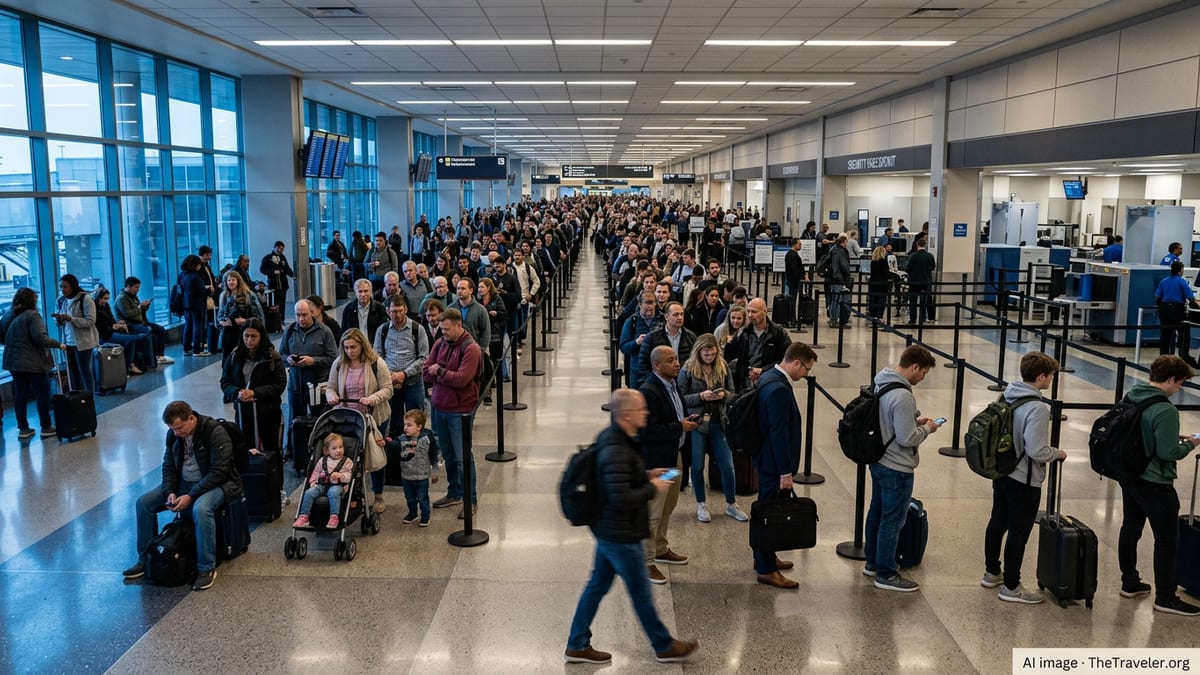
Passengers at Moscow’s Vnukovo International Airport faced hours of uncertainty as arrivals and departures were halted following reported Ukrainian drone attacks targeting the wider Moscow region and its critical infrastructure.
Get the latest news straight to your inbox!
Fresh Drone Wave Disrupts Moscow Air Travel
Recent reports on October 9 and again in mid-October 2026 describe large Ukrainian drone and balloon incursions toward the Moscow area, prompting aviation authorities to temporarily halt or restrict flights at all four of the capital’s main airports, including Vnukovo International Airport. Publicly available flight tracking data shows that Vnukovo’s operations were repeatedly suspended or curtailed while air defenses responded to suspected inbound drones.
Coverage from regional and international outlets indicates that the October 9 alert alone led to more than 200 delays and around 100 cancellations across Moscow’s airports, with Vnukovo among the facilities most heavily affected. Additional incident mapping platforms and open-source monitoring later recorded another shutdown of Vnukovo operations in the following days, as new drone threats were reported over the Moscow region.
These latest incidents follow a broader pattern in 2026, during which multiple long-range Ukrainian drone strikes and attempted strikes have reached the Moscow area. Earlier in the year, federal aviation notices already documented several mass suspensions of flights at Sheremetyevo, Domodedovo, Vnukovo and Zhukovsky for safety reasons during large-scale drone barrages, underscoring how airspace security has become a central constraint on travel to and from the Russian capital.
While flight restrictions at Vnukovo and the other Moscow airports have typically been lifted within hours once airspace was declared secure, the immediate impact on passengers has been significant. Departure boards have periodically shifted from regular schedules to walls of delayed and cancelled flights, leaving travelers uncertain about when they will finally be able to depart.
Passengers Stranded as Delays Stretch Into the Night
According to published airport statistics and media tallies, the most recent wave of airspace restrictions left hundreds of flights across Moscow either delayed or cancelled, with Vnukovo bearing a substantial share of the disruption. In previous mass drone incidents this year, figures compiled from official notices and carrier timetables showed Vnukovo listing dozens of delayed arrivals and departures in a single evening, alongside outright cancellations.
The cumulative effect for travelers has been long, unscheduled layovers inside the terminal. Publicly available accounts and video footage from past disruption days in 2026 show passengers resting on terminal floors or in waiting areas as announcements report continuing “temporary restrictions” without precise end times. In several cases, long-haul and popular leisure services from Vnukovo to destinations such as Turkey’s Mediterranean resorts and the Caucasus region experienced overnight or near‑overnight delays.
For international passengers transiting through Moscow, the sudden closures create further complications. When Vnukovo’s operations are stopped, inbound flights already in the air may divert to other Moscow airports or, in some instances, to alternate cities, forcing travelers to negotiate rebooking and missed connections once they arrive. Airlines operating from Vnukovo have generally offered same‑day or next‑day re-accommodation when operations resume, but the surge in disrupted itineraries can overwhelm customer service capacity.
Families with children, elderly passengers and those with medical needs face particular challenges in such conditions. Although Vnukovo and other Moscow airports maintain on-site hotels and rest areas, publicly available information suggests that room availability quickly tightens during mass disruption events, leaving many travelers to stay inside the public terminal zones for extended periods.
Why Vnukovo Keeps Getting Caught in the Crossfire
Vnukovo International Airport lies about 28 kilometers southwest of central Moscow and is closely integrated into the capital’s wider aviation system. As a major hub for domestic routes and select international services, it typically handles a high volume of short- and medium-haul flights, many of them operated by Russian carriers linking Moscow with regional cities and nearby foreign destinations.
Reports on recent drone activity indicate that Ukrainian forces have increasingly targeted military, energy and logistical infrastructure across western Russia, including sites in the Moscow region. Some incursions have involved large numbers of drones, sometimes estimated in the hundreds, launched over several hours to probe and saturate Russian air defenses. As air defense systems respond, aviation regulators have repeatedly opted to restrict civilian traffic at airports such as Vnukovo to decrease the risk of debris or interception activity affecting passenger aircraft.
Open-source chronologies of the conflict show that, since 2023, several high-profile drone attacks on the Moscow City business district, nearby suburbs and infrastructure nodes have prompted short-term closures or restrictions at Vnukovo. Although most drones are reported to have been intercepted before reaching heavily populated zones, the resulting airspace hazards and the need for search, firefighting and investigation efforts have led to frequent operational pauses at the airport.
This pattern has grown more pronounced in 2026. Independent aviation and insurance analysis published in October highlighted that cancellations of regular passenger flights across Russia almost doubled in the first nine months of the year compared with the same period in 2025, with safety-related restrictions at Moscow airports cited as a key contributing factor. Vnukovo’s role within that network makes it especially sensitive to any renewed escalation of long-range drone activity.
Operational Response and Guidance for Travelers
Publicly available statements from Russia’s federal air transport regulator and airport notices show a consistent operational response when drone threats emerge over the Moscow region. Air traffic controllers are instructed to halt arrivals and departures, sometimes redirecting incoming flights to holding patterns or diversion airports, until air defense and aviation safety services consider the situation to be under control. In some incidents, these suspensions have lasted only an hour or two, while larger drone barrages have caused multi‑hour shutdowns across several airports.
For travelers with upcoming itineraries via Vnukovo, the events of October 9 and the latest mid‑October disruptions illustrate the importance of closely monitoring flight status on the day of travel. Airline advisories and live departure boards have often been the first indicators of mounting disruption, showing a growing list of delayed flights even before formal closure notices are circulated more widely.
Travel industry observers also note that passengers booking complex journeys through Moscow may wish to allow longer connection times than usual or consider alternative routings where feasible, particularly during periods when cross-border tensions are high and drone activity is more frequent. While such adjustments cannot eliminate the risk of disruption, they can reduce the likelihood that a short transfer window will be missed if Vnukovo’s operations are temporarily halted.
Given the evolving nature of the conflict and the absence of a clear timeline for an easing of drone activity, no reliable forecasts are available on when flight operations at Vnukovo and other Moscow airports will stabilize. For now, the pattern of rolling suspensions in response to aerial threats remains an ongoing reality for travelers using the Russian capital as a gateway.
Wider Implications for Air Connectivity and Tourism
The repeated grounding of flights at Vnukovo and other Moscow airports has broader implications for connectivity, tourism and business travel across the region. Russia’s civil aviation sector was already dealing with the impact of international sanctions, reduced access to Western-built aircraft and spare parts, and the withdrawal of many foreign carriers from the market. The additional variable of unpredictable drone-related closures adds another layer of uncertainty for passengers and airlines alike.
Tour operators that continue to sell packages involving flights to or through Moscow face heightened operational risk each time mass drone incursions are reported. Even when journeys ultimately operate, the perception of instability can deter some visitors and corporate travelers from booking itineraries that rely on Moscow’s airports, including Vnukovo, as a central hub.
Within Russia, domestic travelers are experiencing the cumulative effect of these disruptions in the form of longer travel days, missed connections and, at times, higher costs when they are forced to rebook or arrange new itineraries at short notice. Insurance sector analyses released in early October pointed to increased claims related to flight cancellations and delays, especially on routes touching Moscow’s airspace.
Until the security environment improves, passengers using Vnukovo International Airport can expect that periodic suspensions, diversions and extended waits in terminal halls will remain a feature of travel in and out of the Russian capital. For many of those stranded in recent days, the drone war playing out high above Moscow has translated into a very immediate and grounded reality on the airport’s concourses.