


More news on this day
Severe operational disruption at Frankfurt International Airport has triggered delays to 143 flights operated by Lufthansa, Condor, Air Dolomiti, American Airlines, Delta Air Lines and other carriers, stranding passengers as far afield as London, Toronto, Manchester, Helsinki, Amsterdam, Dallas and Los Angeles.
Get the latest news straight to your inbox!
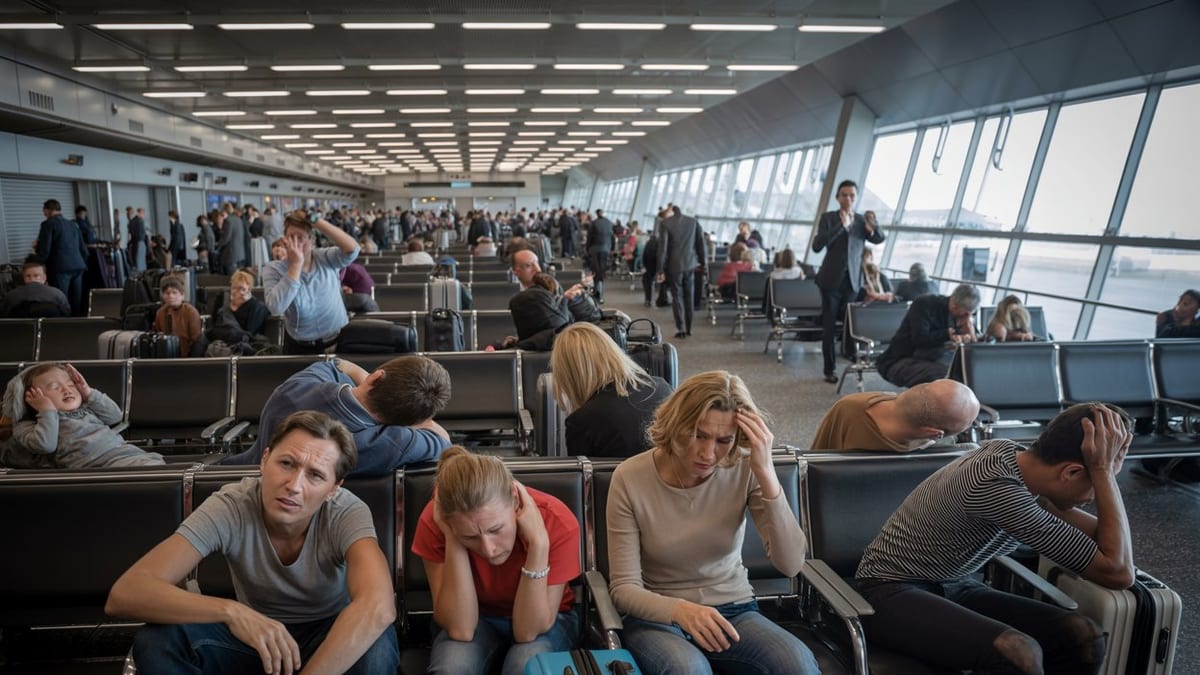
Major Hub Gridlock Spreads Across Airline Networks
Frankfurt International Airport, one of Europe’s busiest hubs and the primary base for Lufthansa, has again become the focal point of a cascade of schedule problems rippling through global airline networks. Publicly available airport and schedule data show that Lufthansa and its partners, including regional specialist Air Dolomiti and leisure carrier Condor, account for a significant share of daily movements at the airport. When those operations slow, the impact is felt not only in Germany but across long haul and short haul routes connecting Europe and North America.
Reports from live flight tracking and aviation monitoring platforms indicate that a cluster of delays concentrated around Frankfurt quickly propagated to partner airlines and codeshare routes. Aircraft and crews scheduled to operate onward services to cities such as London, Manchester, Helsinki and Amsterdam were held on the ground or arrived late into the German hub, narrowing already tight connection windows. As knock on effects accumulated, transatlantic links to Toronto, Dallas and Los Angeles also began to show extended delays.
Travel industry coverage in recent months has repeatedly highlighted how dependent carriers remain on Frankfurt’s smooth functioning. Analyses of 2023 traffic statistics for the airport underscore its role as a key gateway for Lufthansa, Condor, Air Dolomiti, American Airlines and Delta Air Lines. Any substantial disruption at this single point tends to magnify across multiple airlines, especially when aircraft operate multi sector rotations in a single day.
The latest episode comes against a backdrop of heightened sensitivity to reliability among passengers, following earlier incidents in Germany this year involving large numbers of cancellations and delays at Frankfurt and Munich. Those events, attributed variously to staffing issues, technical problems and industrial action, have left many travelers more cautious about relying on tight connections through the country’s main hubs.
Passengers Face Missed Connections and Overnight Stays
As Frankfurt’s departure and arrival boards filled with delayed flights, travelers connecting between European and long haul services were among the hardest hit. When inbound flights landed late from regional points such as London or Manchester, passengers often had insufficient time to clear security checkpoints and reach onward gates, particularly for services departing from distant concourses or remote stands.
Accounts shared across traveler forums in recent months illustrate how even modest delays at Frankfurt can quickly turn a planned 60 to 90 minute layover into a race across terminals. In many cases, a late arriving feeder flight from within Europe has meant missing the last daily departure to secondary destinations or the final overnight transatlantic service, leaving passengers reliant on rebooking and overnight accommodation.
With 143 flights reportedly affected in the latest disruption, the number of missed connections is likely to be substantial. Travelers heading to North American cities including Toronto, Dallas and Los Angeles typically rely on tightly timed evening departures out of Frankfurt. When those flights push back late or when incoming European services arrive behind schedule, rebooking options on the same day become limited, particularly at the start of the busy summer travel period.
Airport facilities have come under renewed scrutiny as stranded passengers seek food, rest areas and updated information. Frankfurt’s terminal layout, which places some security screening points close to the gate areas rather than centrally, has been criticized by frequent travelers who argue that it complicates last minute gate changes and lengthens transfer times when schedules are off balance.
Operational Strains at Key Carriers
The latest wave of disruption illustrates the operational stress facing several major and mid sized airlines headquartered or heavily active at Frankfurt. Lufthansa, as the dominant carrier at the airport, is particularly exposed when irregular operations occur. Its network structure, built around connecting flows from across Europe into long haul services, leaves relatively little room to absorb one delay without influencing subsequent sectors.
Air Dolomiti, which operates regional flights on behalf of Lufthansa between Frankfurt and cities across Italy and neighboring countries, is also vulnerable to schedule shocks. A delayed arrival from Frankfurt can easily cascade into late departures from smaller airports, which in turn feed back into the hub hours behind schedule. This dynamic complicates efforts to restore the timetable once a significant disruption has taken hold.
Condor, while operating a more leisure focused network, also relies heavily on Frankfurt as a base for both short haul and long haul services. Travel industry reporting has previously noted that disruptions at the airport can cause Condor’s connecting passengers to miss onward flights, especially when transferring between partner or interline services involving other carriers at the hub.
On the transatlantic side, American Airlines and Delta Air Lines both serve Frankfurt as part of their broader joint ventures with European partners. When slots become constrained or ground operations slow at Frankfurt, these US based airlines can experience knock on delays on routes that are tightly scheduled around peak transatlantic departure waves. The result can be late night arrivals back into hubs such as Dallas and major morning schedule adjustments at airports like Toronto and other connecting points.
Knock On Effects Across Europe and North America
While Frankfurt is the epicenter of the current disruption, the practical consequences are being felt at a string of airports connected to the German hub. In Europe, passengers at London, Manchester, Helsinki and Amsterdam have reported extended waits at boarding gates as aircraft and crews arrive late from Germany. Departures that would typically leave on time to maintain onward connections into Frankfurt’s afternoon and evening banks instead pushed back significantly behind schedule.
These European delays, in turn, affected the availability of passengers and aircraft for subsequent transatlantic departures. Flights from Frankfurt to Toronto, Dallas and Los Angeles are often timed to arrive in North America at convenient morning or early evening slots, supporting both local demand and onward domestic connections. When departure times slip by several hours, arrival times may shift into less favorable overnight or late night windows, narrowing onward choices and increasing the risk of missed final legs.
The strain on schedules also has implications for crew duty limits. When flights depart late from Frankfurt, pilots and cabin crew operating multi sector days may approach or exceed maximum permitted working hours, forcing airlines to reshuffle rosters or cancel later sectors altogether. This can extend the life of a disruption beyond the initial event as carriers work through aircraft repositioning and crew scheduling challenges.
Publicly available aviation data and prior episodes of mass disruption at Frankfurt indicate that it can take carriers more than a full operational day to absorb a shock of this magnitude. Even when the immediate cause of delays has been resolved, residual timetable adjustments and aircraft out of position can lead to continued late departures and arrivals across the network.
What Travelers Can Do If Their Flight Is Affected
The latest difficulties at Frankfurt underline the importance for travelers of preparing contingency plans when connecting through major hubs. Passenger rights regulations such as the European Union’s EC 261 framework, which can apply to Lufthansa, Condor, Air Dolomiti and qualifying flights operated by American Airlines and Delta Air Lines to or from the EU, may entitle eligible travelers to assistance or compensation when delays exceed certain thresholds, depending on the cause.
Consumer advocacy organizations and specialized claims platforms advise passengers to retain boarding passes, booking confirmations and any written notices of delay or cancellation, as these documents can support later claims. Travelers are also encouraged to monitor live flight status information through airline apps and independent flight tracking tools, which can sometimes show gate changes or rolling departure estimates before they are widely announced in terminal areas.
For those still planning trips through Frankfurt in the coming weeks, industry observers recommend allowing generous connection times, particularly when linking from short haul European flights to long haul departures bound for North America or Asia. Booking slightly longer layovers can provide a buffer if inbound services run late, reducing the likelihood of missed final flights to destinations such as Toronto, Dallas or Los Angeles.
As airlines and the airport operator work to normalize operations after the latest disruption, passengers will be watching closely to see whether schedule reliability improves during the peak northern summer season. Frankfurt’s role as a central node for Lufthansa, Condor, Air Dolomiti, American Airlines and Delta Air Lines ensures that its performance will remain a key indicator of broader transatlantic and intra European travel stability in the months ahead.