


More news on this day
A United Airlines Boeing 737-824 operating as flight UAL602 from New York to Chicago diverted to Cleveland Hopkins International Airport on August 9, prompting a mid-journey schedule disruption for passengers traveling between the two major hubs.
Get the latest news straight to your inbox!
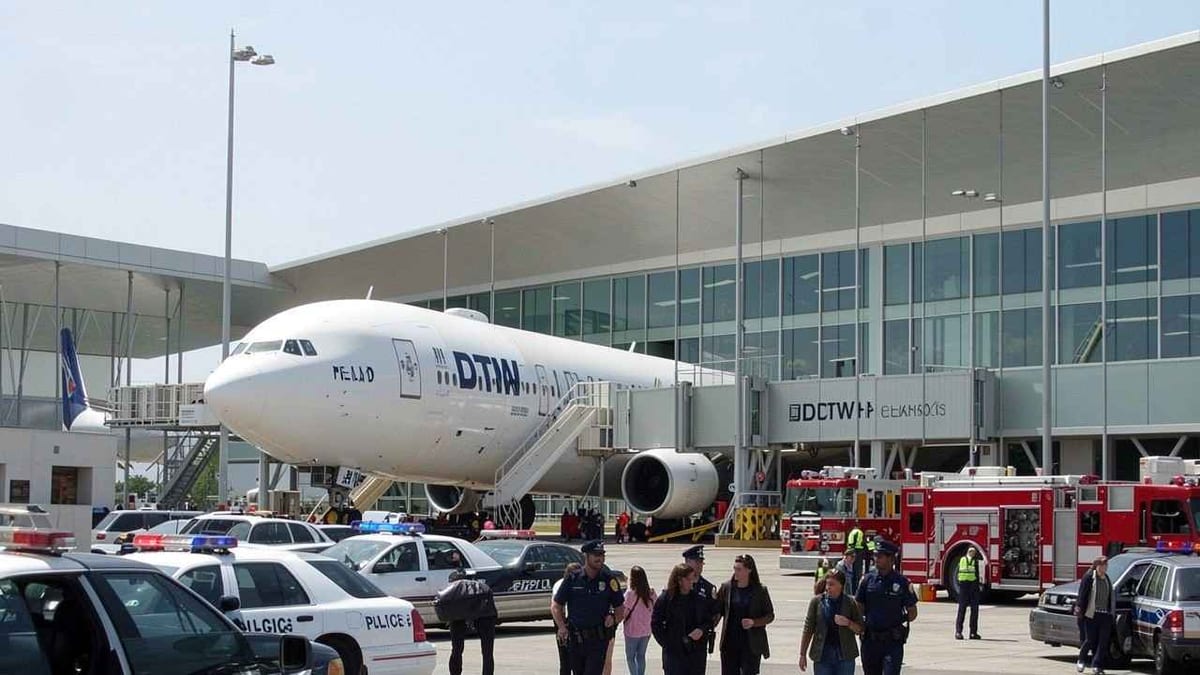
Diversion Interrupts New York to Chicago Route
Publicly available flight tracking information shows that United Airlines flight UAL602, a Boeing 737-824, departed the New York City area on August 9 bound for Chicago before changing course toward Cleveland Hopkins International Airport in Ohio. The midflight diversion interrupted one of the busiest domestic corridors in the United States, briefly repositioning the aircraft and its passengers to a non-scheduled stop.
Data from aviation tracking platforms indicates that the aircraft followed its typical westbound routing after departure before turning south toward Cleveland, where it landed instead of continuing directly to Chicago. Such diversions are not uncommon on heavily traveled routes, particularly during periods of unstable summer weather or operational constraints at major hubs.
Initial publicly visible data suggests that the aircraft landed safely in Cleveland, where ground handling, refueling and operational checks can typically be performed before a flight is either continued to its original destination or passengers are reaccommodated on alternative services. Information on the exact turnaround timeline for this specific flight has not been fully detailed in publicly accessible reports.
Potential Weather and Operational Factors
As with many unscheduled diversions on domestic routes, a combination of weather and operational considerations likely played a role in the decision to divert UAL602. Industry data and recent travel advisories for the Chicago region highlight the impact of thunderstorms and convective weather patterns on arrivals and departures at Chicago O Hare International Airport, especially during the summer travel period.
When thunderstorms or low visibility reduce arrival capacity at a major hub such as Chicago, flights may be routed into holding patterns, slowed en route, or redirected to alternate airports with available runway and gate capacity. Cleveland Hopkins, located roughly midway between New York and Chicago and equipped to accommodate mainline narrowbody aircraft, is a common alternate for flights operating along east to midwest corridors during such disruptions.
In addition to weather, standard operational considerations such as fuel reserves, air traffic flow restrictions and congestion management can all influence diversion decisions. If an aircraft is expected to encounter extended holding or significant rerouting near its destination, crews may opt to land at an intermediate airport to refuel, await improved conditions, or receive updated routing from traffic control.
Passenger Impact and Reaccommodation
For passengers on UAL602, the diversion to Cleveland likely translated into extended travel time and missed or at-risk onward connections in Chicago. Experience from similar recent diversions on domestic routes suggests that carriers typically work to rebook affected travelers on later flights, either from the diversion airport or from the original destination once the aircraft is able to continue.
Operational patterns described in recent publicly available accounts of diversions indicate that airlines may pursue several options: continuing the same aircraft to its original destination once conditions permit, assigning a replacement aircraft at the diversion point, or reaccommodating passengers on other scheduled departures. The specific approach tends to depend on aircraft availability, crew duty limits, gate access and broader network constraints on the day of operation.
Passengers on diverted flights often receive updated itineraries through airline mobile apps, email notifications or airport departure boards. In some cases, travel credits or vouchers are extended as goodwill gestures after significant delays or missed connections, although these measures vary by carrier, situation and the cause of the disruption.
Cleveland Hopkins Role as an Alternate Airport
Cleveland Hopkins International Airport has long served as a strategic alternate for east to midwest traffic, in part due to its runway infrastructure, instrument approach capabilities and location relative to major airways. While it no longer functions as a large hub for any single carrier, its facilities continue to make it a practical diversion point for mainline narrowbody and regional jets operating across the Great Lakes region.
Historical aviation records and contemporary network data show that Cleveland frequently appears as an alternate on operational flight plans for services linking the northeastern United States with Chicago, Denver and other inland hubs. Airlines use such alternates to provide crews with options when weather, congestion or technical issues would make proceeding directly to the planned destination impractical or inconsistent with fuel and safety policies.
When a diversion to Cleveland occurs, the airport s ground operations teams coordinate with carrier staff to secure a gate, manage deplaning if permitted, and support refueling or maintenance checks. The ability to provide timely gate access and support services often determines whether passengers remain on board during a short stop or are asked to deplane and continue later, a decision that typically becomes clear only after the aircraft has arrived and the likely length of delay is assessed.
Broader Context of U.S. Summer Flight Disruptions
The diversion of UAL602 on August 9 fits into a broader pattern of summer operational challenges across the U.S. airline system. Seasonal thunderstorms, high traffic volumes, and airspace constraints routinely lead to delays, diversions and cancellations, particularly at major hubs such as Chicago O Hare, Newark, and other large connecting airports.
Research on U.S. flight operations has documented how weather related disruptions can ripple across airline networks, affecting on time performance far beyond the immediate storm area. When a single hub experiences capacity reductions, flights en route from multiple origins may be forced to slow down, hold, divert or cancel, which in turn affects aircraft and crew availability for subsequent departures.
Industry analysis and academic studies on flight delays note that diversions, while inconvenient, are a standard tool for maintaining safety margins and regulatory compliance. By landing at an alternate such as Cleveland, crews ensure that fuel reserves remain adequate and that passengers and crew are not exposed to unnecessarily extended airborne holding in congested airspace near a storm affected hub.
For travelers, the incident underscores the importance of allowing buffer time for connections during peak travel periods, keeping contact information updated with airlines, and monitoring flight status tools that reflect operational changes in near real time. While the diversion of UAL602 disrupted plans for those on board, publicly available information indicates that the flight completed its journey via Cleveland without reports of onboard injury or emergency beyond the schedule interruption itself.