


More news on this day
Greece is rolling out a new tourism planning framework intended to rein in uncontrolled development in popular hotspots, tighten rules for accommodation and construction, and channel investment toward under-visited regions as part of a broader push for sustainable growth and destination protection.
Get the latest news straight to your inbox!
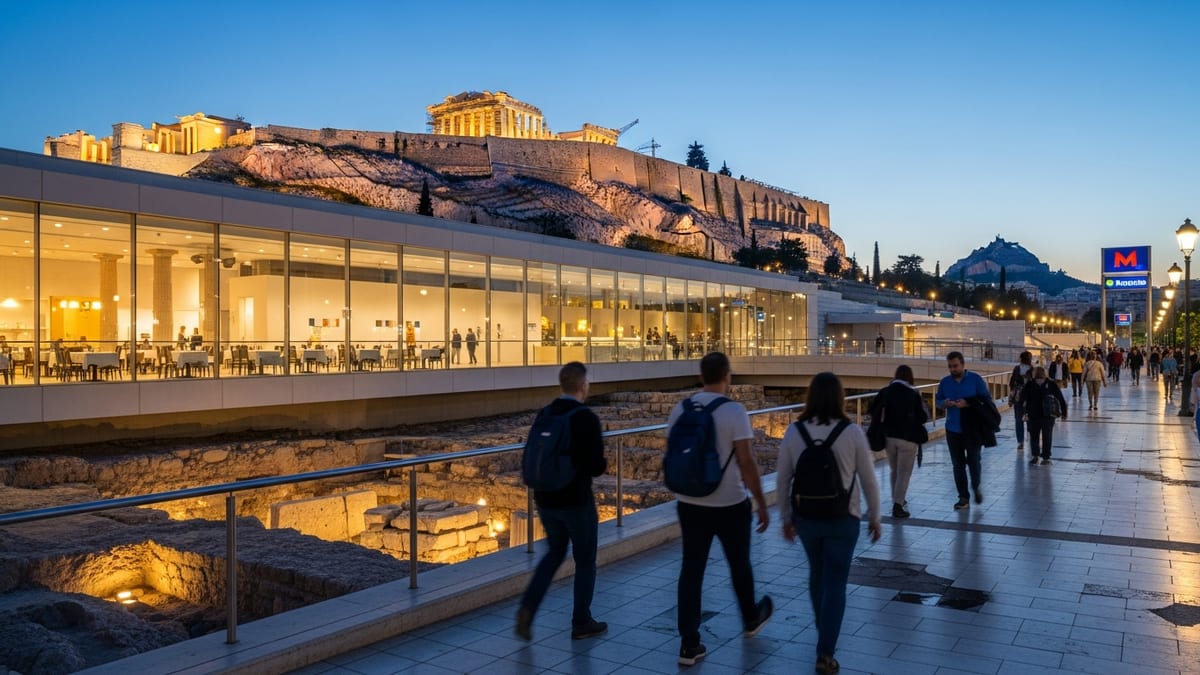
A Long-Term Spatial Blueprint for Tourism
The new framework, presented in Athens earlier this year, centers on an updated Special Spatial Planning Framework for Tourism. Publicly available information indicates that the blueprint is designed as a long-term tool to guide where and how tourism-related projects can proceed, replacing piecemeal decision-making with clearer national rules.
The plan sets differentiated development zones across the country, distinguishing mature and saturated destinations from emerging or rural areas. In heavily developed islands and coastal resorts, stricter limits on new hotel capacity, short-term rentals and large-scale construction are envisaged, while less-visited mainland regions and secondary islands are earmarked for targeted, lower-impact investment.
According to published coverage, the framework is aligned with Greece’s wider 2030 tourism vision and with reforms supported by European Union recovery funds. It is meant to integrate spatial planning, environmental protection and tourism policy, an approach that observers have long argued was missing in a sector that accounts for a sizeable share of national output and employment.
The initiative builds on earlier public consultations on a revised Special Spatial Framework for Tourism, as well as strategic environmental studies that assessed the cumulative impact of tourism development. Planning documents emphasize that future decisions should be guided by carrying capacity considerations and the specific characteristics of each destination rather than uniform national rules.
Protecting Islands and Overstretched Coastal Destinations
A central focus of the new framework is the Aegean and Ionian islands, where rapid growth in visitor numbers and construction has strained water supplies, waste systems and local housing markets. Recent seasons have seen record arrivals in destinations such as Santorini, Mykonos and parts of the Cyclades, fuelling concerns about overtourism and the erosion of local character.
The planning rules introduce tighter controls on hotel development and tourism-related construction in what are described as saturated or highly sensitive zones. Reports indicate that these areas will face more restrictive building coefficients, higher environmental performance requirements and, in some cases, caps on new capacity. Short-term rental expansion, including properties marketed on major platforms, is also expected to face closer scrutiny where pressure on housing and public space is most acute.
At the same time, the framework aims to safeguard coastal ecosystems and landscapes, in parallel with a separate coastal management law that has drawn intense domestic debate. The tourism planning blueprint is presented as a tool to prevent further encroachment on beaches, dunes and fragile habitats by setting clearer boundaries for legal development and strengthening links with environmental impact assessments.
Observers note that the effectiveness of these measures will depend on enforcement at local level, where illegal construction and informal land use have historically undermined national planning rules. The framework is therefore viewed as only one component of a broader governance challenge that includes permitting systems, inspections and court procedures.
Steering Growth Toward Under-Visited Regions
Beyond restrictions in crowded destinations, the new framework places strong emphasis on redistributing tourism flows and extending the season. Policy documents and related studies highlight significant untapped potential in mainland regions, mountainous areas and lesser-known islands that have so far captured only a small share of arrivals.
The spatial plan promotes product diversification, including nature-based, cultural, agro-tourism and wellness experiences, as a way to attract visitors outside the peak summer months and reduce pressure on a narrow group of islands. It encourages investment in energy-efficient infrastructure, improved transport links and small-scale accommodation in areas that meet environmental and social criteria.
European-backed initiatives, such as the establishment of Destination Management and Marketing Organizations and a National Observatory for Sustainable Tourism, are intended to support this shift by strengthening local planning capacity and providing better data on visitor flows and impacts. According to recent analytical work on Greek tourism, such tools are seen as essential to balancing competitiveness with community well-being and environmental limits.
Industry bodies have responded with detailed proposals, calling for evidence-based zoning that reflects the specific profile of each region rather than one-size-fits-all restrictions. Their positions highlight the need for regulatory clarity that allows investment to proceed in suitable areas while ensuring that sustainability conditions are clearly defined and consistently applied.
Climate Resilience and Environmental Safeguards
The planning overhaul comes as Greece grapples with intensifying climate risks, including heatwaves, wildfires and coastal erosion that directly affect its tourism offer. Research on spatial planning and tourism in the country has underscored the vulnerability of many destinations to climate impacts and the importance of integrating adaptation measures into development rules.
The new framework incorporates climate resilience as a cross-cutting objective. Public documents reference requirements for energy-efficient building standards, water-saving technologies and stronger protections for high-risk zones such as fire-prone forests and low-lying coastal areas. In practice, this is expected to influence where new resorts can be built, how existing facilities are upgraded and what infrastructure receives priority funding.
Strategic environmental assessments tied to the framework examine cumulative pressures from tourism on biodiversity, water resources and landscapes. Recommendations include concentrating new projects in areas with existing infrastructure, protecting corridors for wildlife and maintaining open space that can help buffer extreme weather events.
Analysts point out that these measures reflect a wider European policy context, where recovery and resilience plans and green transition funding encourage member states to link tourism growth to emissions reduction and climate adaptation goals. Greece’s tourism planning framework is presented as one of the instruments through which those commitments are to be implemented on the ground.
Implementation, Monitoring and Visitor Experience
Attention is now turning to how the framework will be implemented and monitored in practice. The plan foresees a series of secondary regulations, ministerial decisions and local plans that will translate national guidelines into specific zoning maps, density limits and design rules for individual destinations.
The creation of a National Sustainable Tourism Observatory, supported by international organizations and European instruments, is expected to play a key role by gathering data on visitor numbers, environmental indicators and socio-economic impacts across regions. According to recent policy papers, the observatory will help track whether measures are effectively reducing pressure in saturated areas, improving resource efficiency and supporting local communities.
For travelers, the new framework may gradually change the experience of visiting Greece. Stricter caps and pricing in the most iconic islands could coincide with greater promotion of alternative destinations, more visible sustainability standards in hotels and tour services, and new incentives to explore mainland regions and off-season travel opportunities.
Tourism analysts note that the transition will take time and will require coordination among national and local authorities, the private sector and residents. The planning blueprint, however, signals a clear strategic choice: to move away from a narrow model based on ever-rising visitor numbers toward one in which growth is more evenly distributed, resource use is more carefully managed and the natural and cultural assets that underpin Greek tourism are better protected for the long term.