


More news on this day
An American Airlines flight operating from New York LaGuardia to Chicago O’Hare as AAL2057 diverted to Milwaukee on August 9, altering travel plans for scores of passengers and raising fresh questions about how U.S. carriers handle mid‑journey disruptions.
Get the latest news straight to your inbox!
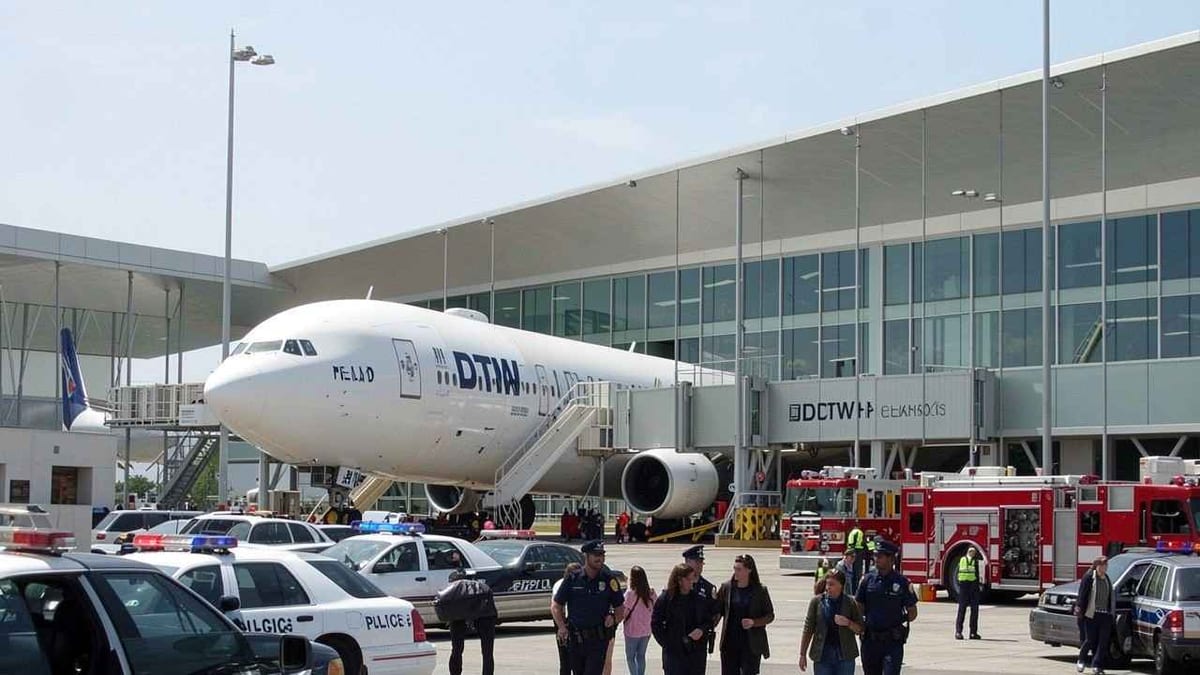
What Happened On Board AAL2057
Publicly available flight tracking information shows that American Airlines flight AAL2057, operated by a Boeing 737, departed New York LaGuardia on August 9 bound for Chicago O’Hare before changing course en route and landing at Milwaukee Mitchell International Airport instead. The unscheduled stop meant the service did not reach its intended destination as planned, forcing passengers to disembark in Wisconsin.
Data from flight status and tracking platforms indicates that the aircraft followed a typical westbound routing after departure from LaGuardia before initiating a turn toward Milwaukee. The diversion occurred while the jet was still in the cruise phase of the journey, rather than during approach into Chicago, suggesting a decision made with sufficient time and altitude to plan an orderly landing.
At Milwaukee, the Boeing 737 reached the gate and passengers were brought into the terminal while crews prepared for onward arrangements. Available information does not point to any injuries among those on board, and there are no indications that emergency evacuation procedures were required.
As of August 10, American Airlines had not released a detailed, widely circulated public explanation specific to this flight. In the absence of a formal description, the incident is being treated by aviation watchers as a standard precautionary diversion, a maneuver that U.S. carriers perform daily in response to a range of operational or safety considerations.
Possible Reasons Behind The Diversion
When a scheduled flight diverts to an alternate airport, the underlying reasons typically fall into several broad categories that are familiar across the industry. Operational manuals and general guidance on American Airlines flight status note that diversions can be triggered by technical concerns, medical issues, weather at the destination, air traffic control constraints, or fuel and routing considerations that arise as a flight progresses.
In many recent cases involving U.S. carriers, reports have described diversions that stemmed from mechanical checks, cabin pressurization irregularities, medical emergencies in the cabin, or air traffic congestion around busy hubs such as Chicago O’Hare. In a typical scenario, flight crews act conservatively, electing to land early at a suitable alternate airport rather than continue to the original destination if any doubt exists about the safest course of action.
Milwaukee’s airport functions as a practical alternate for flights headed to Chicago from the east, with long runways, established airline operations, and relatively uncongested airspace compared with O’Hare at peak periods. Aviation analysts often point to airports like Milwaukee as strategic alternates that allow carriers to land, refuel if needed, perform maintenance inspections, or wait for conditions to improve while keeping passengers relatively close to their intended destination.
Without a detailed, flight‑specific explanation from the airline, it is not yet possible to state definitively which factor led AAL2057 to divert on August 9. However, based on established patterns in domestic operations, observers generally regard such diversions as precautionary steps taken to maintain safety margins and regulatory compliance, even when they cause significant inconvenience for travelers.
Impact On Passengers Traveling To Chicago
For travelers booked from New York to Chicago, the diversion to Milwaukee meant missed connections, disrupted weekend schedules, and uncertainty about hotel and ground transport plans. Accounts shared across social media and travel forums after similar events with other airlines show that passengers typically face long lines at airport service desks, busy call centers, and frequent changes to rebooking options during irregular operations.
Standard U.S. airline practice in such situations is to aim to rebook diverted passengers on the next available flights to their ticketed destination, subject to crew and aircraft availability. Depending on timing and capacity out of Milwaukee, options for those on AAL2057 likely included a short connecting flight onward to Chicago, or ground transportation arranged to bridge the roughly 90‑mile distance between the two cities.
Published guidance on American Airlines disruption handling explains that when an interruption is classified as an operational decision rather than a broad weather event, some travelers may be offered meal vouchers or hotel accommodation if they face an extended wait. However, the level of support can vary by circumstance, and passengers often report needing to proactively request assistance or explore alternative itineraries themselves using mobile apps and self‑service tools.
For business travelers and those with tightly timed connections at O’Hare, even a relatively short diversion can have outsized effects. Missed international links, lost meeting time, and additional expenses for overnight stays are recurring themes in traveler reports whenever a major hub flight ends the day at an alternate airport.
How Diversions Fit Into The Bigger Picture Of U.S. Air Travel
Although unsettling for those on board, diversions such as AAL2057’s Milwaukee landing are a regular feature of modern commercial aviation. Studies of U.S. airline operations and federal transportation statistics show that a small but consistent portion of domestic flights each year experience route changes, extended holding patterns, or unscheduled stops as carriers respond to real‑time conditions.
In this context, industry specialists emphasize that a decision to divert is typically a sign of caution rather than crisis. Whether prompted by an onboard technical alert that requires a closer look, a cabin medical situation, or deteriorating weather at a busy hub, the underlying priority is to position the aircraft at an airport where it can land safely and where support resources are available.
The cluster of recent passenger accounts involving diversions across American and other major U.S. carriers highlights the stresses placed on the system by tight schedules, high seasonal demand, and constrained air traffic control capacity. Each unscheduled landing can ripple through an airline’s network, affecting crews, aircraft rotations, and subsequent departures, which in turn influences the rebooking options made available to travelers from a flight like AAL2057.
For passengers, the August 9 diversion underscores the importance of contingency planning, including flexible hotel bookings and awareness of overland alternatives in regions where major hubs sit relatively close together. While airlines carry the responsibility for operational decisions, travelers who understand how and why diversions occur are often better prepared to navigate the disruption when a straightforward journey suddenly ends at a different airport than the one printed on the boarding pass.