


More news on this day
Royal Caribbean’s Legend of the Seas is adjusting several Western Mediterranean itineraries, replacing planned calls at Naples with visits to Marseille as new local port restrictions disrupt access to the Italian city.
Get the latest news straight to your inbox!
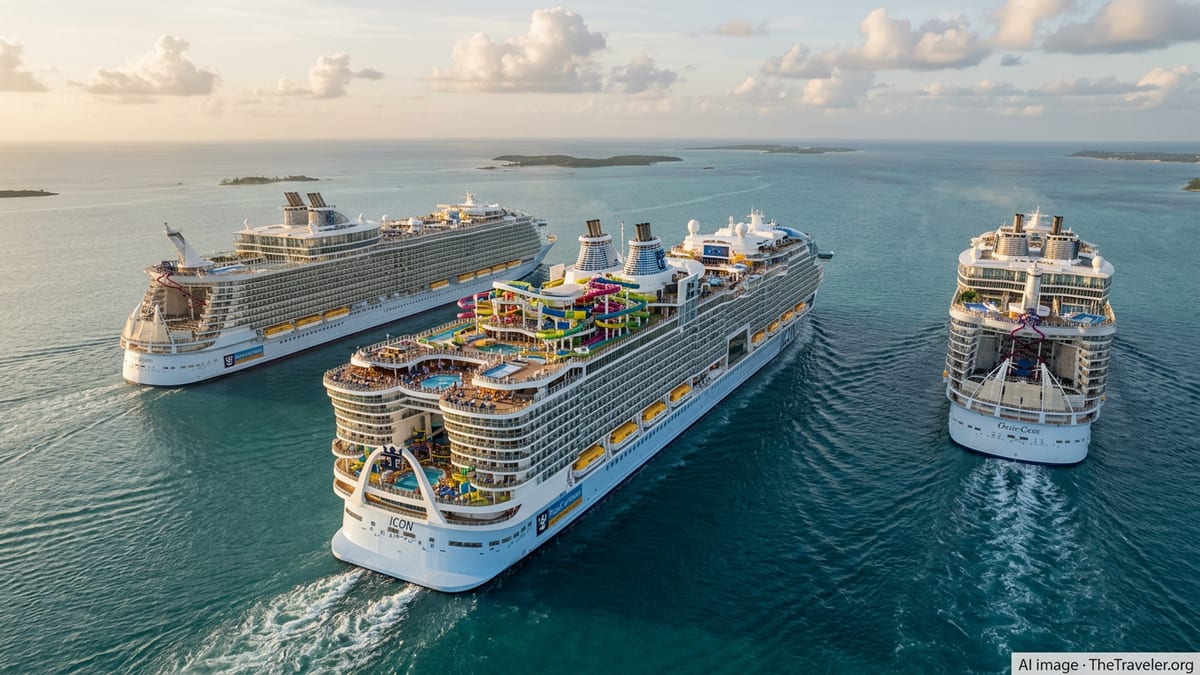
Itinerary Change Emerges After Repeated Naples Cancellations
Recent sailings of Legend of the Seas in the Western Mediterranean have highlighted a pattern of short-notice itinerary changes affecting Naples. Publicly shared cruise logs and passenger accounts from multiple voyages in late July and early August 2026 indicate that calls scheduled for Naples were either cancelled outright or replaced with alternative ports. On at least one recent departure, the ship visited Marseille instead of Naples, while on others the missed call resulted in an additional day at sea.
Information available through cruise forums and social media posts points to operational issues at the Port of Naples as the catalyst. Travelers report being informed on board that local port conditions or infrastructure constraints were preventing Legend of the Seas from safely docking, prompting last-minute route adjustments. Neither Royal Caribbean nor port authorities have released a detailed technical explanation, but the recurrence of the issue over consecutive sailings suggests an ongoing restriction rather than a one-off weather or congestion event.
Legend of the Seas is operating a series of 7-night Western Mediterranean cruises in summer 2026, with typical itineraries built around marquee ports such as Rome (Civitavecchia), Barcelona, Palma de Mallorca, Marseille, La Spezia and Naples. Deployment materials and guidebooks describe Naples as a key gateway for excursions to Pompeii, the Amalfi Coast and Capri, underscoring why repeated cancellations have drawn heightened attention from travelers.
As of early August, publicly accessible itineraries on Royal Caribbean’s booking channels still list Naples on upcoming Legend of the Seas sailings, but discussion among booked passengers reflects growing expectations that some of those calls may yet be substituted by Marseille or converted to sea days if the local restrictions persist.
New Port Restrictions Limit Access for Large Cruise Ships
While full technical details have not been publicly outlined, available reports point to new or newly enforced restrictions at Naples that affect large, modern cruise vessels. Travelers referencing crew announcements describe concerns involving the condition or suitability of the berth used by big ships, as well as safety margins related to docking maneuvers. One earlier incident involving another large Royal Caribbean ship prompted a decision not to dock alongside and instead move passengers by smaller vessels, reinforcing perceptions that the infrastructure is under strain.
Port authorities around the Mediterranean have increasingly tightened operational rules for cruise calls, responding to a combination of safety, congestion, and environmental pressures. In practice, these measures can encompass berth load limits, stricter wind or swell thresholds for mooring, revised channel maneuvering parameters, or capacity caps on simultaneous cruise calls. Even when a port technically remains open, application of updated criteria can result in certain ships, particularly the largest or heaviest, being restricted from using specific piers until upgrades or repairs are completed.
Legend of the Seas is one of Royal Caribbean’s newest and largest vessels, built to carry thousands of guests and fueled by liquefied natural gas. Its size and draft place particular demands on harbor infrastructure, from bollard strength and fendering to turning basins and tug availability. If any component is deemed marginal under current safety standards, operators may choose to divert to a port with more robust facilities rather than risk delays or complex tendering operations in a busy commercial harbor.
Without formal technical bulletins available to the public, travelers and industry watchers are relying on a patchwork of first-hand cruise accounts and schedule tracking to infer the scope of the restrictions in Naples. That evidence nonetheless points to a consistent pattern: for the time being, large cruise ships such as Legend of the Seas cannot rely on Naples calls proceeding as originally advertised.
Marseille Steps In as Substitute Western Mediterranean Gateway
In several affected cases, Marseille has emerged as the primary substitute port for Legend of the Seas. Passenger accounts from recent sailings show itineraries that originally featured Naples being reworked so that the ship instead calls at Marseille, often with adjusted timing to fit within existing berth allocations. Some travelers describe relatively short days in the French port, with early afternoon all-aboard times to keep the rest of the schedule intact.
Marseille is already a well-established stop on Royal Caribbean’s Western Mediterranean deployments. Company materials promoting Legend of the Seas highlight Provence, with Marseille as its main cruise gateway, alongside Barcelona, Palma de Mallorca, La Spezia and Naples. This existing footprint makes the port a logical candidate for absorbing additional calls when other Western Mediterranean ports encounter operational issues or sudden restrictions.
For guests, the last-minute substitution reshapes shore plans. Many travelers book Naples for its access to archaeological and coastal highlights such as Pompeii, Herculaneum, Mount Vesuvius and the Amalfi Coast. Marseille instead opens the door to different experiences, including the historic Vieux-Port, the basilica of Notre-Dame de la Garde on its hilltop perch, and excursions into Provence, from Cassis and the Calanques National Park to inland towns known for wine and lavender landscapes.
While some passengers report disappointment at losing carefully planned Naples excursions, especially once-in-a-lifetime visits to Pompeii, others note that Marseille offers its own mix of culture and scenery and can be easier to navigate independently. The substitution also preserves a port day in the overall cruise experience, which many see as preferable to an additional day at sea when the original schedule promised several Mediterranean calls.
Impact on Booked Passengers and Shore Excursion Planning
Repeated substitutions of Naples with Marseille have prompted a wave of practical questions from booked guests, particularly those sailing later in the 2026 Mediterranean season. Discussions on public forums indicate that travelers are monitoring ship-tracking data and early-season sailings to gauge whether their own itineraries are likely to be affected. Some report adjusting pre-booked independent tours in and around Naples, while others are holding off on finalizing plans until closer to departure.
Where itineraries have already changed, passengers describe receiving notice relatively close to the affected port day, often once the ship is underway. In those cases, Naples-based shore excursions sold through the cruise line are typically removed from accounts and replaced with options in Marseille or refunded, depending on availability. Independent arrangements may carry stricter cancellation terms, leaving some guests focused on flexible, last-minute booking strategies or opting to plan Marseille days on their own rather than through organized tours.
Travel advisers observing the situation are encouraging guests to build contingency plans when itineraries list Naples on large-ship Mediterranean routes. Practical suggestions include favoring refundable excursions, avoiding nonrefundable rail or private-car bookings far from the port, and researching both Naples-area and Marseille-area activities in advance so that a sudden switch does not leave travelers scrambling.
The episode also highlights how dependent cruise passengers can be on infrastructure well beyond the ship itself. Even when a vessel is fully operational and the weather is favorable, factors such as pier reinforcement projects, revised safety margins or capacity limits at a single port can ripple through vacation plans for thousands of guests at a time.
Wider Mediterranean Cruise Operations Under Scrutiny
The Legend of the Seas itinerary changes come amid broader scrutiny of large cruise ships in historic and heavily trafficked Mediterranean ports. Cities including Venice and Barcelona have already introduced various measures aimed at limiting congestion and environmental impact, and discussions continue in multiple destinations over how many and what types of ships local infrastructure and communities can sustainably accommodate.
Academic research focused on ports such as Marseille has documented concerns over local air quality and emissions from cruise traffic, while engineering studies emphasize the importance of carefully managing berth allocation and ship movements to balance efficiency with safety. Against that backdrop, any structural or operational issue at a major harbor is more likely to trigger conservative responses from both port managers and cruise operators than in previous decades.
For cruise lines, the situation underscores the value of maintaining a network of interchangeable ports within a region. Marseille’s role as a substitute for Naples on Legend of the Seas illustrates how existing relationships and infrastructure in one city can help offset sudden constraints in another, preserving itinerary variety even when specific destinations become temporarily problematic for large ships.
Looking ahead, travelers booked on Western Mediterranean cruises featuring Naples are likely to watch itinerary updates closely. Unless and until port conditions and restrictions in Naples are clearly resolved and reflected in published schedules, the experience of Legend of the Seas in summer 2026 suggests that Marseille will remain an important fallback option when calls to the Bay of Naples cannot go ahead as planned.