


More news on this day
Test runs of Trenitalia’s Frecciarossa high-speed trains in Germany and Austria are laying the groundwork for new direct rail links from Rome and Milan to Munich, with passenger services targeted for summer 2027.
Get the latest news straight to your inbox!
International Testing Begins on Key Alpine Corridor
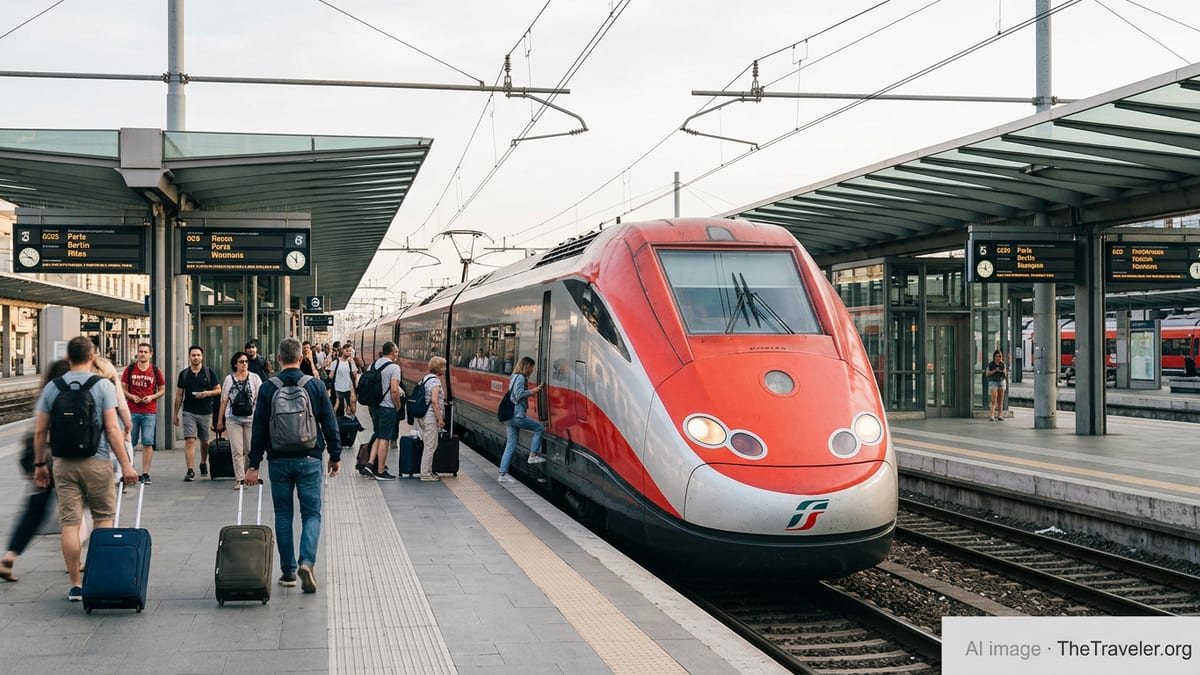
According to published coverage, Frecciarossa trainsets have entered the German and Austrian rail networks for a series of international approval tests, a crucial step before regular services can begin between Italy and Bavaria. Trial operations are currently being carried out on the Berlin–Munich–Kufstein axis in Germany and on the Kufstein–Brenner and Salzburg–Vienna routes in Austria, using specially equipped Frecciarossa 1000 units designed for cross-border certification.
Information from FS Group and European media indicates that these tests form part of a wider homologation process required for high-speed trains to operate under differing national signaling, power and safety systems. The Frecciarossa sets are being evaluated not only for performance on new infrastructure, but also for interoperability on conventional stretches that link Germany, Austria and Italy through the Brenner corridor.
Reports from Germany highlight that Frecciarossa 1000 units have already been spotted near Munich, reflecting a visible new presence on a network historically dominated by domestic rolling stock. These test movements follow earlier technical work in Italy to adapt the trains’ braking and control systems to German standards, signaling the project’s progression from workshop to mainline trials.
Coverage across European transport outlets presents the current test phase as broadly on schedule, reinforcing expectations that the Rome–Munich and Milan–Munich routes will be ready to welcome passengers in time for the 2027 summer timetable change, subject to the successful completion of all safety and certification requirements.
New Direct Links Between Rome, Milan and Munich
FS Group communications state that commercial Frecciarossa services between Milan and Munich and between Rome and Munich are planned for launch in the summer of 2027, once the homologation process has been completed with a positive outcome. The project is being developed in partnership with Germany’s Deutsche Bahn and Austria’s ÖBB, building on a broader cooperation framework announced in recent years for Italy–Germany–Austria connections.
According to transport-focused reporting and regional Italian broadcasters, the initial phase from 2027 is expected to include four daily connections from Italy to Germany, shared between Rome and Milan departures. From late 2028, plans reported by European passenger advocacy publications and FS-related material point to an expansion to around ten daily services, adding new itineraries such as Milan–Berlin, Naples–Munich and Naples–Berlin alongside the core Rome and Milan links to Bavaria.
Published summaries of the forthcoming timetable suggest that the Rome–Munich journey by Frecciarossa could take around eight and a half hours, with intermediate stops in major Italian and Alpine cities. For the Milan–Munich corridor, journey times are expected to be closer to six and a half hours, reflecting the shorter distance and more direct routing via Verona and the Brenner axis.
European rail overviews already list the Rome–Munich and Milan–Munich high-speed services among notable international launches anticipated for 2027, underscoring the symbolic importance of connecting two of Europe’s most visited cultural capitals with a single daylight train.
Route, Stops and Onboard Experience
Regional station information and Italian news coverage indicate that the new Frecciarossa route from Rome to Munich is planned to serve key hubs including Florence, Bologna, Verona, Rovereto, Trento, Bolzano and Innsbruck before reaching the Bavarian capital. The Milan–Munich variant is expected to follow the northern Italian high-speed and upgraded corridors via Verona and the Brenner Pass, tapping into existing infrastructure that has been progressively modernized.
The services will be operated with Frecciarossa 1000 trainsets, the flagship high-speed units of Trenitalia. Technical documentation and operator profiles describe these trains as compliant with European interoperability specifications, built to handle multiple voltage systems and signaling technologies, and capable of very-high-speed operation on dedicated lines while also running on conventional tracks where necessary.
Passengers can expect the interior offer already seen on other international Frecciarossa routes, such as those between Milan and Paris or within Spain. Publicly available material on the fleet highlights multiple travel classes, including premium and business sections, Wi-Fi connectivity, at-seat power and an onboard catering service, features designed to appeal both to leisure travelers and to business passengers seeking a rail alternative to short-haul flights.
By threading together major cities across Italy, Austria and southern Germany, the Rome and Milan links to Munich are also expected to serve as feeders for onward connections deeper into the German network. Munich’s role as a hub for regional and long-distance rail is likely to make the new Frecciarossa services a key component in multi-leg itineraries across central Europe.
Part of a Wider Push for a “European Underground”
The new connections form part of a broader international strategy set out by FS Group, which has framed its goal as developing a kind of high-speed “European underground” connecting major cities across the continent. Previous expansion has already brought Frecciarossa services to France, including on the Paris–Lyon–Milan corridor, and to Spain through a separate high-speed operation linking major Iberian cities.
Press releases and strategic documents from the group present cross-border projects such as the Rome/Milan–Munich–Berlin axis as central to increasing the share of passengers traveling internationally by rail. The intention, according to these publicly available materials, is to position the Frecciarossa brand as a pan-European high-speed option, rather than a product confined to the Italian market.
European rail policy reports point out that such services align closely with EU ambitions to shift more medium-distance travel from air and road to rail, particularly along major passenger corridors. By offering competitive journey times and a through service that avoids airport transfers, operators aim to capture travelers who might previously have relied on flights between Italy and southern Germany.
Industry observers also highlight the potential for these routes to become a template for future expansions. Discussions in rail enthusiast and professional forums have referenced long-term aspirations for extensions from Munich toward Berlin and for additional international links operated with the same rolling stock, suggesting that the 2027 launch could mark the beginning of a broader Frecciarossa network across central Europe.
Implications for Travelers Planning 2027 and Beyond
For travelers, the test phase now underway signals that practical new options for overland journeys between Italy and Germany are getting closer. If the approval process proceeds as indicated in current public information, summer 2027 could see direct daytime high-speed trains offering city-center to city-center links between Rome, Milan and Munich, with connections to other Alpine and German destinations.
The planned frequency increase after 2027, documented in European passenger transport reports and FS-related material, suggests that travelers will gradually gain a broader choice of departure times and city pairs. The anticipated expansion toward Berlin and additional Italian origins, including Naples, would further widen the network available to those planning multi-country rail itineraries.
For now, the presence of Frecciarossa 1000 units on German and Austrian tracks remains confined to testing and familiarization runs. However, the scale of the trial program, the detailed routing through the Brenner corridor, and the coordinated effort with Deutsche Bahn and ÖBB collectively indicate that the Rome and Milan to Munich links are advancing from concept to a concrete timetable objective for 2027.
Travelers considering overland trips across the Alps in the coming years can therefore look to these developments as a sign of increasing choice, with high-speed trains poised to take a more prominent role on routes that have traditionally been dominated by flights and overnight or slower international services.
Euronews – Frecciarossa tests for Rome and Milan links to Munich
FS Group – Test runs of Frecciarossa in Germany and Austria